Visit Saint-Omer: A Historic Town of Abbeys, Heritage and Culture
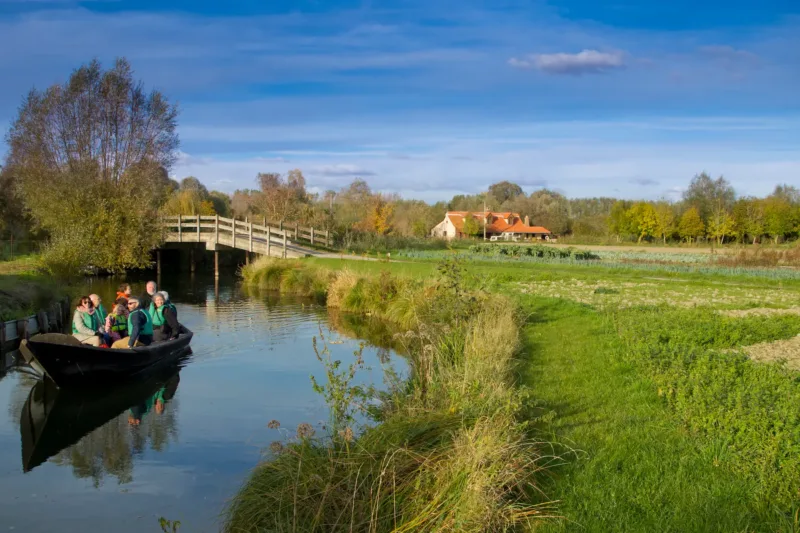
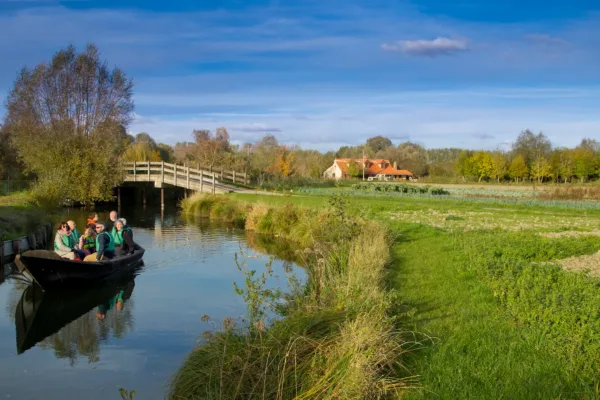
Just 40 minutes from Calais, Saint-Omer is one of northern France’s most rewarding historic towns. Wander through centuries of history as you explore its magnificent Gothic cathedral, the evocative ruins of Saint-Bertin Abbey, elegant museums and lively market squares. Then venture beyond the town to discover the nearby UNESCO-recognised Saint-Omer Marshes, where traditional wooden boats still glide through one of France’s most remarkable wetland landscapes.
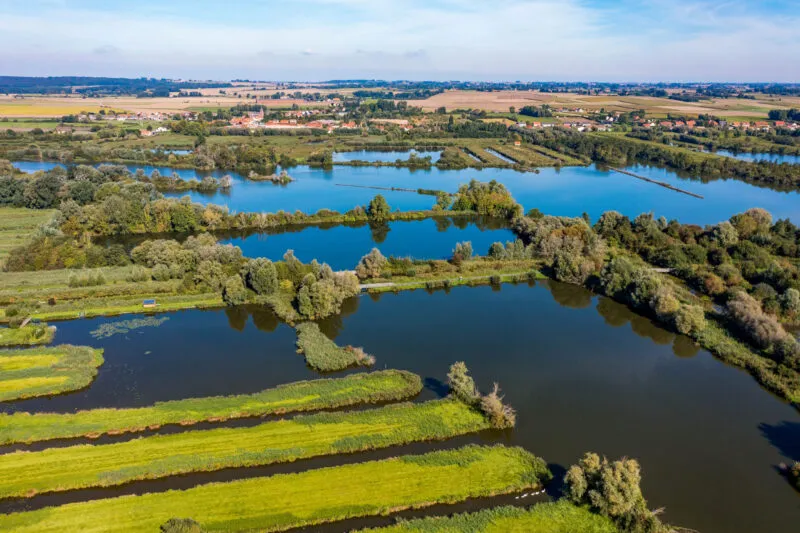
Saint-Omer is a quiet, unassuming but genuinely charming little town in the Pas-de-Calais department, it was once home to one of the most important abbeys in northern Europe, and is surrounded by the sprawling, watery world of the Marais Audomarois, a Ramsar-listed wetland of international importance. With a magnificent cathedral, as well as several other very worthwhile monuments to visit – not to mention some excellent restaurants where you can enjoy local specialties like carbonnade or Welsch, delicious produce from local market gardens, and artisan beers from a panoply of regional brewers – Saint-Omer makes for a rewarding and memorable place to spend a few of days while exploring the town and its beautiful surroundings.

Saint Omer Tourist office
-
Adress: 7 place Victor Hugo – 62500 Saint Omer
-
Phone: + 33 (0)3 21 98 08 51
-
Iconic visits in Saint-Omer
Saint-Omer Railway Station
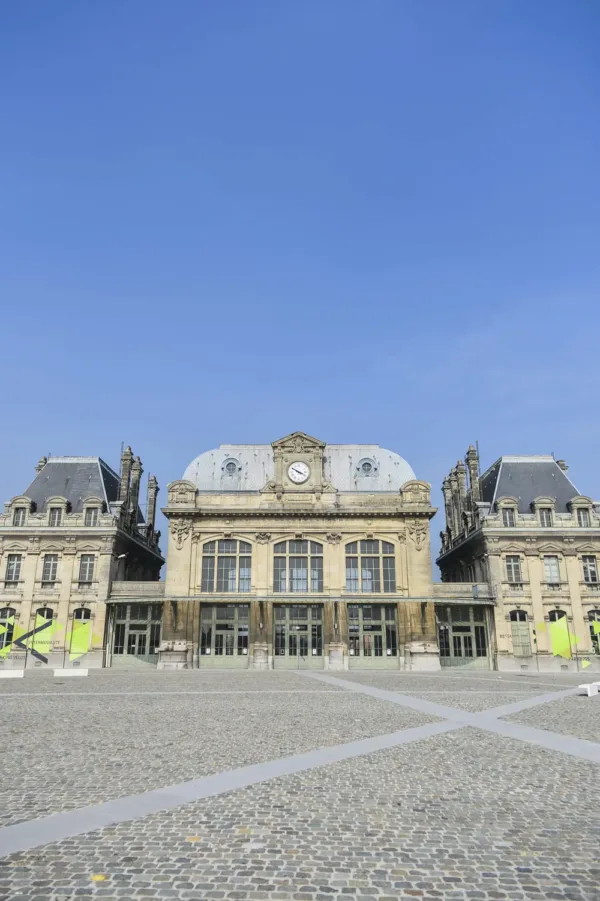
Saint-Omer boasts an unexpectedly grand railway station for a town of its size. Opened in 1904, it was designed by the architect Clément Ligny, and replaced a smaller station built in 1848. Built of high-quality stone from Soignies and Creil (in itself unusual at a time when wrought iron was all the rage), its Neoclassical style and elegant proportions make it look as much like a château as a railway station, and it emerged from renovation looking beautifully spick and span in early 2020.
Travelling by train is definitely the best way to arrive in Saint-Omer, not just because of the impressive station, but because it gives an unrivalled preview of the surrounding landscape of the Marais Audomarois.
 © Yannick Cadart-CD62
-
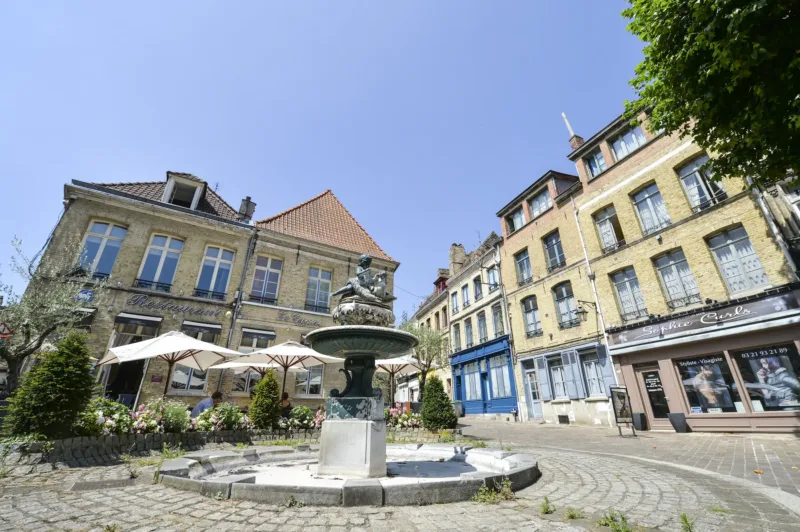
Place Foch
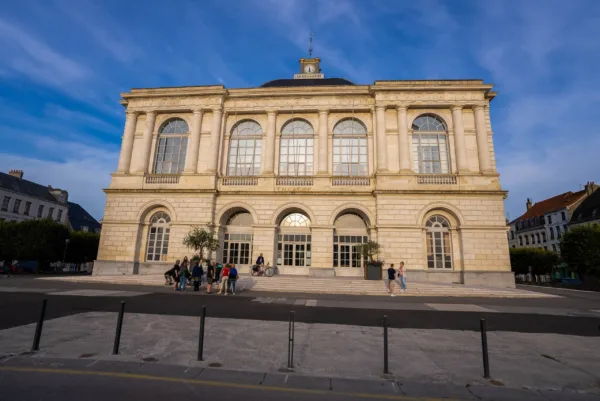
Place Foch, Saint-Omer’s main square, is home to its colourful weekly market, and is surrounded by restaurants, cafés and bars, which continue along the narrow pedestrianised Rue Louis Martel. At one end of the square stands the elegantly proportioned Town Hall, built using stone from the dismantled Abbey of Saint-Bertin, and containing a rather fabulous little 19th-century theatre.
 © Les Coflocs
-
Saint-Omer, the ruins of one of Europe’s great abbeys
Abbey of Saint-Bertin
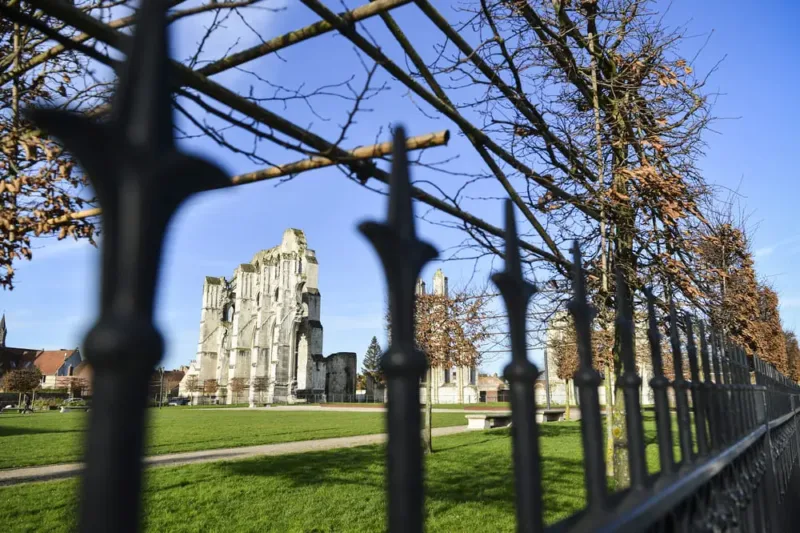
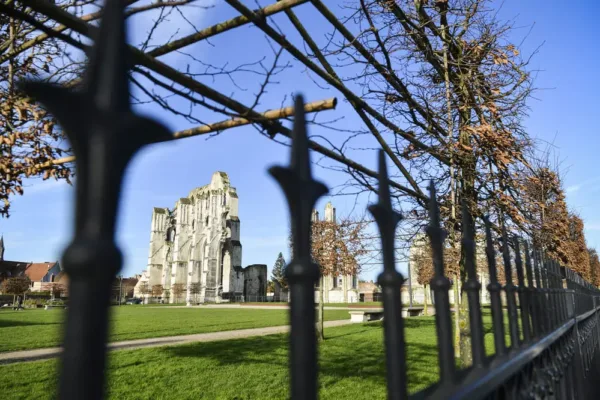
The gaunt ruins of the once great Benedictine Abbey of Saint-Bertin (Abbaye Saint-Bertin) stand at the lower end of Rue Saint-Bertain, near the banks of the River Aa, the course of which has shifted over the centuries. Founded in the 7th century by St Audomar – these days better known as St Omer, after whom the town is named – it was rebuilt several times and in the Middle Ages grew to be one of the most important abbeys in northern Europe. The abbey went into decline in the 15th century, and was closed in the Revolution, finally being demolished in 1830, with its stone being reused in new buildings, including the Town Hall. Standing in front of the ruins of the Abbey of Saint-Bertin, is a statue of Suger (circa 1081–1151), the 12th Abbot of the Basilica of Saint-Denis in Paris. The monumental statue is the work of the sculptor Jean-Baptiste Stouf, and was one of a dozen statues of historical figures installed at Versailles in the 19th century. In 1931 these were dispersed to the respective birthplaces of their subjects (Suger is thought to have been born in Saint-Omer).
 © Yannick Cadart-CD62
-
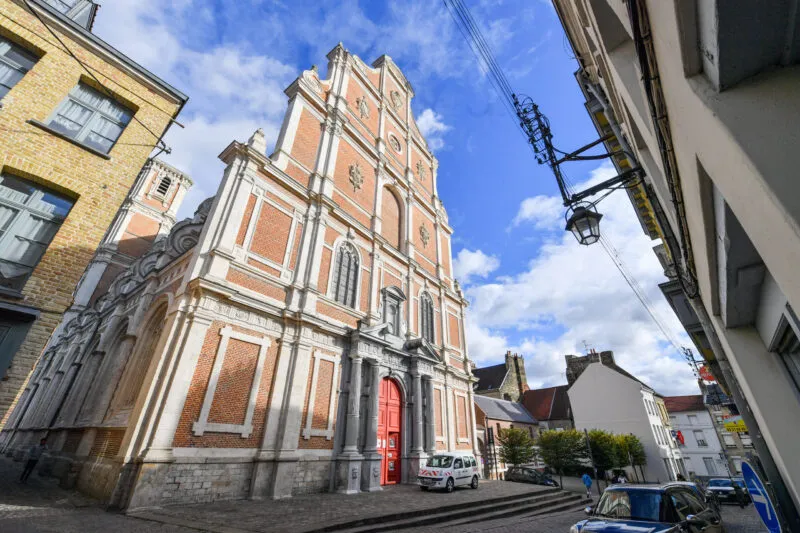
The Jesuits Chapel
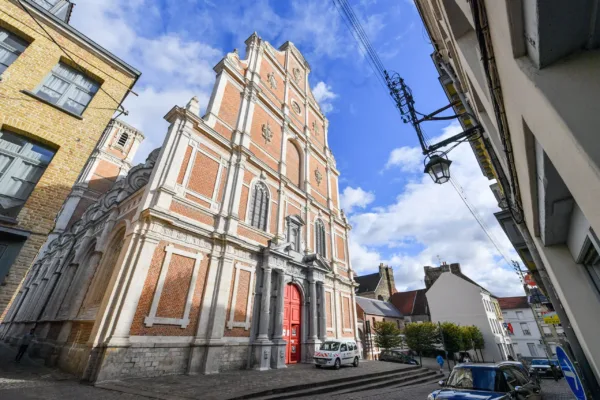
The Jesuits Chapel (Chapelle des Jesuites) stands on Rue du Lycée, its elegant four-tiered façade in red brick and stone rising up above the surrounding rooftops. The Walloon Jesuits founded a college here in 1556, with the chapel itself being built between 1615 and 1640 by the Jesuit architect Jean du Blocq (1583–1656), who also supervised work on the Cathedral of Notre-Dame in Luxembourg. The building is a mixture of local Gothic and Italianate styles – the carefully ordered façade and portal, for example, show the influence of the Italian architect Serlio (who worked on the palace at Fontainebleau), while the ribbed vaults of the interior follow Gothic tradition. However, Blocq’s innovative design abandons the usual transept, giving the interior a feeling of more unified space, while details such as the triglyphs (three vertical lines) and bucranes (ox skulls) are drawn from ancient Greek and Roman architecture.
 © Yannick Cadart-CD62
-
Theatre
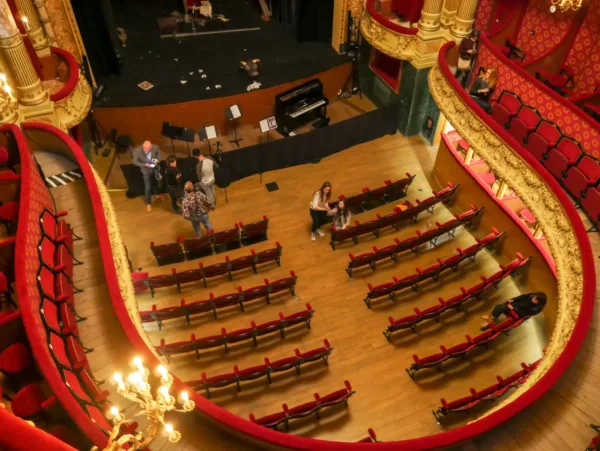
Hidden away within the Town Hall, Saint-Omer’s small, Italianate theatre follows the style of theatres in 17th-century Venice. Opened in 1840, it is lavishly decorated, with elaborate stucco, gilded balconies, a painted trompe l’oeil ceiling and pink marble columns. It was re-opened in 2018 after extensive renovation, having been closed to the public for the previous 45 years, and can be visited with a guide.
 © A. Chaput Pas-de-Calais Tourisme
-
Sandelin Museum
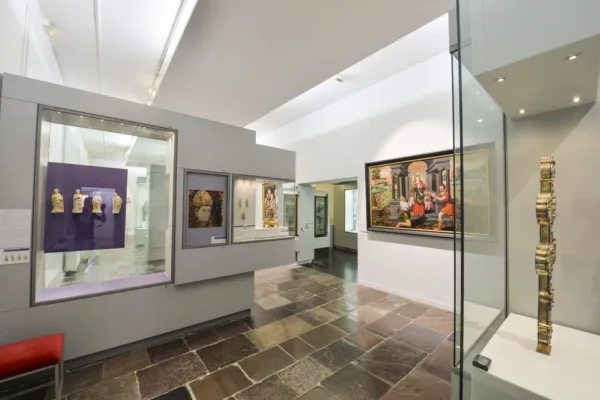
Located in a beautiful 18th-century townhouse near the top of Rue Carnot, the Sandelin Museum (Musée de l’hôtel Sandelin) contains over 3,000 artworks, which span a period from the Middle Ages to the 19th century. This is the place to see fragments of sculpture from the now ruined Abbey of Saint-Bertin, breathtaking religious art from the Medieval and Renaissance periods, and there’s an exceptionally fine ceramic collection, with some 750 pieces from Europe and Asia. The house has exquisite Rococo interiors and was built for Pierre and Marie-Josephe Sandelin, the Count and Countess of Fruges. It opened as a museum in 1904.
 © Yannick Cadart-CD 62
-
Jardin Public
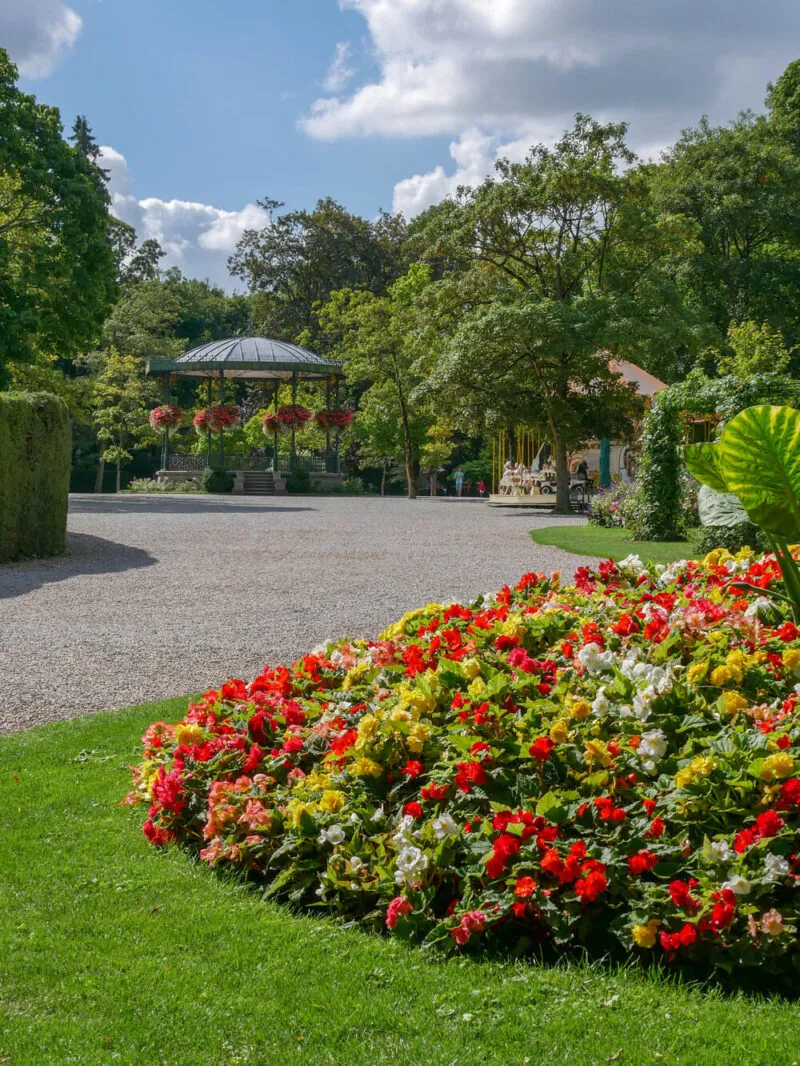
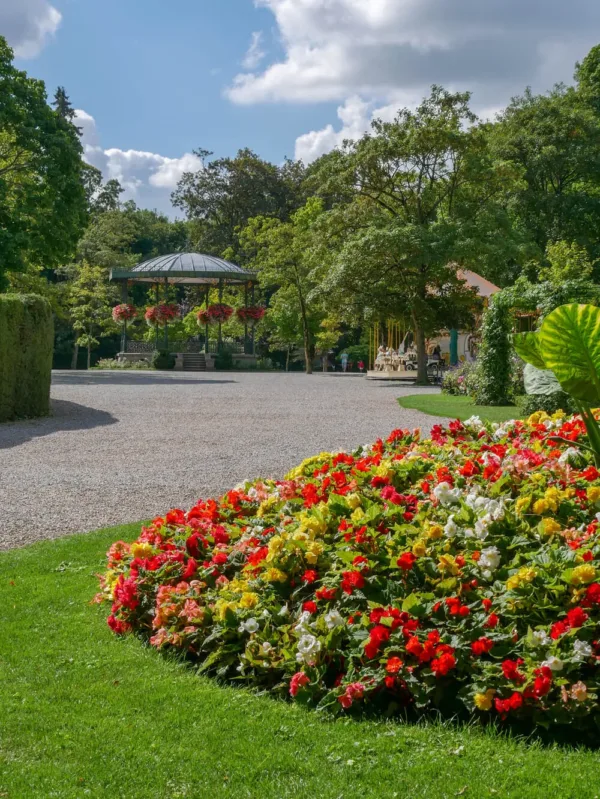
Saint-Omer’s beautifully lush and peaceful public gardens (Jardin Public) lie hidden behind a wall, just across the road from the cathedral – you can enter through a small alley here, or through the main entrance just off Place Foch. Completed in 1898, it includes an orderly French garden with a fountain, an English garden with a small pond, and an arboretum.
 © A. Chaput Pas-de-Calais Tourisme
-
Notre-Dame cathedral
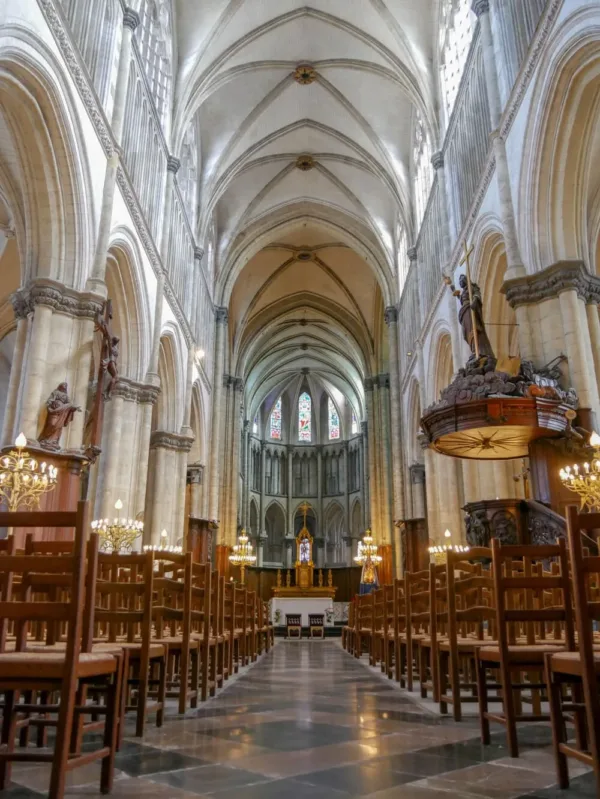
Saint-Omer’s Cathedral of Notre-Dame (Cathédrale Notre-Dame) was founded in the 7th century, on the site of a Temple of Jupiter. The first building was replaced by a Romanesque church in the 11th century, and this was in turn gradually replaced by the present Gothic structure between the 12th and 16th centuries. The length of this reconstruction – some four centuries – means that the cathedral encompasses all the different stylistic phases of French Gothic architecture, from Early Gothic (visible in the plan of the choir), to Flamboyant Gothic (seen in the north transept, built in the second half of the 15th century). The main façade is unusual in that unlike most French cathedrals of this period it is not flanked by twin towers, while an unusual feature inside are the chapels slanted at an angle of 45 degrees. The interior includes a beautifully sculpted cenotaph of Saint-Omer (who was buried here), an enormous Descent from the Cross by Rubens, and a magnificent astrolabe dating from 1558. The huge organ is the work of the 19th-century French master, Aristide Cavaillé-Coll, who is widely regarded as the greatest organ-builder of his time.
Motte and Bailey Castle.
Beside the cathedral, hidden within a ring of houses, lies a motte and bailey castle. This was the town’s original keep, built in the 10th century but later destroyed and replaced with the present brick structure in the 18th century. During WW1 it was used as the British Army headquarters.
 © A.Chaput-Pas-de-Calais-Tourisme