Équihen-Plage: what to do in this wild seaside resort?
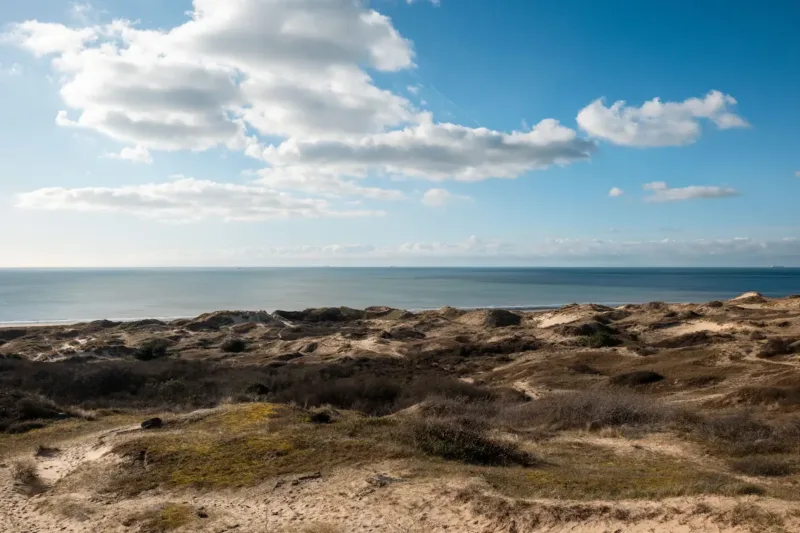
Tucked away on the Opal Coast in Pas-de-Calais, Équihen-Plage is one of Northern France’s best-kept secrets. Authentic, wild and beloved by families, this former fishing village perched on the cliffs offers sweeping beaches, the iconic Quilles en l’Air huts, a dramatic cove and a surprising slice of aviation history. Here’s everything you need to know before you visit.
Some tourist guides do not devote a single line to it. This shows that Équihen-Plage is a very low-key resort, even a little wild…After all, they do call it « the wild daughter of the sea »! Authentic, simple and loved by families, Équihen is not a fan of chichi. The sloping resort jealously guards its natural spaces and lives peacefully alongside a small town centre, its beating heart.
-
Équihen-Plage: a former fishing and grounding harbour
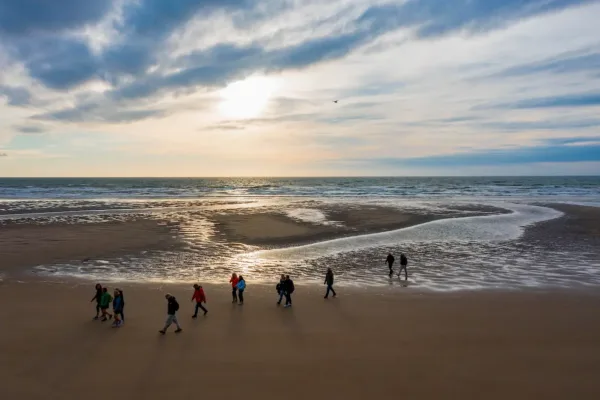
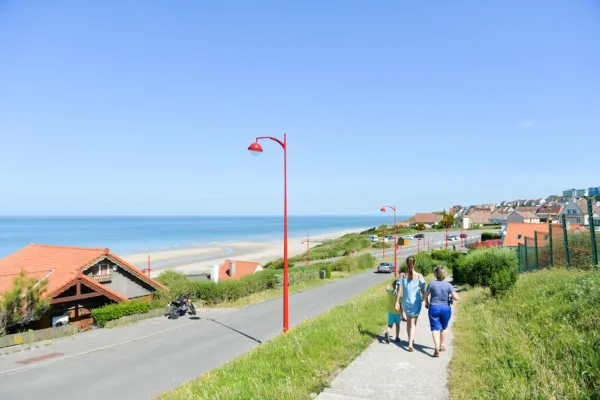
Much like its neighbour Le Portel, Équihen-Plage was once a fishing port before becoming a little seaside resort with a very natural feel. There’s nothing very original about that, except perhaps the location of the old village, perched on the top of the cliffs. Équihen-Plage is a village that is all about slopes, with a road that goes down seemingly forever towards the main approach to the sea. And what a road it is… A real panoramic balcony, with a perfect view of the vast expanse at low tide!
-
The Quilles en l’Air: Équihen-Plage’s most iconic tradition
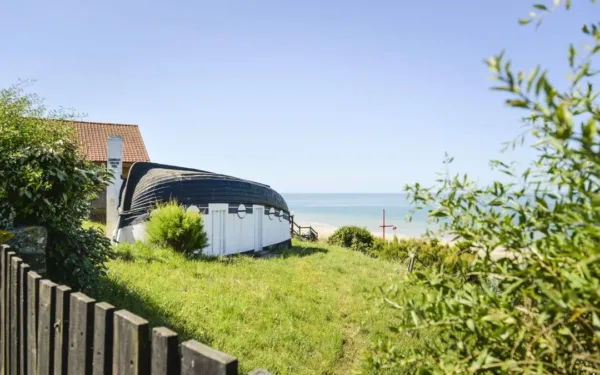
The old fishing village is not content with its Blessing of the Sea on the Feast of the Ascension, or the Mussel Festival in July. Lovingly cultivating its maritime traditions, Équihen-Plage has revived the tradition of Quilles en l’Air.
In the late XIX and early XX Century, these Quilles were the hulls of old fishing boats that were reused so that poor fishermen could transform their modest homes. Until the Second World War, they formed a real village up on the hills. But the shelling took its toll on this maritime heritage…They reappeared a few years ago at the town’s camp site. They were no longer the upturned boat hulls of yesteryear! Instead, they are now quirky little huts, topped off in black and welcoming up to 5 people with all the modern comforts and still a magnificent view of the coast.
 © Yannick Cadart CD62
-
When painters fell in love with Équihen-Plage
The village of Quilles en l’Air, the people of the sea and the grounding harbour are all subjects that have inspired artists and painters who have lived and worked in Équihen-Plage. Among them was Paul Christol, who transformed a Quille en l’Air into a summer residence and art studio. Or Edmond de Palézieux, who was born in Switzerland and died in Équihen, and whose grave is in the village cemetery. He was very attached to the world of the navy, which he represented extensively. A street in the village still bears his name.
 © Yannick Cadart CD 62
-
The Grande Plage d’Équihen: one of the longest beaches on the coast
When it comes to beaches, Équihen certainly knows how to keep up with its neighbours. To the south, its large beach is one of the longest on the coast, running from the Warenne Estuary to the cliffs at Cap d’Alprech. This vast expanse of fine sand is ideal for swimming, strolling and fishing, but also for water sports. You can go like the wind on a sand yacht, or try sea kayaking.
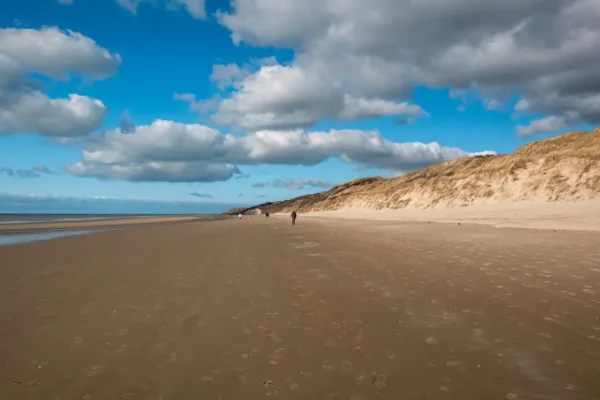 © S.Brissaud Pas-de-Calais Tourisme
-
La Crevasse cove: the wild heart of Équihen-Plage
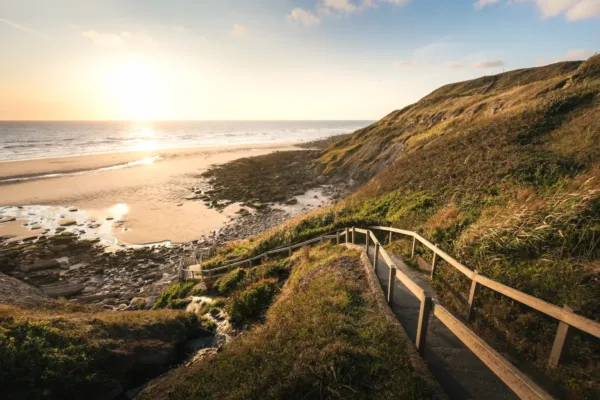
But if you want to leave civilisation behind, it’s best to head for La Crevasse cove, north of Équihen-Plage. A totally wild place in which to play Robinson Crusoe, enjoy a unique view of the cliffs or admire paragliders in action.
From here, a hiking trail runs along the cliffs, offering astonishingly beautiful panoramic views. The more courageous among you can continue along the so-called “Customs Officers’ Trail” to Cap d’Alprech in Le Portel.
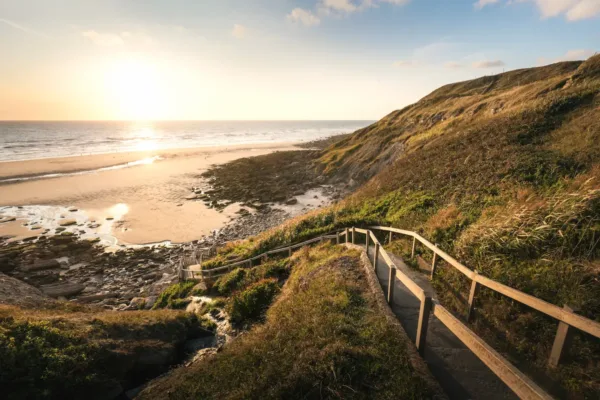 © Fabien Coisy
The first woman to cross The Channel landed at Équihen-Plage
It was 16th April 1912. At the end of a historic flight, American Harriet Quimby, aviator but also journalist and writer, landed on the beach of Équihen. The first female pilot to cross the English Channel, she had set off from Whitfield near Dover. She flew for the first time on the Blériot XI, a single-seater borrowed from Louis Blériot. Even though the sinking of the Titanic on 15th April made all the headlines in the press, her crossing was nevertheless praised by several French newspapers.