Guînes: from Viking legends to the great cliffs of the Opal Coast
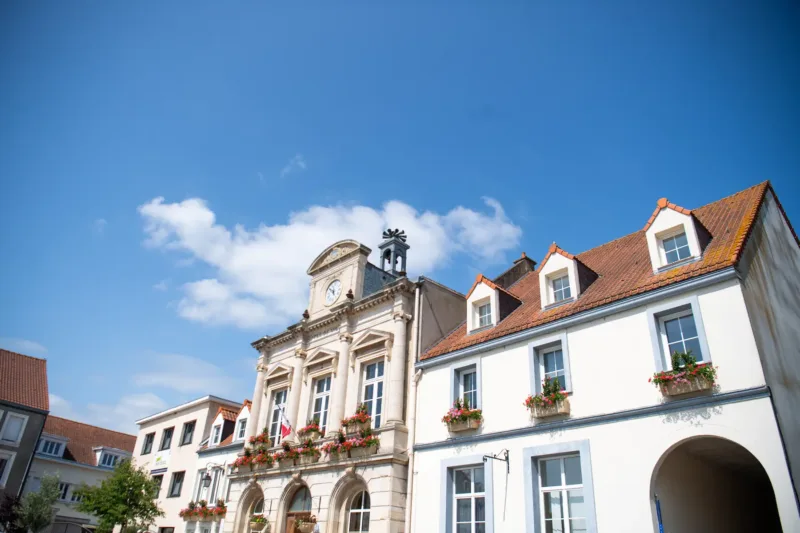
Just a short drive from Calais, Guînes is a small town with a surprisingly big story. Its history stretches from the Vikings and medieval Counts of Guînes to one of the most spectacular diplomatic meetings of the Renaissance. Today, its historic centre, surrounding forest and marshes make it an appealing base for exploring this quieter corner of the Pas-de-Calais – with the dramatic landscapes of the Opal Coast and the Grand Site des Deux Caps close by.
Guînes in brief: from Vikings to the Field of the Cloth of Gold
Guînes lies between the Boulonnais and Calaisis, on the edge of the marshes that have shaped the landscape for centuries. The town grew up around a medieval feudal motte, associated with the Counts of Guînes, and this historic mound remains at the heart of the town today. It was here, in June 1520, that the spectacular Field of the Cloth of Gold took place nearby at Balinghem. The meeting brought together Francis I of France and Henry VIII of England for an extraordinary display of wealth, ceremony and chivalry. There were tournaments, feasting and lavish entertainments, with both kings keen to demonstrate the splendour of their courts.
-
The Tour de l’Horloge: a history you can step inside
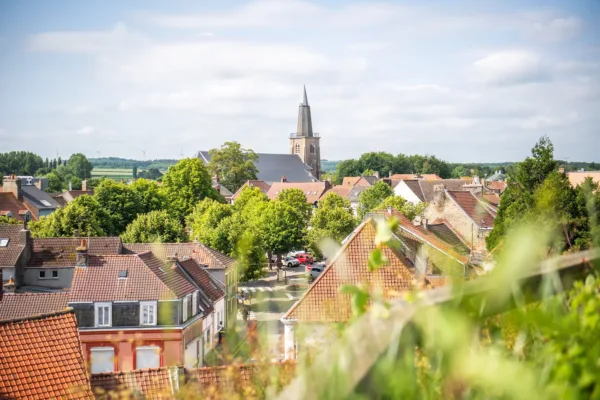
The most recognisable landmark in Guînes stands on the old feudal motte. The present Tour de l’Horloge was built in 1763, replacing earlier buildings on the site, and its museum now offers a wonderfully hands-on way to explore the town’s past.
This is not the sort of museum where you simply wander past a row of display cases. You can dress up as a Viking or medieval knight, solve puzzles, discover the story of Henry VIII and even climb aboard a replica drakkar. A short film, Sifrid le Danois: aux origines de Guînes, brings the town’s Viking story to life from inside the ship.
The museum also explores the famous meeting between Francis I and Henry VIII, making the Tour de l’Horloge a good introduction to Guînes before you head out to explore the surrounding countryside.
 © Yannick Cadart-CD62
-
Blanchard’s great Channel adventure
Guînes also has a remarkable connection with the early history of aviation. On 7 January 1785, French aeronaut Jean-Pierre Blanchard and his English companion John Jeffries set off from Dover in a hydrogen balloon, hoping to become the first people to cross the English Channel by air.
Their journey was far from straightforward. After more than two hours in the air, the balloon came down in the forest of Guînes. Local records describe the two travellers being helped from their basket, and the event was considered such an achievement that the town soon decided to commemorate it with a column.
Today, La Colonne Blanchard stands among the trees, marking the story of that pioneering flight – an unexpectedly thrilling chapter in Guînes’ history.
 © Yannick Cadart CD62-
Forest, marshes and the great capes
One of the great advantages of staying in or around Guînes is how easily you can combine inland countryside with the spectacular scenery of the Opal Coast.
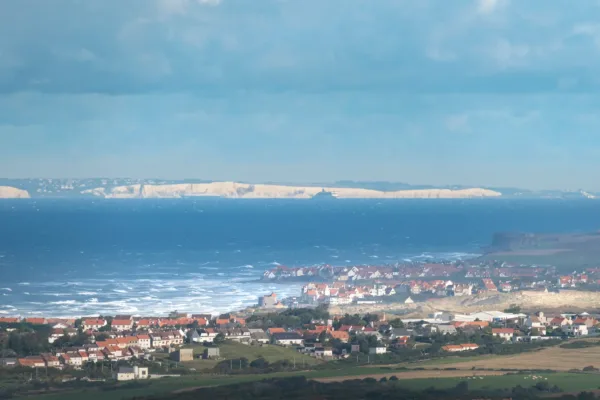
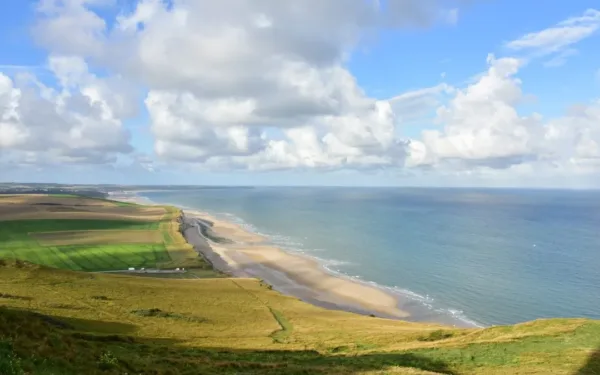
The Grand Site des Deux Caps brings together Cap Blanc-Nez and Cap Gris-Nez, where chalk cliffs, beaches, dunes and coastal grasslands create some of the most memorable scenery in northern France. The area has numerous walking routes, including sections of the long-distance GR120, as well as cycle routes for exploring the coast at a gentler pace.
And if you’re travelling with children, Saint Joseph Village offers something completely different. Set in the Guînes marshes, this open-air attraction recreates a French village from around 1900 to 1970, with old-fashioned shops, workshops, homes and everyday objects. Allow several hours to explore at your own pace, and you can even combine your visit with a meal at the on-site estaminet.
Planning your visit to Guînes
With its Viking motte, historic clock tower and links to the spectacular Field of the Cloth of Gold, Guînes packs a remarkable amount of history into a small corner of the Pas-de-Calais. Beyond the town, the forest, marshes and landscapes of the Opal Coast are all within easy reach, with plenty of opportunities to walk, explore and stop for a good meal along the way. With the trails of the Regional Natural Park drawing more visitors towards the coast, Guînes is a place worth discovering now – before too many other people discover it too.