
Lens: Heritage, history and leisure around Louvre Lens
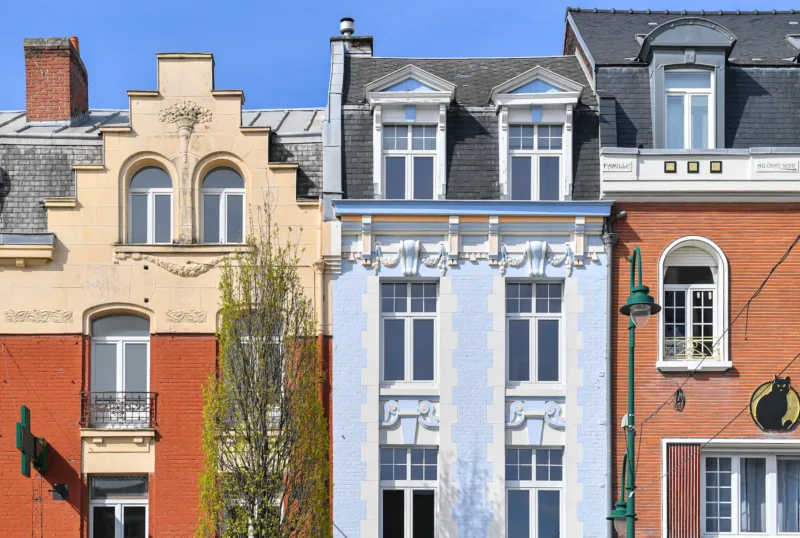
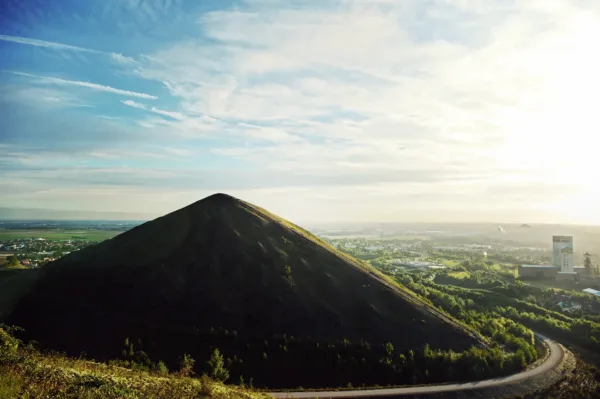
The landscape of Lens evokes the deep history that links the French and the British. It is at the top of the Artois hills from Vimy to Notre Dame de Lorette that our countries are joined in history, that of the First World War, when the men and women of the Commonwealth came to defend their freedoms, alongside the inhabitants of the Lens-Liévin region. Those same inhabitants who, through their labour, literally shaped the landscape around Lens. The spoil tips, the headframes, the mining towns and the red bricks today bear witness to a mining history so important as to be classified a World Heritage Site: the Unesco mining basin around Lens. The Lens area is also home to another treasure: the Louvre-Lens. Part of the collection of the largest museum in Paris, the Louvre, is located in Lens.
So, if the Louvre-Lens is a true must visit attraction, what else will you discover during your visit to this fascinating area, so rich in history, gastronomy and culture?
Lens Town center
Your first stop is the large and friendly tourist office in the centre of the town; where you will also find a large selection of local products and produce to tempt you. An e-bike makes the perfect partner to discover the area and its attractions, and they are available to rent – at competitive rates – from the tourist office. Free route maps are available, and there is a wealth of information to ensure a great visit.
So, let’s set off on a bike ride to discover this famous triptych: the treasures of the mining basin, the Louvre-Lens and the events of The Great War. Put on your helmet, get on your bike and let’s go for a gentle ride, the electric ‘cheat’ helping all the time!

-
Cycling around Louvre-Lens
Art deco in the city centre
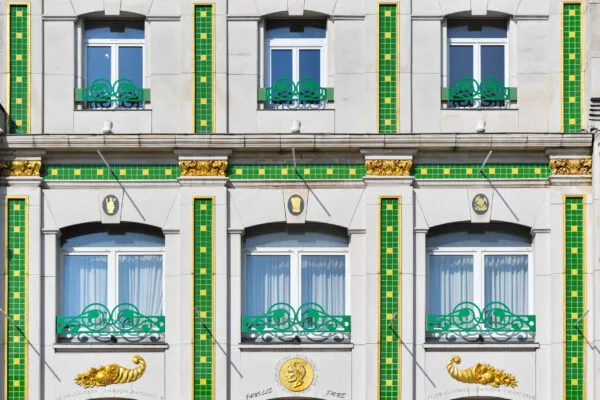
Leaving the Lens-Liévin tourist office don’t forget to admire the facades all around you: starting with the office itself, housed in a former art deco shop, its name still visible on the entrance’s floor. Look up and wave at the gorilla that stands proudly on the façade of the famous chocolate maker Jean Claude Jeanson. Head first to the railway station, where the interior mosaics tell the story of the miners and the collieries, an art-deco treasure in red, gold and brilliant white.
 © Yannick Cadart-CD62
-
The miners and football supporters
On your way to the Louvre-Lens, close by you’ll find the Bollaert Stadium home of Racing Club de Lens, the Ligue 1 football team, renowned for its fanatical fans, and its fierce derby match rivalry with Lille Olympique Sporting Club. Next stop: the Louvre-Lens, and to reach it you will pass through the miner’s housing estates, with their terraced houses, garden estates and engineers’ and colliery manager’s houses; everywhere colliery rank and status is marked. The houses are positioned around the facilities necessary for their daily lives, the schools and social establishments. Look up and notice the details of the facades, where a variety of bricks provide elegant and subtle decoration. Strangely unique and yet as familiar as British mining villages such as Consett, Blaenavon, and, of course, Coalville!
 © Andy Sutcliffe
-
Human history at the Louvre
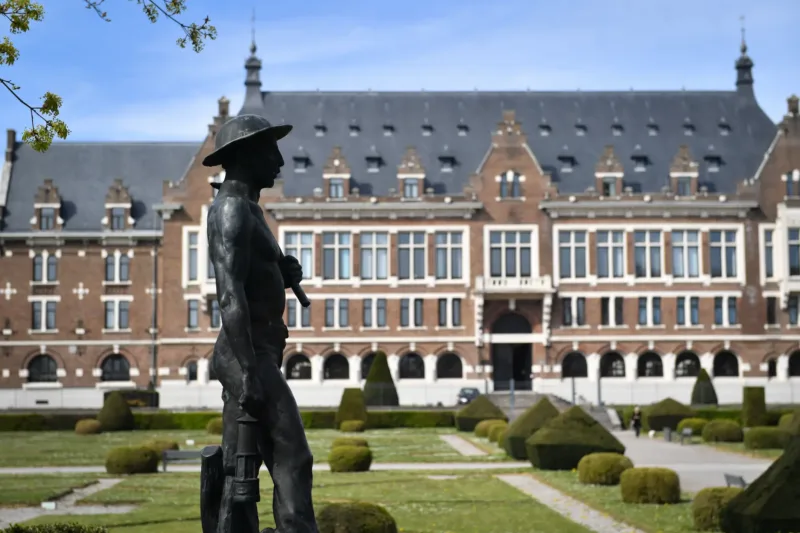
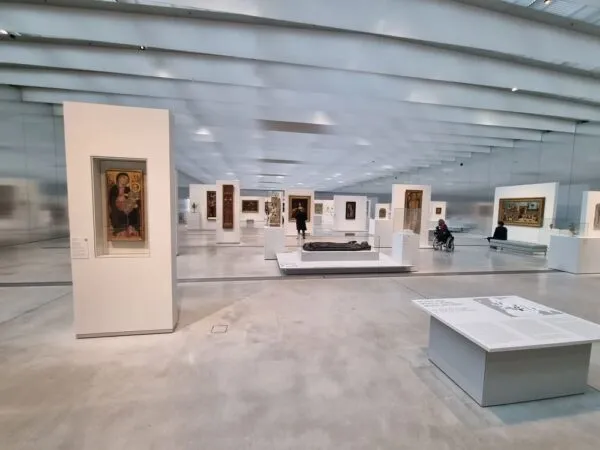
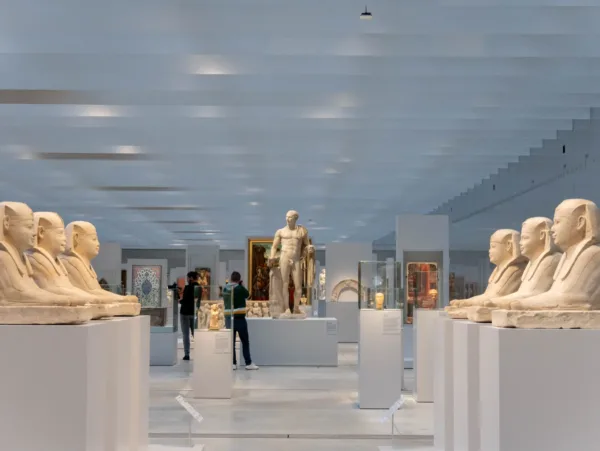
A few assisted pedal strokes away is the Louvre-Lens museum. In a purpose-built building, opened in 2012, itself a strikingly modern, aluminium-clad contrast to the rows of neat, terraced former miners’ houses that surround its grounds, a timeline-curated collection startles with treasure from pre-history to the 19th century. In the football-pitch sized Gallery of Time, more than 200 masterpieces from the Louvre’s collections are displayed carefully and spectacularly, taking you through 5000 years of creative excellence. At the entrance you will find a massive photographic installation, a recent acquisition that combines thousands of high-resolution photographs to create a multi-paneled visualization of Afghanistan’s Bamiyan Valley and its destroyed Buddha statues. At the end of your visit, you’ll find a huge painting of Napoleon, astride a horse; the emperor gazing balefully down on you.
Industrial scars
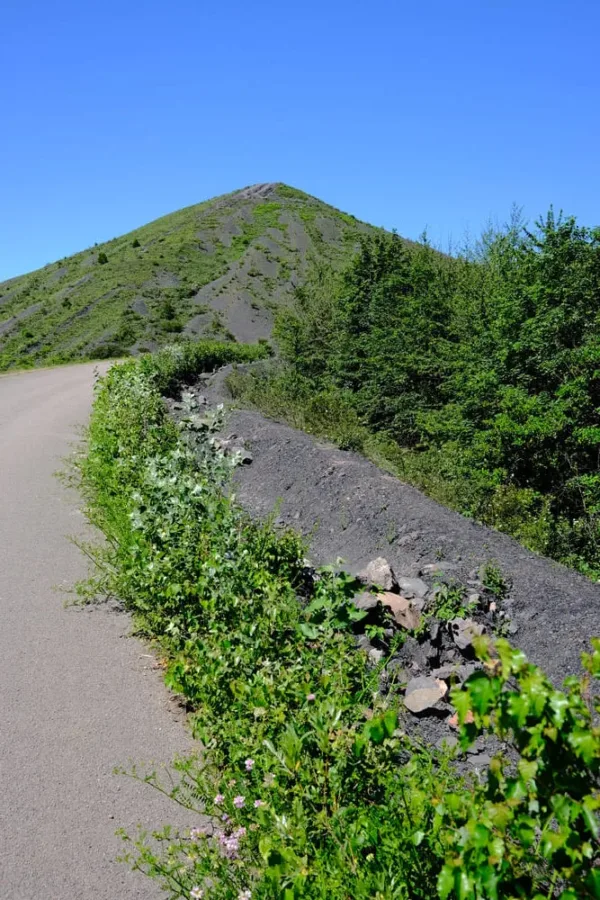
Now, it’s time to push on to Loos en Gohelle for a last effort. We’re heading to the 11-19 base, now transformed into a place of art and cultural exchange. Here are the largest spoil heaps in Europe.
-
Cycle route of the mining basin
Discover the 11/19 Site in Loos-en-Gohelle
Now, it’s time to push on to Loos en Gohelle for a last effort. We’re heading to the 11-19 base, now transformed into a place of art and cultural exchange. Here are the largest spoil heaps in Europe.
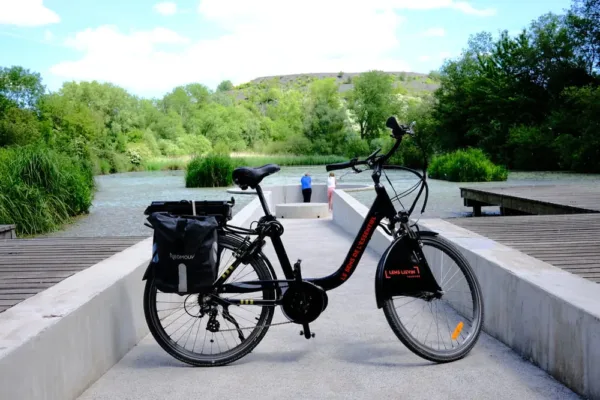
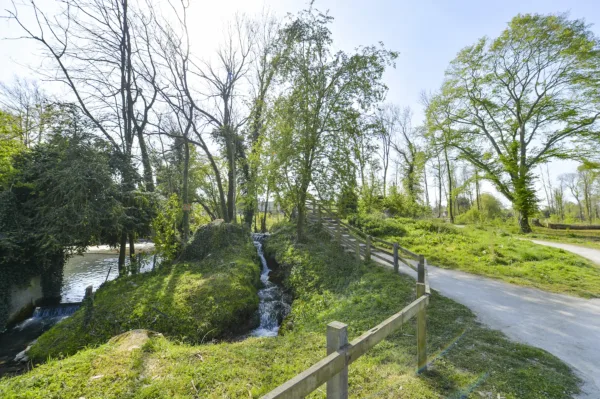
Set off on an amazing route along the towpath from Liévin. This green route offers surprises along the way. First stop at the Parc de la Glissoire, a former pithead now converted into a leisure centre. You can have a picnic there while enjoying the peace and quiet of the place and the silent fishermen …. Climb to the top of the slag heap and wind your way through the bushes; this is where the stars of the Racing Club de Lens train.
© Andy Sutcliffe -
Parc de la Glissoire: A Former Pithead Turned Leisure Park
From the summit, Vimy Ridge is clearly visible with the twin towers of the giant Canadian National Vimy Memorial reminding us of darker times. Then get back on your bike to discover a bucolic spot amidst the industrial scars. Take a break at the Briquette marshes, where a well-deserved rest on one of the benches will give you a chance to glimpse an amazing landscape. The last objective is Aquaterra and its park of islands. This vast green lung was designed for outdoor sports activities. Try out the sliding ring or follow the health trail, nature walks, petanque, rollerblading, etc. Enjoy the place before turning back, by bike.
-
Discover the Food Tour Experience
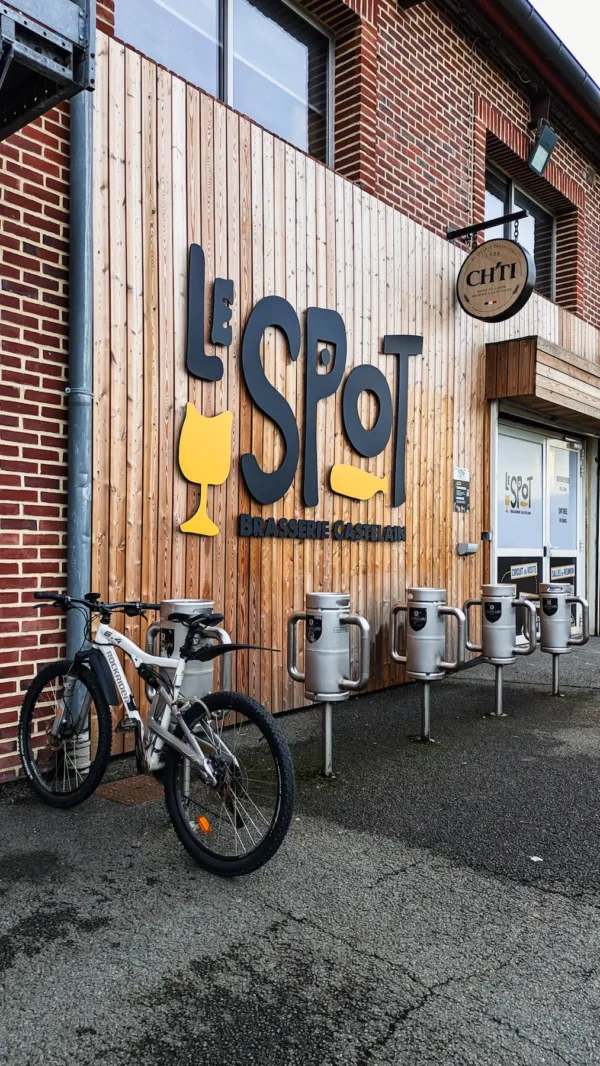
At the tourist office, after handing back your faithful e-bike, don’t forget to pick-up a Food Tour. This ‘planche’, or tasting board, is more than a simple Food Tour, the encounter is at the heart of the offer. You go to meet the local traders and they welcome you and advise you, giving visitors a tasty and entertaining insight into regional produce. Discover fine cheese at renowned fromagerie Philippe Olivier. In-house roasted coffee and chocolates await you at the Brûlerie du Cantin, where manager Laurent Baysse has just been awarded ‘best coffee roaster in France’! More treats await. But some things you will have to discover for yourselves.
 © S. Brissaud Pas-de-Calais tourisme
-
Cycling around the memorial sites
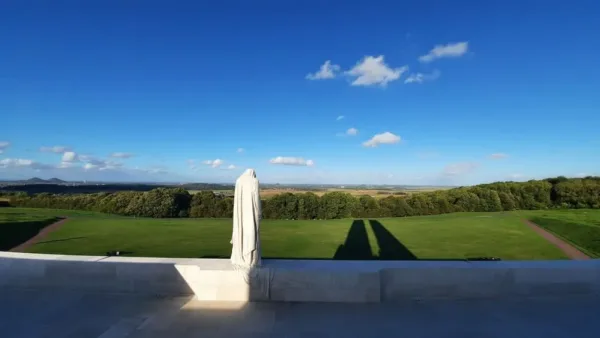
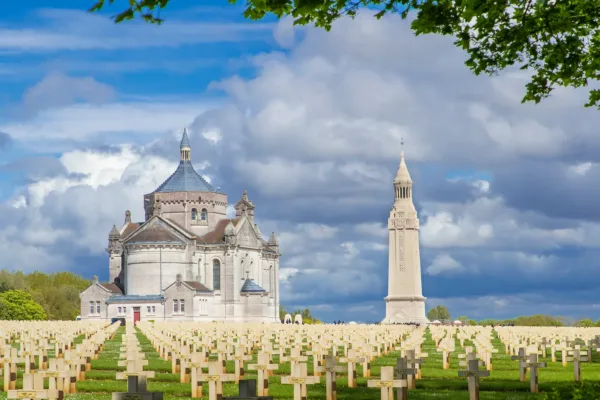
This route for the sportier takes you to the important sites of the Western Front, from the Canadian memorial at Vimy to the Ring of Remembrance, and along the way you will pass the 14-18 Memorial and the largest national necropolis at Notre Dame de Lorette; a route guide is available.
The ideal way to follow this route is again e-bike, it is certainly hillier, but it is well worth the effort and you will discover new views of the slag heaps as you visit iconic locations from 1914-1918.
 © Benoît Diéval Pas de Calais Tourisme
-
Cycling from Souchez to Vimy
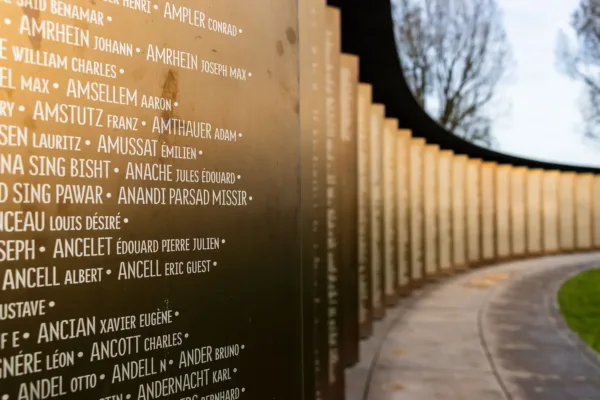
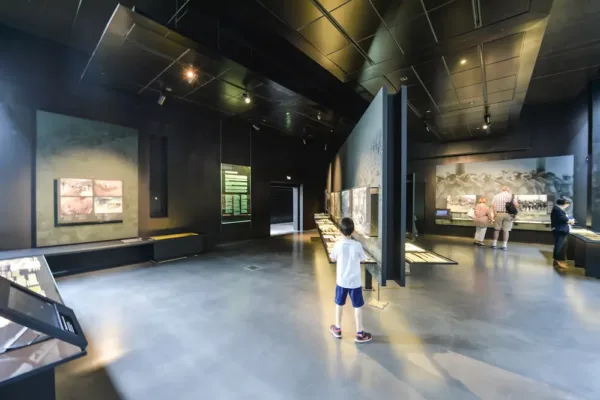
The starting point is in Souchez, at the heart of your itinerary, and you can opt for several routes. Head east and climb up to Ablain Saint Nazaire, where you will find the Notre Dame de Lorette cemetery and its basilica, the largest French cemetery in the world. Here, in 2014, the Ring of Remembrance was inaugurated to commemorate the more than 600,000 soldiers, of all nationalities, who fell in the region during The Great War. A unique, humbling and solemn spot. This ring lists in alphabetical order the men and women who gave their lives on our northern French soil. At the bottom of the hill, don’t miss the 14-18 history centre which tells the story of the Great War in photos and videos. To the west, cycle a few kilometres to Vimy. This memorial, and the Ridge, is where you will feel history all around you; were, among other things, the reconstructed trenches, craters, and bunkers of the Battle of Arras bear witness to the events of a century ago that changed the world forever. Canadian students are on hand to retell the many small stories that come together to create the big story that shook France and Great Britain and the whole world.
During your journey, some sections are equipped with cycle paths, others are not. Be careful during your ride.
FAQ: Visiting Lens for UK Travellers
-
How far is Lens from Calais and how do I get there?
Lens is approximately 70 km south of Calais, around 50 minutes by car via the A26 motorway. It is also easily reachable by train from Lille, which has direct Eurostar connections from London St Pancras. Lens makes a comfortable day trip or an overnight stop on a longer Pas-de-Calais itinerary.
-
What is the Louvre-Lens and is it worth visiting?
The Louvre-Lens is a branch of the famous Louvre museum in Paris, opened in 2012 in a purpose-built aluminium building on a former mining site. Its centrepiece is the Gallery of Time — a football-pitch-sized space displaying more than 200 masterpieces spanning 5,000 years of history, from ancient Egypt to the 19th century. Entrance to the permanent collection is free.
-
Is the Louvre-Lens free to visit?
Yes. The permanent collection at the Louvre-Lens — including the Gallery of Time — is free to visit. Temporary exhibitions carry a separate admission charge. The museum is closed on Tuesdays.
-
What WW1 sites can I visit around Lens?
The Lens area is one of the most significant WW1 landscapes in northern France. Key sites include the Canadian National Vimy Memorial on Vimy Ridge (with reconstructed trenches and free guided tours by Canadian students), the Notre-Dame-de-Lorette national necropolis — the largest French military cemetery in the world — and the Ring of Remembrance (Anneau de la Mémoire) at Ablain-Saint-Nazaire, which lists over 580,000 soldiers of all nationalities in alphabetical order. All three sites are free to visit.
-
What is the UNESCO mining heritage around Lens?
The Lens-Liévin area sits at the heart of the Nord-Pas-de-Calais Mining Basin, inscribed as a UNESCO World Heritage Site in 2012. The landscape — spoil heaps, headframes, red-brick mining estates and former pit sites — tells the story of nearly three centuries of coal mining. The twin spoil heaps at Loos-en-Gohelle (the 11/19 site) are the largest in Europe and have been transformed into a cultural and arts venue. British visitors often note the strong resemblance to former mining communities in Wales, County Durham and the East Midlands.
-
Can I explore Lens by bike?
Yes, and it is one of the best ways to see the area. The Lens-Liévin tourist office hires e-bikes at competitive rates and provides free route maps. Two main cycling circuits are available: an urban loop taking in the art deco town centre, the Bollaert Stadium, the mining estates and the Louvre-Lens; and a hillier memorial route from Souchez to Vimy Ridge, passing Notre-Dame-de-Lorette and the Ring of Remembrance. The e-bikes make the hilly memorial route manageable for most riders.
-
What is there to do in Lens with children?
Lens has several family-friendly options. The Louvre-Lens free permanent collection appeals to older children, while the Parc de la Glissoire — a former pithead turned leisure park — offers outdoor space and picnic areas. The Aquaterra park at Loos-en-Gohelle has nature trails, a sliding ring, rollerblading and pétanque. The e-bike hire from the tourist office is suitable for families, with child seats and adapted bikes available on request.
-
What local food and drink should I try in Lens?
The Lens tourist office offers a Food Tour in the form of a tasting board (planche), guiding visitors to local producers and traders. Highlights include Philippe Olivier, one of France’s most respected fromagers with a shop in the town centre, and the Brûlerie du Cantin, whose manager Laurent Baysse was named best coffee roaster in France. The area’s mining heritage also means a strong tradition of hearty northern French cuisine — carbonnade, Welsh (a local cheese toast), and Maroilles cheese dishes are all worth seeking out.
-
Is Lens a good base for visiting the Pas-de-Calais?
Yes. Lens sits at the crossroads of the main WW1 heritage sites and is within easy reach of Arras (20 km), Béthune (25 km) and the Opal Coast (around 60 km). It works well as a base for visitors combining a museum visit with battlefield tours and coastal stops. Several hotels are clustered around the Louvre-Lens and the town centre.
-
What football team plays in Lens?
Racing Club de Lens — known as Les Sang et Or (the Blood and Gold) — plays at the Bollaert-Delelis Stadium in the centre of town. The club plays in Ligue 1 and is famous throughout France for the intensity of its supporters and its derby rivalry with Lille OSC. Matchday atmosphere in Lens is considered one of the most passionate in French football.