The Crypt – Boulogne-sur-Mer
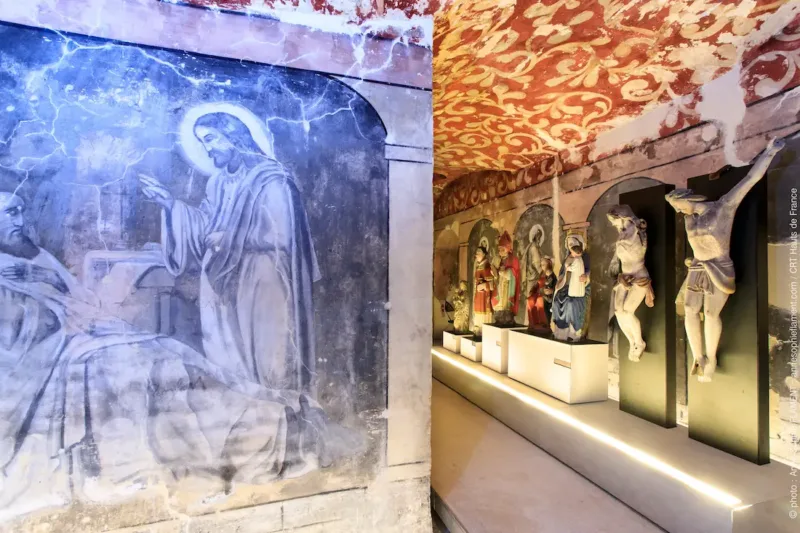
One of the largest crypts in France, the crypt of Boulogne-sur-Mer forms a fascinating maze of underground galleries stretching beneath the entire Basilica of Notre-Dame. Redesigned and restored in recent years, the site preserves Roman remains, medieval foundations, sacred art collections and more than 4,000 m² of murals illustrating centuries of Christian history.
Explore the crypt beneath the basilica
Built during the 19th century around the remains of an earlier Romanesque crypt, this vast underground labyrinth extends for nearly 100 metres and covers around 1,400 square metres beneath the Basilica of Notre-Dame.
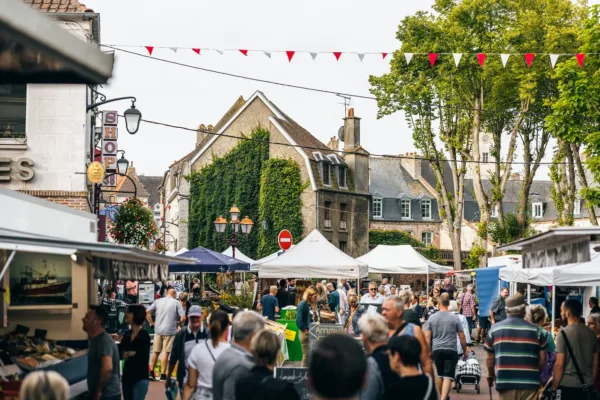
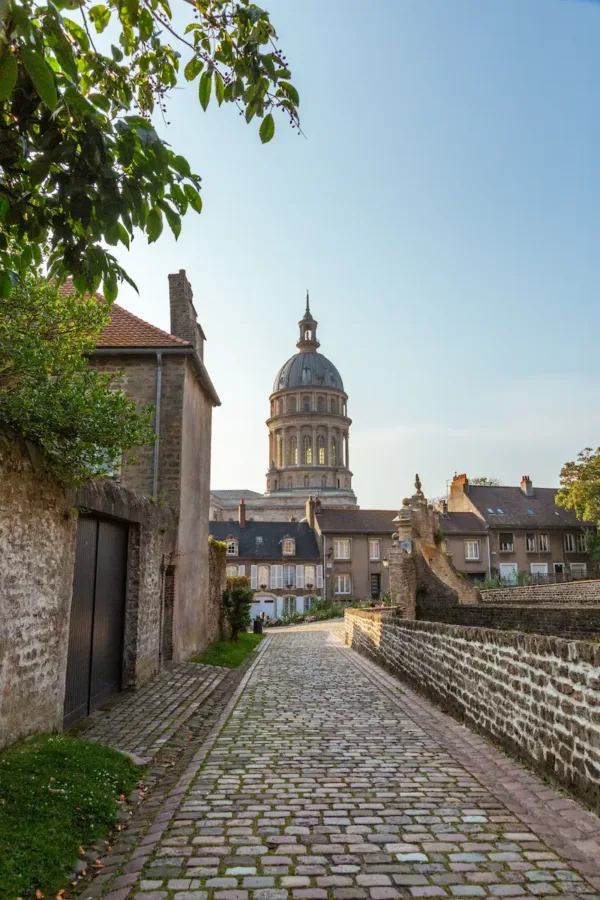
Located in the historic upper town of Boulogne-sur-Mer, the crypt is one of the city’s most remarkable heritage sites. Visitors can explore Roman remains, medieval foundations, religious treasures and 19th-century murals all within the same underground complex.
Its cool atmosphere, labyrinthine galleries and rich historical collections make it one of the most unusual cultural visits on the Opal Coast.
Practical information :
-
Address: Rue de Lille, 62200 Boulogne-sur-Mer
-
Phone :+33 (0)3 21 87 81 79
-
The crypt is open every day except Mondays.
High season (2 May to 30 September)
9:30 am – 6:00 pmLow season (1 October to 30 April)
9:30 am – 12:30 pm
2:00 pm – 5:30 pmAnnual closures
25 December
1 January
1 May
The two weeks following the end of the Christmas holidays
-
Discover 2,000 Years of History
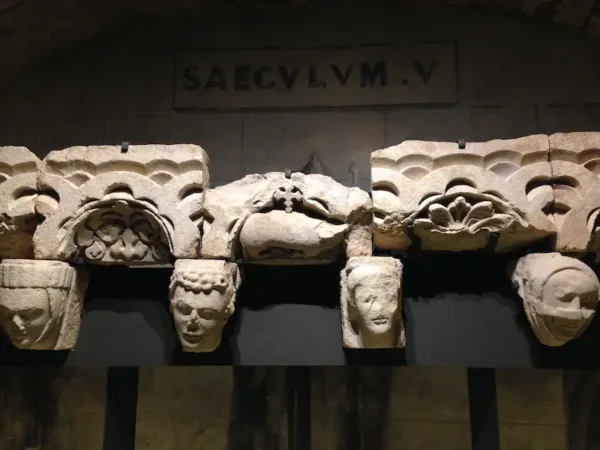
UndergroundThe crypt preserves traces of several periods of Boulogne-sur-Mer’s history, from Roman antiquity to the medieval period and the 19th century reconstruction of the basilica.
Archaeological remains, ancient foundations and sacred objects reveal the evolution of the site over centuries and highlight the historical importance of Boulogne-sur-Mer as a major coastal city linked to Britain and continental Europe.
 © Valérie Sobierajski
-
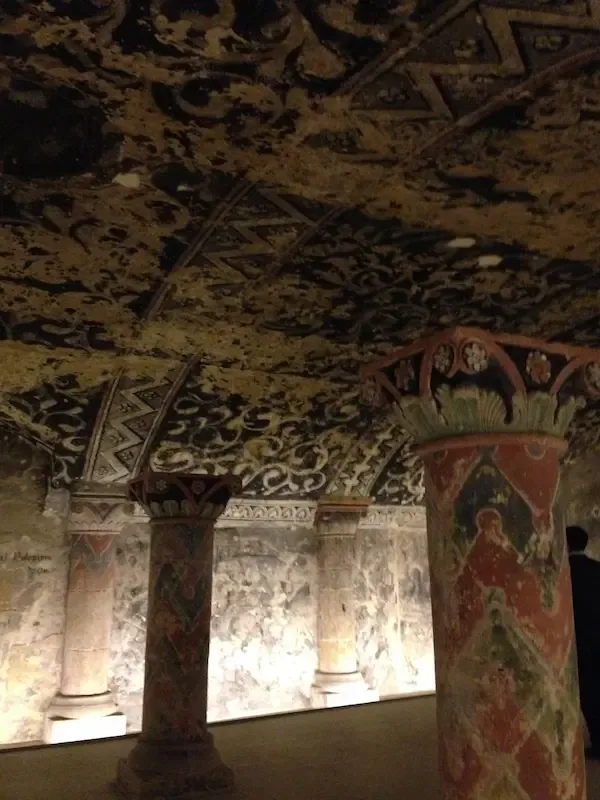
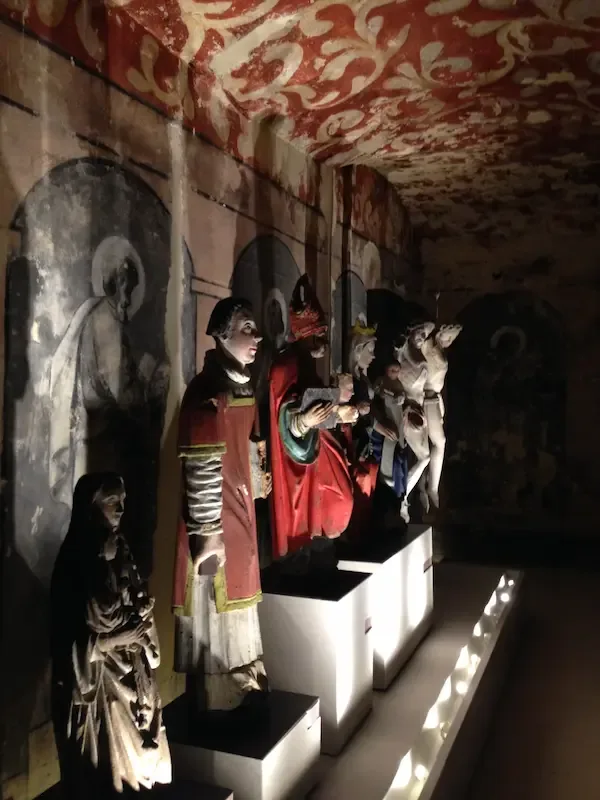
4,000 m² of Murals and Painted Vaults
One of the most remarkable features of the crypt is its extraordinary painted decoration covering almost every wall and vaulted ceiling.
The murals illustrate scenes from the Old and New Testament, saints, religious figures and episodes linked to the history of Christianity. Some sections also preserve traces of the legend of Notre-Dame de Boulogne.
In the dome crypt, visitors can admire colourful Byzantine-inspired decorations that create a spectacular underground atmosphere.
 © Valérie Sobierajski Pas de Calais Tourisme
-
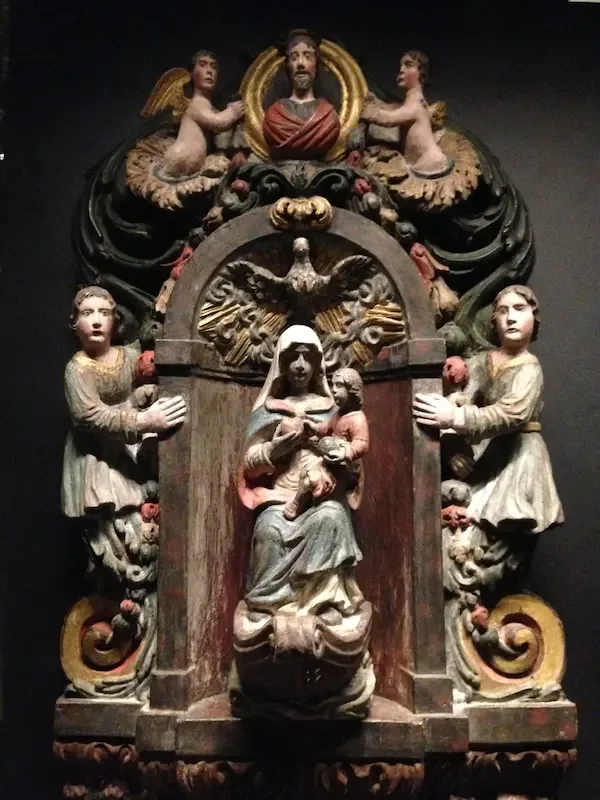
The Last Remains of the Medieval Church
The current Basilica of Notre-Dame was built during the 19th century on the exact site of the former medieval church destroyed during the French Revolution.
The crypt still preserves the original foundations and Romanesque remains of this earlier church, making it the last visible witness to the medieval sanctuary of Boulogne-sur-Mer.
 © Valérie Sobierajski Pas de Calais Tourisme
-
The San Martin Chapel
One of the chapels inside the crypt is dedicated to General José de San Martin, the national hero who played a major role in the independence of Argentina, Chile and Peru.
After living in exile in Europe, San Martin settled in Boulogne-sur-Mer, where he died in 1850. His body rested inside the crypt until 1861, making the site an important place of memory linked to South American history.
 © Valérie Sobierajski Pas de Calais Tourisme
Frequently Asked Questions
-
Why is the crypt of Boulogne-sur-Mer famous?
The crypt is famous for being one of the largest crypts in France and for its underground galleries covered with more than 4,000 m² of murals and painted vaults.
-
What can you see inside the crypt?
Visitors can explore Roman remains, medieval foundations, sacred art collections, painted galleries and the chapel dedicated to General San Martin.
-
How old is the crypt of Boulogne-sur-Mer?
The current crypt was developed during the 19th century around the remains of an older Romanesque crypt dating back to the medieval period.
-
How long does it take to visit the crypt?
Most visitors spend around 1 to 1.5 hours exploring the crypt and its collections.