Visit Béthune: Belfry, Art Deco architecture and WW1 heritage
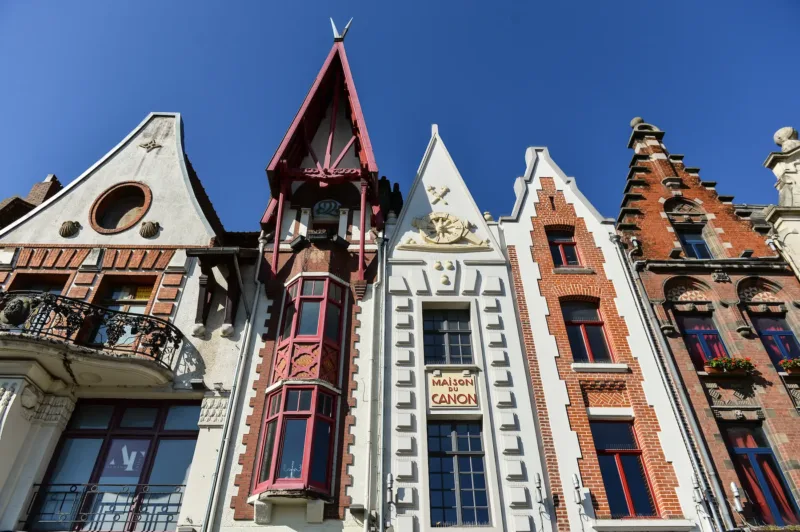
Just an hour from Calais, Béthune combines Flemish architecture, UNESCO heritage, First World War history and industrial culture in a way few towns in northern France can match. Rebuilt after the devastation of two world wars, the town is known for its elegant Grand Place, its restored belfry, and its strong links with British and Commonwealth history. Beyond the town centre, visitors can explore important memorial sites, discover the region’s mining heritage at the Cité des Électriciens, and enjoy remarkable examples of Art Deco architecture. Authentic, welcoming and easy to reach, Béthune offers a fascinating introduction to the history, culture and landscapes of Pas-de-Calais.
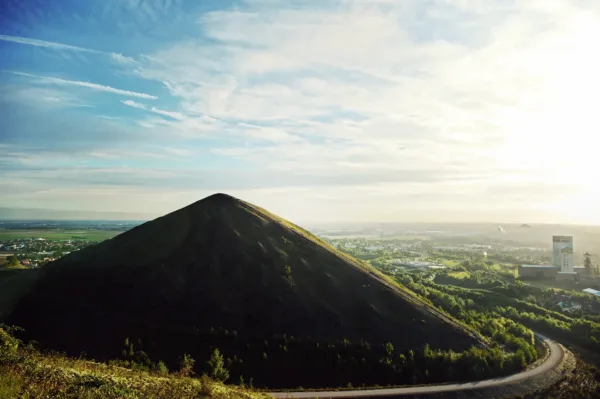
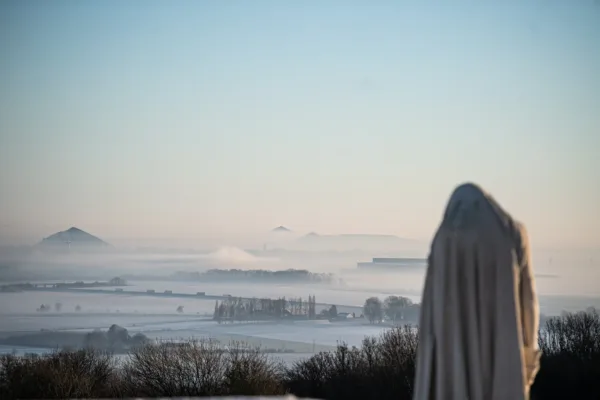
As for so many of the towns of the Pas-de-Calais region, Béthune, just an hour’s drive from the port of Calais, is shaped and marked by great historic events, industrial landscapes, and fine architecture. This area of northern France has been fought over for centuries, culminating in the two momentous and destructive 20th-century wars, to which the numerous memorials and graves pay such stark testimony to. The area’s subterranean world, with the richest coalfields in France, drove the nation’s own industrial revolution, scarring the landscape in the process whilst building a growing whole communities of workers, whose fortunes ebbed and flowed as world events consumed them and industries came and went.

Practical information
-
Address: 3 Rue Aristide Briand, 62400 Béthune
-
Phone: + 33 (0)3 21 52 50 00
-
Opening hours
- Monday: 9.30 am–12.30 pm & 2.00 pm–6.00 pm
- Tuesday: 2.00 pm–6.00 pm
- Wednesday to Saturday: 9.30 am–12.30 pm & 2.00 pm–6.00 pm
- Sunday: Closed
-
Our shared history
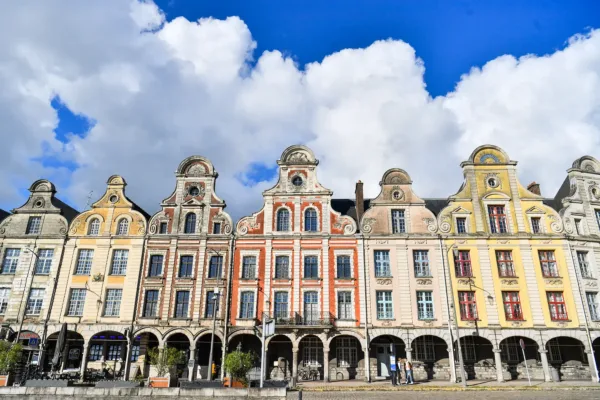
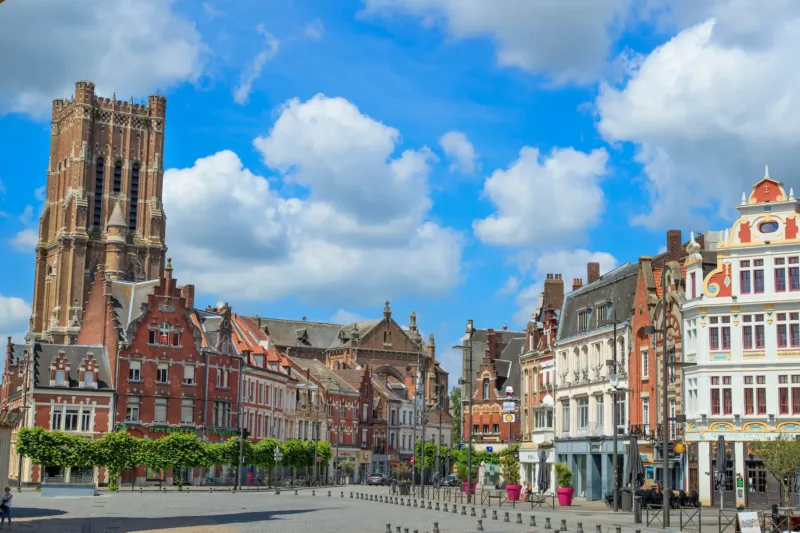
The catastrophic events of WW1 and WW2 are, perhaps ironically, responsible for the stunning architecture of the town centre, rebuilt in flamboyant art deco and Flemish styles.
And the vast coalfields, and the miners that toiled in them, created the environment, and resources, to drive huge social change. Bringing the neat industrial villages and towns, so resemblant of the British worker villages that also sprang up during the 19th century, and opulent structures to improve and enhance workers’ lives.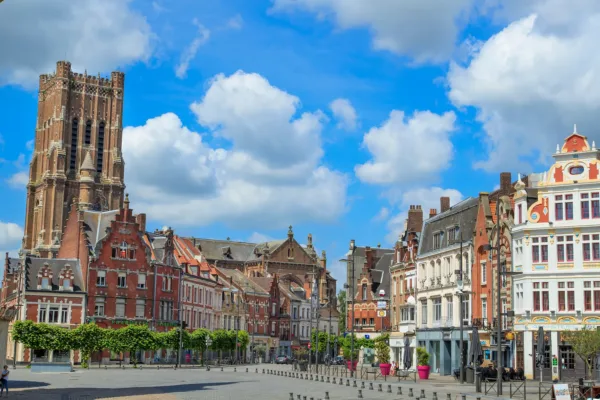 © Anne-Sophie Flament
-
Wartime Béthune
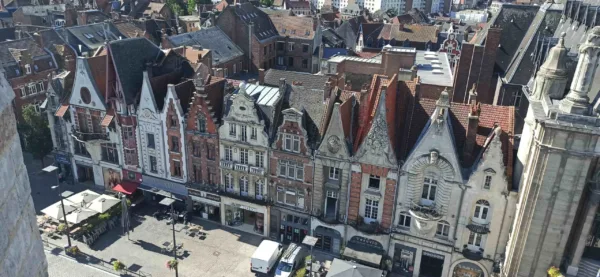
Any visitor to Béthune will be moved by the town’s recent history. The legacy of The Great War and World War 2 is everywhere. During the First War the town was a major railway junction, the location for several hospitals and casualty clearing stations, and base for a huge garrison of Commonwealth soldiers, particularly from India and Canada. The town is marked by the destruction of the numerous shells that fell on it between 1914 and 1918, suffering badly in 1918 as the front-line moved backwards and forwards. The medieval belfry, now a Unesco World Heritage Site, was badly damaged and had to be restored. Today, from its top, you can enjoy a breathtaking view of the city, rebuilt in art deco style, and further afield to as far as the Belgian border. In the town centre, you will find a signposted walking route that takes you to the many locations associated with the British and Commonwealth presence. The 4.2 km-long urban route starts from the belfry, and leads to the hospitals, barracks, churches, and monuments that bear witness to the presence of the Allies.
 © ©M.Torond Pas-de-Calais Tourisme
-
Neuve Chapelle and the Indian Memorial
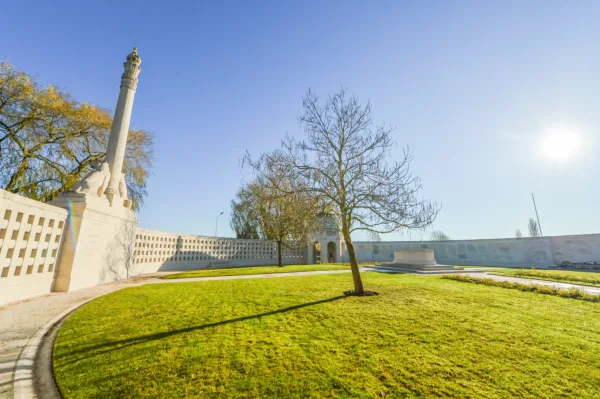
A few kilometres outside Béthune, the Indian Memorial in Neuve Chapelle is a Commonwealth monument with remarkable Indian-inspired architecture. On its curved walls are carved the names of the 4,700 Indian soldiers and labourers with no known grave, and in the centre, flanked by two tigers, a column is surmounted by the Star of India, a Lotus flower, and the Imperial Crown. The cemetery is located here because of the losses the Indians suffered during the nearby Battle of Neuve Chapelle, where in March 1915, over 3,000 Sikhs, Gurkhas, and Punjabis lost their lives.
 © Yannick Cadart-CD 62
-
The forgotten front
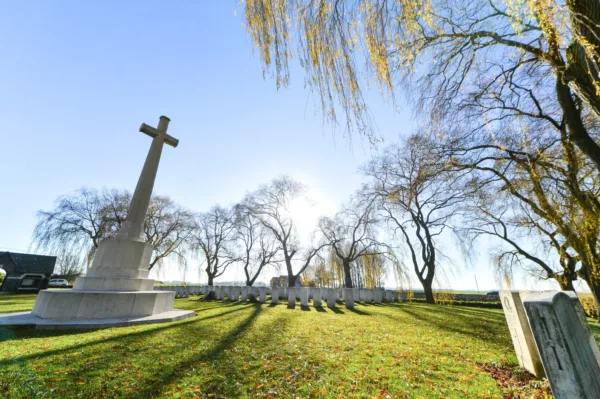
Béthune, away from the front, is a garrison town. Often referred to as the forgotten front, daily life in Bethune was nevertheless disrupted, with thousands of wounded troops brought back from the front to convalesce in the town. Hospitals were set up in the town’s colleges, and British ambulances brought back wounded soldiers from lesser-known battles such as Festubert and Givenchy-lès-la-Bassée. Having defended the town for four years, there are today many cemeteries and monuments around the town.
Rebuilt after the end of hostilities, Béthune again suffered badly in May 1940 as the advancing Germans drove the French forces and the BEF back to Dunkirk. The notably fierce defence of Béthune caused great destruction and led to one of the War’s most notorious massacres, when German troopsshot almost 100 prisoners of war from the Royal Norfolk Regiment at a farm in nearby Le Paradis. Today various memorials mark this dark event.
 © Yannick Cadart-CD62
-
Visit the Grand Place of Béthune
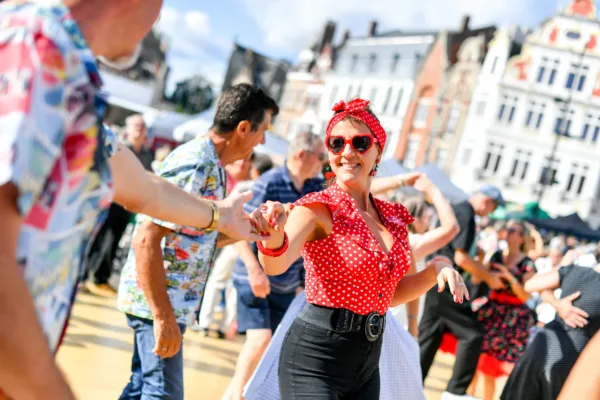
The starting point for any visit to Béthune is its stunning central square, the Grand Place. Relax on the terrace of a café – of which there are many! – and take in the flamboyant facades of the houses. Entirely rebuilt in the art deco style between 1923 to 1927, Béthune offers a fascinating architectural mix around its Grand Place, sometimes of brick, sometimes of stone, you will be constantly surprised by this neo-regional architecture, rich in colour and eclectic adornment. The town is blessed with the – typical of the region – bars and brasseries, cheese and chocolate shops, delicatessens, breweries and patisseries that make spending time here so agréable! At the end of August, don’t miss the vibrant Béthune Rétro festival. With concerts, memorabilia, food and drink (mais oui!), and displays, this rockabilly-themed event brings classic cars, dancing, and celebration to the whole of Béthune.
 © Yannick Cadart-CD 62
-
Climb to the top of the Belfry
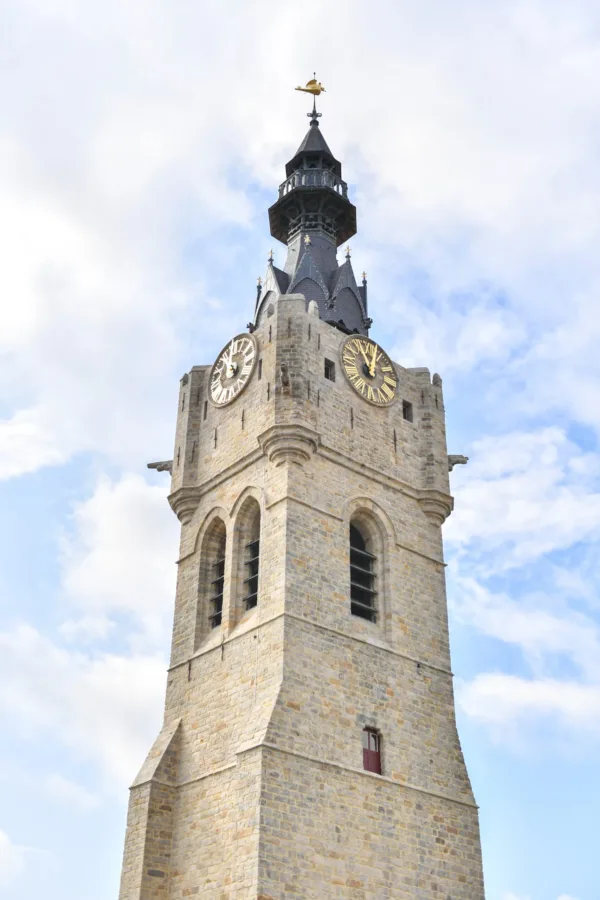
The fully restored belfry reopened in September 2021. Climb the steps to the top of this iconic city monument. The belfry is Unesco World Heritage listed, as are the other 23 listed belfries in the region. Dating from the Middle Ages, it was partially destroyed during The Great War when in 1918 the belfry and its carillon fell. Today, it has regained its spectacular appearance, this symbol of communal freedom built in 1346 is the beating heart of the city. Its bells ringing out their melodies every 30 minutes. Be sure to listen out for the lullaby song ‘min p’tit quinquin’ (my little darling in local ch’ti language).
 © Yannick Cadart CD 62
-
Art surprises in Béthune’s Bank of France
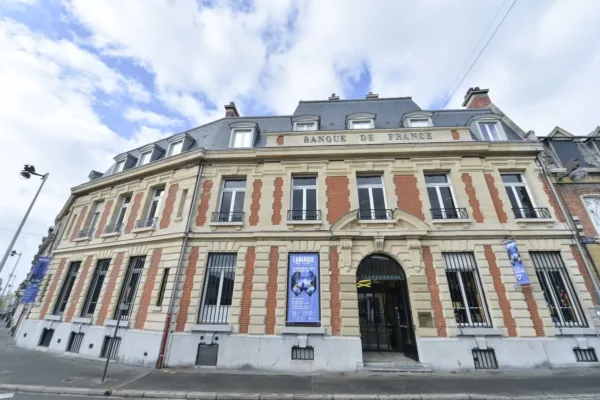
A playground for ultra-creative artists, the former Banque de France is now a cultural centre open to contemporary art. Artists are given free rein to transform the rooms of this once-secret lair into their own personal creations: vaults, counters, offices, and the director’s apartment…. There are no boundaries to creativity. Painting, video, sculpture, installations; let yourself be (very) surprised.
 © Yannick cadart-CD62
-
La Cité des Électriciens
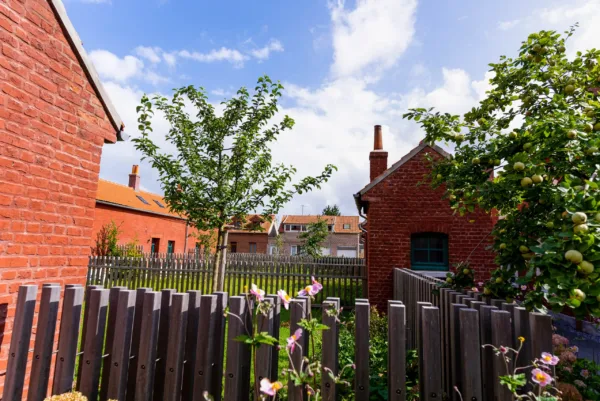
As the vast coalfields were mined, and industries sprang up to serve them or be supplied by them, the new workers need to be housed and entertained, health needs to improve and citizen’s expectations from life rise inexorably. In Bruay la Buissière, the oldest remaining mining town in the region, a remarkable rehabilitation for one of these ‘worker towns’ has occurred, with its transformation into a visitor centre, an artist’s residence and a gîte. The Cité des Électriciens (The Electricians City), an archetype of the mining city of the nineteenth century, is surely the near French cousin of notable British worker towns such as Port Sunlight, Bourneville and Saltaire. One of the key locations for the Danny Boon’s blockbuster film ‘Bienvenue chez les Ch’tis’ the visitor centre tells you about the mining heritage and the men and women who shaped this exceptional landscape.
 © Les coflocs
-
A splendid art deco swimming pool
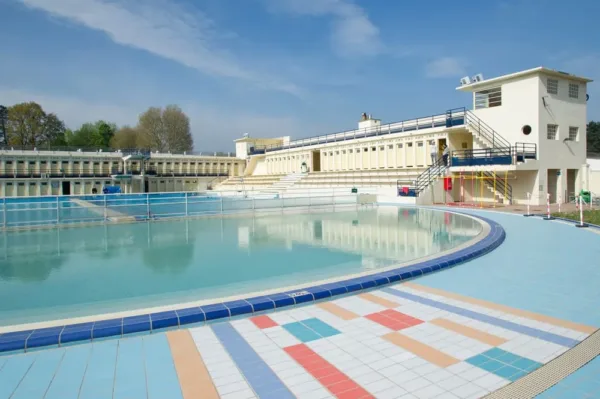
Tired workers, many with raised expectations and higher wages, needed to be entertained. And the mine and factory managers need their men to keep fit. Across the region parks, hospitals, green spaces, and leisure facilities are built. The Piscine de Bruay-La-Buissière, close to the electrician’s city, is an art deco masterpiece of an open aired swimming pool. Built in the 1930s, with mining money, and in line with the social ideas of the Popular Front, notice the ranks of changing rooms, the towers, the glistening mosaics. The warm and inviting water of the huge main pool. The white walls and tiles reflecting the sun… on some days!
If the weather permits, a trip, or rather a plunge into, this art deco swimming pool is a refreshing way to explore industrial history. To imagine the joy of the working-class families able to benefit from such a grand pool; a testament and monument to their toil. Two pools are available for swimmers, with water heated to 29°. An exceptional setting for a few hours of paddling.
 © Jean-Michel André