Blockhaus d’Éperlecques: discover a remarkable V1 and V2 site
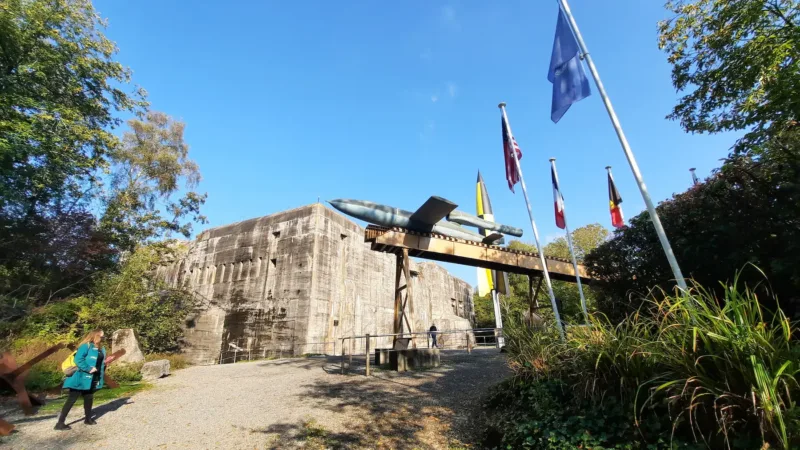
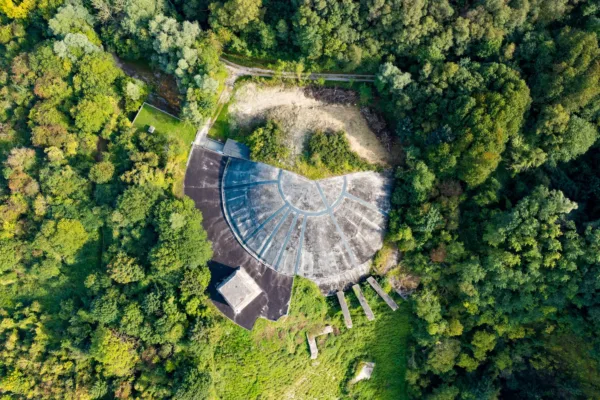
The Blockhaus at Eperlecques lies hidden away in the forest, around 13km northwest of Saint-Omer. A vast concrete bunker linked by rail to Saint-Omer and Calais, it was built in 1943 as a combined assembly plant and launch site for Hitler’s lethal V2 rocket, until following Allied bombing this activity was moved to La Coupole. There are good, informative displays and audio-visual presentations, and the setting has been left deliberately raw – think cold, harsh concrete – making a visit a fascinating but sobering experience.
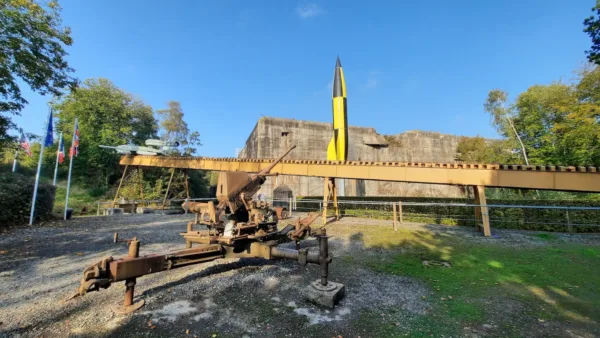
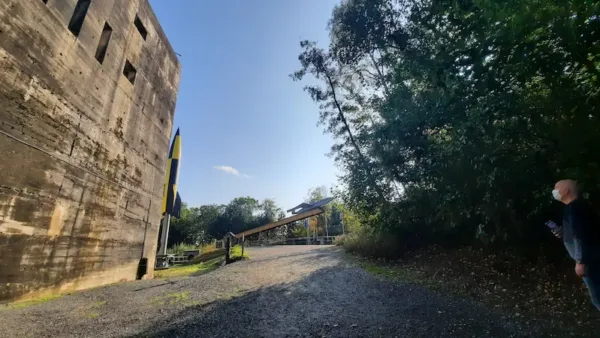
Unlike a conventional museum, much of the experience takes place around the original bunker and its wooded surroundings. The massive concrete walls, wartime remains and displays devoted to the V1 and V2 help reveal the extraordinary scale of the project.
Practical information :
-
Adress : Rue des Sarts, 62910 Éperlecques
-
Phone : =33 (0)3 21 88 44 22
-
Hours of operation : open from March to October :
Every day 7/7 (Sundays and holidays included).
-
A huge V2 base hidden in the forest
Construction began in March 1943. Éperlecques had several advantages: it stood close to the railway linking Saint-Omer and Calais, had access to a navigable canal and road network, and was surrounded by forest.
The original plans were ambitious. The complex was designed to assemble and prepare V2 rockets, produce the liquid oxygen they required and enable rockets to be moved out ready for launch. The planned building measured around 216 metres long, 95 metres wide and 33 metres high.
-
Bombing changed the fate of Éperlecques
The site was identified by Allied reconnaissance and came under attack before it could become operational. The first major bombing took place on 27 August 1943, when 185 American B-17 bombers attacked the construction site. In total, Éperlecques was bombed 25 times between August 1943 and August 1944.
The attacks forced major changes to the project. Part of the V2 operation was subsequently transferred to the underground complex at La Coupole near Saint-Omer, while work continued at Éperlecques with a greater focus on the production of liquid oxygen.
 © Benoît Diéval Pas de Calais Tourisme
-
Look for the traces left by the bombing
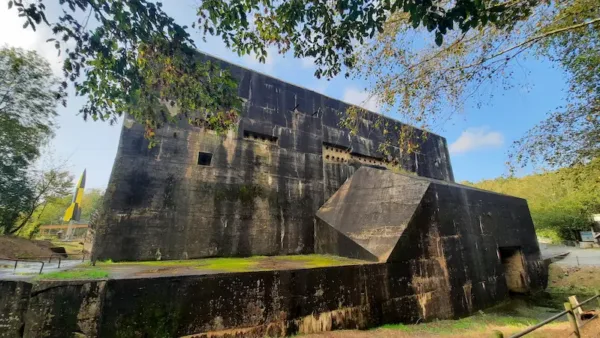
The bunker itself tells part of the story. Visitors can still see evidence of the attempts to destroy it, including the impact of a Tallboy bomb on the northern section of the structure.
These enormous bombs were designed to penetrate heavily protected targets. Tallboys were dropped on Éperlecques during raids in June and July 1944, contributing to the eventual abandonment of the project.
 © Benoît Diéval Pas de Calais Tourisme