Vimy Ridge, the hill where a nation stood up in April 1917
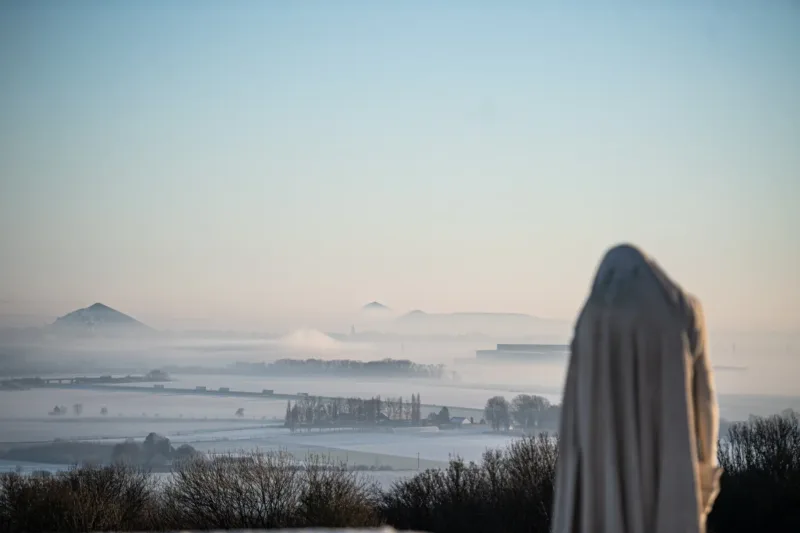
Eleven kilometres north of Arras, a long green swell of land hides one of the most moving battlefields in Europe. Germany held Vimy from 1914, and neither France nor Britain managed to take it back, until four Canadian divisions did, in just four days, in April 1917. Today the site welcomes visitors free of charge all year round, with its twin-pillared memorial, restored trenches and tunnels that still tell the story.
A hill that keeps its secrets
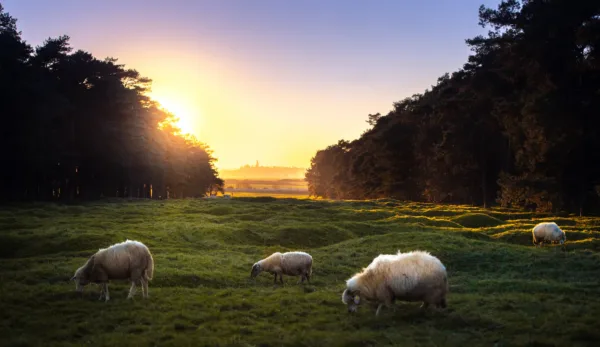
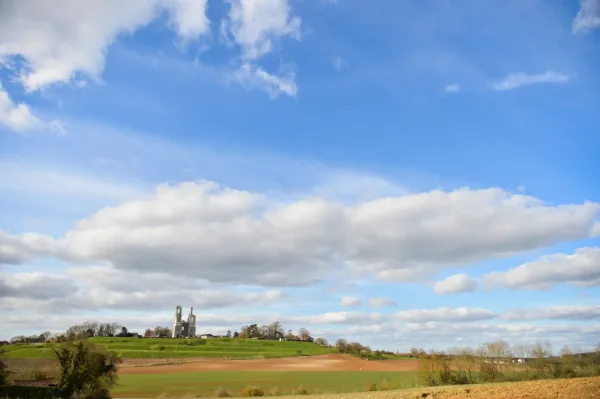
From a distance, Vimy Ridge doesn’t look like much. A long rise of ground above the Douai Plain, sheep grazing quietly, the kind of place you might drive past without a second glance. Then you notice the craters. Everywhere. Shallow grassed-over bowls that never quite let the ground flatten out, some ten metres wide. The earth still carries the memory of what happened here.
Three years of stalemate, then four days that changed everything
German forces took the ridge in October 1914 and turned it into a fortress: tunnels, concrete bunkers, artillery batteries pointing in every direction. From up there, they could see it all: the Allied positions, the roads, the supply lines. France tried to take it back in 1915 and lost 150,000 men. Britain tried again in 1916 and failed too. The Canadians approached the ridge differently.
The preparation nobody talks about
Behind the front lines, the Canadian Corps built a full-scale replica of the ridge: every trench, every turn, every bunker. Soldiers walked it again and again until they knew it by heart. Beneath the real hill, engineers dug more than ten kilometres of tunnels, a secret network that let entire battalions move forward without ever showing above ground. On the night of 8 April 1917, over 100,000 soldiers were already waiting underground, metres from the German lines, unseen. At dawn on 9 April, a creeping artillery barrage advanced at exactly the same pace as the infantry, just 100 metres ahead of the troops: coordination on a scale that had never been attempted before. The ridge fell in three days.
Key dates
-
Date What happened 9 April 1917, 5:30 AM Four Canadian divisions assault the ridge simultaneously. Easter Monday, snow falling 9 April, afternoon Three of four ridge objectives captured. German commanders describe the advance as unstoppable 10–11 April Fighting continues on the northern section, the most heavily fortified part of the ridge 12 April 1917 Full ridge secured. First time Vimy Ridge had been taken by Allied forces in three years of attempts
The cost behind the victory
That speed came at a heavy price: more than 10,600 Canadian casualties in 72 hours, including 3,598 killed between 9 and 12 April 1917 (source: Veterans Affairs Canada). Four Canadian divisions, drawn from every province, from Nova Scotia to British Columbia, fought together for the first time under a single command.
Practical information :
-
Address : Route départementale 55
62580 VIMY -
Hours of operation :
(1 April – 30 September)
Mon: 12 pm–6 pm
Tue–Sun: 10 am–6 pmAdmission: Free, no booking required.
-
Canada Bereft, the face of the memorial
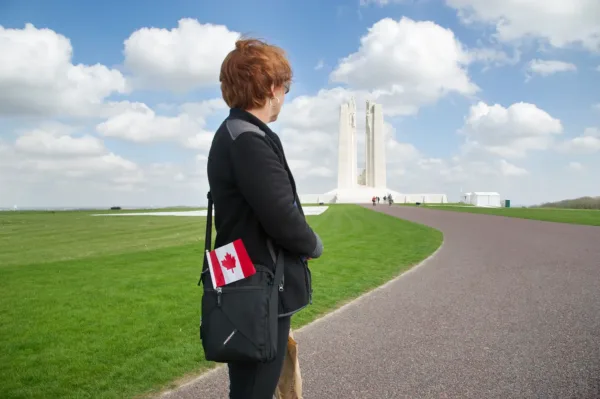
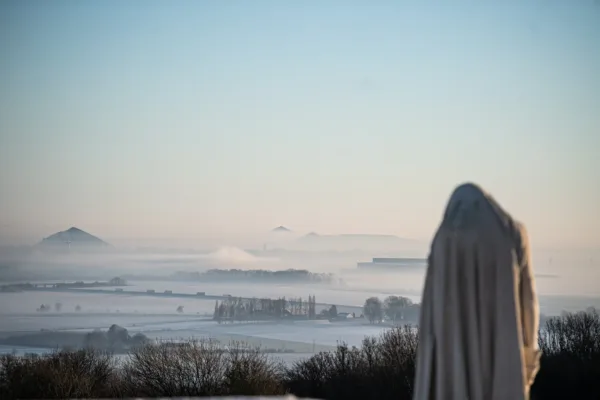
The Canadian National Vimy Memorial began as a dream, quite literally: architect Walter Allward described being carried onto a battlefield where thousands of Canadians rose from the ground. Built between 1925 and 1936, it carries two white limestone pillars, one for Canada, one for France. On a clear day, the strip of sky between them is meant to read as the Atlantic Ocean. Twenty allegorical figures surround the structure; the most affecting is a hooded young woman known as Canada Bereft, facing east, as she has for nearly a century. Carved into the base: 11,285 names of Canadian soldiers who died in France with no known grave.
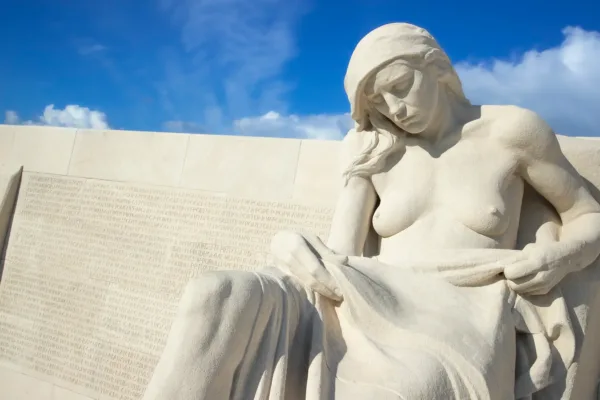 © Anne Sophie Flament
-
The ground itself, an open-air memorial
In the forest around the monument, the zigzag trench lines from 1917 are still there, not reconstructed, simply left exactly where they were dug. Shell craters still pit the earth in every direction. The whole site has been officially declared a graveyard: human remains still lie beneath it, and the trees were planted partly to stop anyone digging. Nothing here sits behind glass.
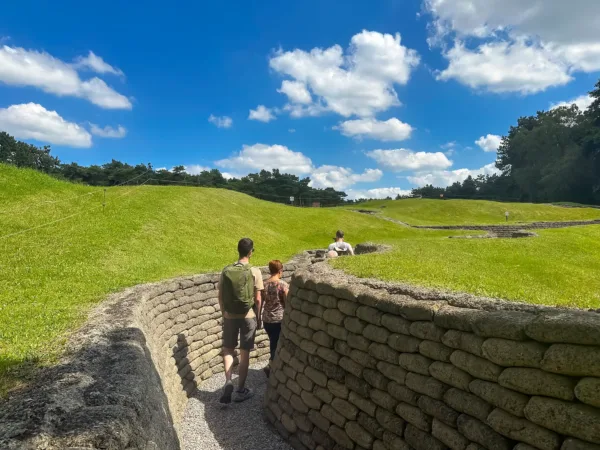 © Anne Sophie Flament
-
Visiting Vimy Ridge, free and unforgettable
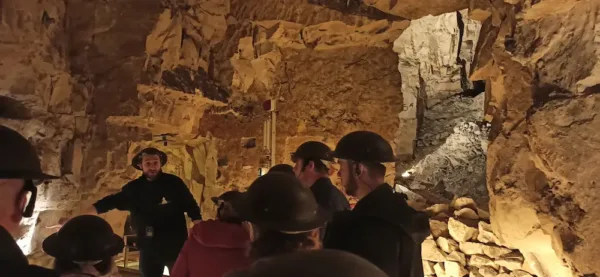
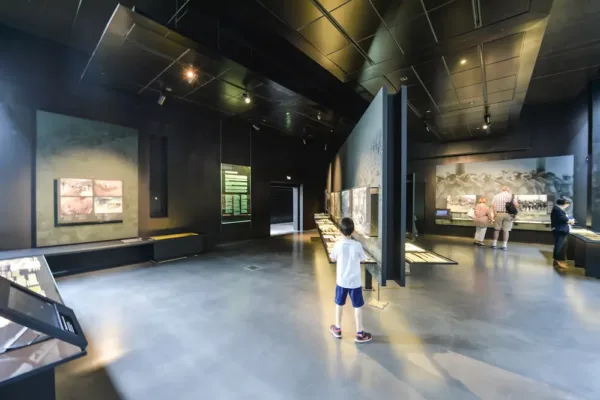
The Interpretation Centre is open almost year-round (with a brief winter closure) and runs free guided tours every 30 minutes in season, both of the Grange Tunnel and the trenches. What sets them apart: the guides aren’t heritage professionals but Canadian students who come to live on site for four months, sharing the story at roughly the age the soldiers were themselves. Start at the Interpretation Centre, book the Grange Tunnel tour on arrival, then walk the trenches (allow at least 45 minutes), and save the memorial for last.
Good to know
- Access and visits: free all year round, no booking needed for the memorial, trenches or forest walk
- Grange Tunnel: free guided tour, departures every 30 minutes in season, at the Interpretation Centre desk
- Wear closed shoes: the ground around the trenches and tunnel is uneven
- Best time to visit: April, around the anniversary of the battle, and autumn; July and August are busier
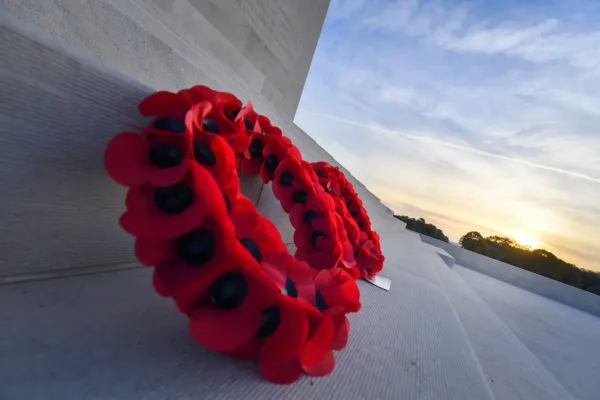 © Yannick Cadart-CD62
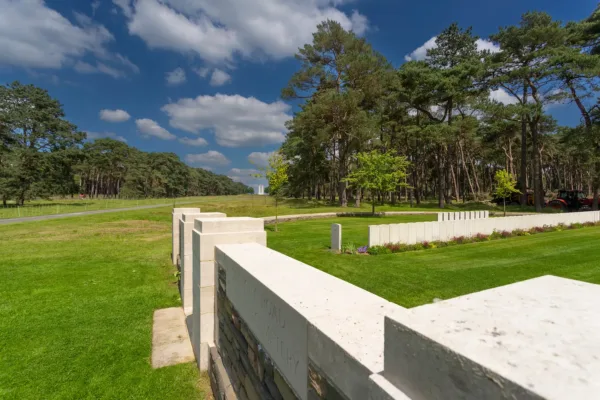


The day trip that actually works
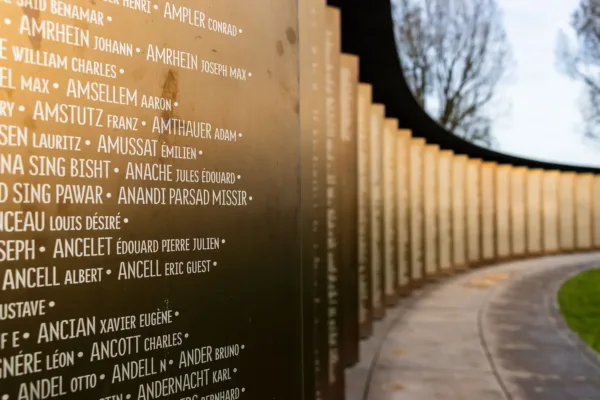
Vimy Ridge, Notre-Dame de Lorette and Carrière Wellington in Arras sit within 20 minutes of each other by car. A day trip from Calais can cover all three without rushing, on the condition that you arrive at Vimy by 10 AM and spend at least 2–3 hours on site before moving on.
- Morning : Vimy Ridge, Interpretation Centre, Grange Tunnel tour, trench walk, memorial (2–3 hours minimum)
- Late morning : Notre-Dame de Lorette and Ring of Remembrance , 45 minutes, genuinely affecting, often empty
- Afternoon : Carrière Wellington underground tour, Arras, 1 to 1.5 hours, bookable on the day
- Late afternoon : drive back to Calais or Boulogne for the crossing under an hour