Discover Pottery Making in Desvres, a 300-Year-Old Ceramics Town
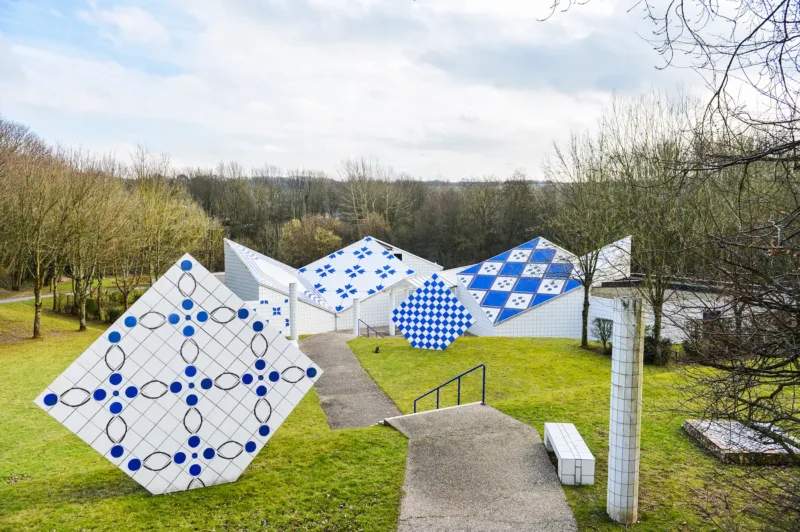
Desvres, a town of around 5,000 people some 15 kilometres from Boulogne-sur-Mer, has been at the heart of French earthenware pottery for over 300 years. Its Musée de la Céramique tells that story through nearly 700 pieces, a reconstructed 1900s café decorated in original earthenware panels, and techniques still practised by local ceramicists today.
Earthenware and Ceramics: What’s the Difference?
Ceramics is a general term for anything taken from the earth and passed through a kiln, covering everything from porcelain to tiles and glassware. Earthenware pottery is part of the ceramics family, but it refers specifically to items covered in a glaze or enamel, generally white in colour, the technique that made Desvres famous.
Practical information :
-
Address : Musée de la Céramique, Rue Jean Macé, 62240 Desvres
-
Phone : +33 (0)3 21 83 23 23
-
Hours of operation :
-
- Opening hours, October to March: Tuesday to Friday, 10am to 12.30pm and 2pm to 6pm; Saturday, Sunday and public holidays, 2pm to 6pm
- Opening hours, April to September: Tuesday to Saturday, 10am to 12.30pm and 2pm to 6pm; Sunday and public holidays, 2pm to 6pm
- Opening hours, July and August: Tuesday to Saturday, 10am to 6pm non-stop; Sunday and public holidays, 2pm to 6pm
- Full price: €6
- Reduced price: €4 for ages 8 to 18, students and jobseekers
-
-
A Golden Age of Earthenware Pottery in Desvres
Upon arrival, opening the museum’s door makes it immediately clear that this commune enjoyed a veritable Golden Age thanks to its principal savoir-faire: the production of earthenware pottery.
The rise of earthenware in Desvres began with the first factory, founded in the late 17th century by a local notary. Desvres quickly became specialised in this famous technique. Rather than developing their own particular style, Desvres’ factories were capable of recreating the motifs of other major production centres, such as Delft or Lille, in a more popular vein.
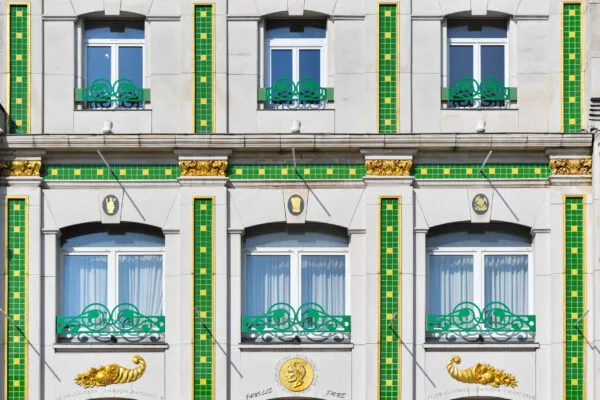
The 20th century marked the Golden Age of local manufacture, thanks to major companies like Fourmaintraux, Géo Martel and Masse. What really forged their reputation was not art for its own sake, but a commercial approach to art. Tableware, plates and dishes were manufactured in huge quantities, particularly enamelled tin tiles that took Desvres into the industrial age. These were exported across the globe, found as far afield as Latin America.
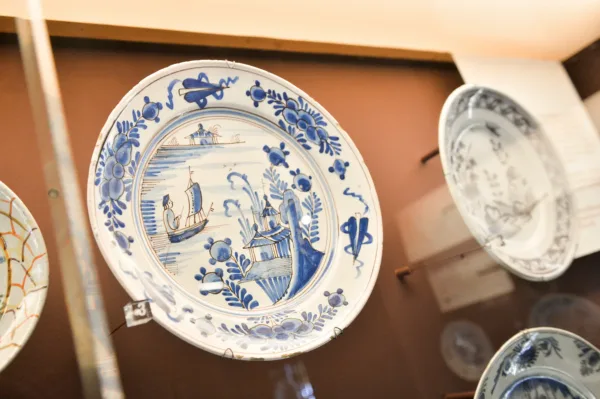 © Yannick Cadart-CD62
-
Step Inside the Musée de la Céramique
The museum’s collections retrace more than three centuries of history. The visit begins with a journey through time and a reconstruction of the Elysée, a café-restaurant from 1900. The museum has recovered the earthenware panels that once decorated its walls and brought new life to this establishment, giving visitors a genuine sense of how earthenware shaped everyday life in the town.
Beyond the permanent collection, the museum runs an interactive trail with videos, games and first-hand accounts from local workers and faïenciers, along with temporary exhibitions, guided tours and pottery workshops throughout the year. Audio guides are available in English and Dutch.
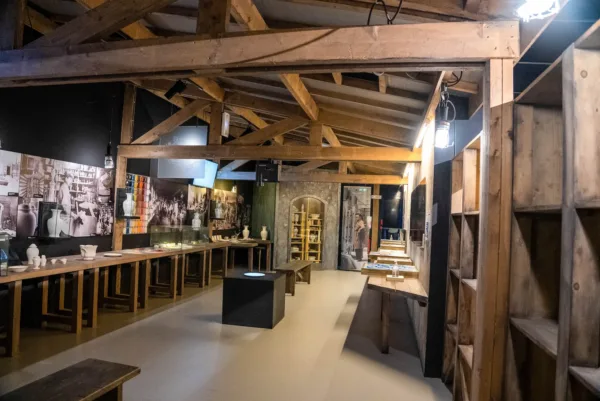 © Les Coflocs
Frequently Asked Questions
-
What is the Musée de la Céramique in Desvres?
It’s a museum dedicated to over 300 years of earthenware pottery and ceramics production in Desvres, a town near Boulogne-sur-Mer that was once one of France’s major centres of earthenware manufacture. The museum displays nearly 700 pieces alongside a reconstructed 1900s café decorated in original earthenware panels.
-
What’s the difference between earthenware and ceramics?
Ceramics is the general term for anything made from clay and fired in a kiln, including porcelain, tiles and glassware. Earthenware is a specific type of ceramic covered in a glaze or enamel, generally white, and it’s the technique that made Desvres famous.
-
Why is Desvres famous for pottery?
Desvres has produced earthenware since the late 17th century, when a local notary founded its first factory. The town’s 20th-century factories, including Fourmaintraux, Géo Martel and Masse, took a commercial approach to earthenware, mass-producing tableware and enamelled tin tiles that were exported as far as Latin America.
-
How much does it cost to visit the Musée de la Céramique?
Full price is €6, with a reduced rate of €4 for ages 8 to 18, students and jobseekers. Entry is free for children under 8.
-
What are the opening hours?
Hours vary by season, with longer non-stop hours in July and August. The museum is closed on Mondays, 25th December and 1st January. Check the museum’s website for exact seasonal times before visiting.
-
How far is Desvres from Boulogne-sur-Mer or Calais?
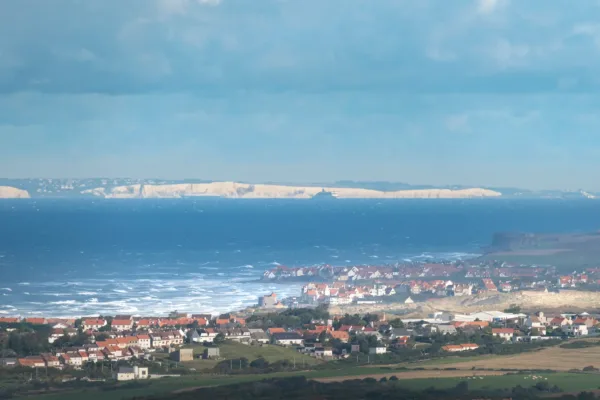
Desvres is around 15 kilometres from Boulogne-sur-Mer, roughly a 20-minute drive. From Calais, allow around 45 minutes to an hour by car.
-
Is the museum suitable for families?
Yes. The museum’s interactive trail includes videos, games and hands-on elements aimed at a family audience, and pottery workshops are available for children and adults throughout the year.