Todt Battery
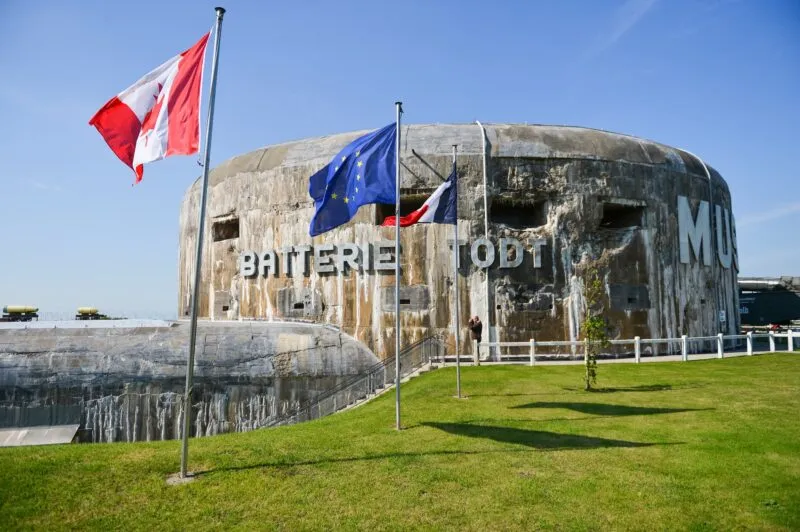
Near the windswept cliffs of Cap Gris-Nez, the Todt Battery is one of the most striking remains of the Atlantic Wall on the Opal Coast. Its enormous concrete bunkers show how German forces fortified this stretch of coastline during the Second World War. For British visitors, the site brings home just how close the conflict was across the Channel.
A giant Atlantic Wall fortress overlooking the Channel
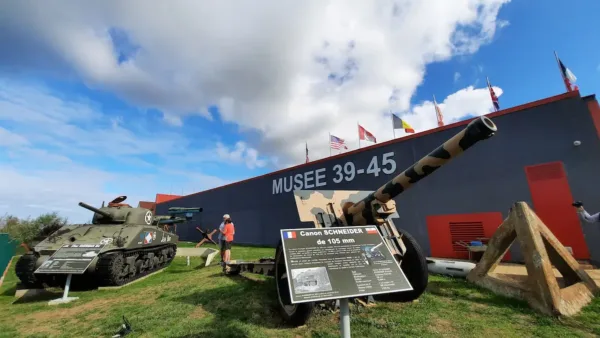
Today, the Atlantic Wall Museum near Audinghen occupies one of the battery’s original gun casemates. Built by Organisation Todt during the German occupation of France, the battery formed part of the coastal defences between Calais and Boulogne-sur-Mer. Its four 380 mm naval guns could fire shells more than 50 kilometres, far enough to reach the coast of Kent.
Practical information :
-
Adress : Route du Musée
62 179 Audinghen
-
Phone : + 33(0) 9 66 91 97 33
-
Hours of operation :
- Tuesday to Sunday: 10:00am to 6:00pm (last admission at 5:00pm)
- Closed on Mondays
Summer closure:
From 31 August to 4 September 2026 inclusiveAnnual closure:
From Monday 9 November 2026 to Friday 12 February 2027 inclusive
-
A direct connection with Britain during the war
For British tourists, the location has an immediate sense of connection.
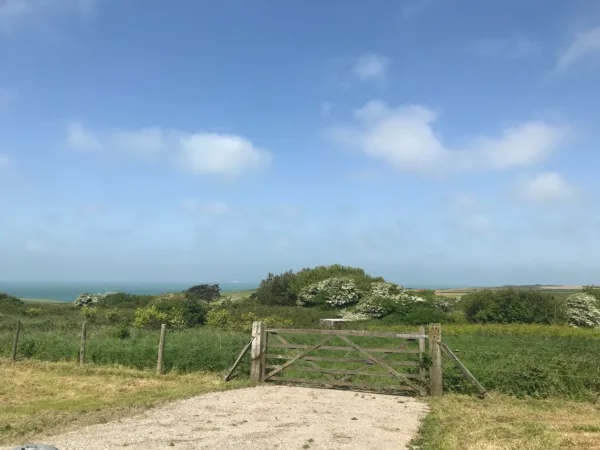
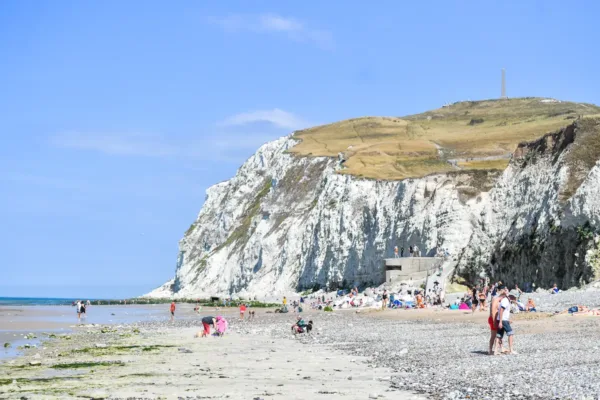
On clear days, the white cliffs of Dover are visible from Cap Gris-Nez, helping visitors appreciate just how narrow the Channel becomes at this point.
During the war, the guns of Batterie Todt regularly fired across the Dover Strait, contributing to what became known as “Hellfire Corner” — the dangerous stretch of sea targeted by long-range artillery duels between Britain and occupied France.
The battery also played a role during the famous “Channel Dash” of February 1942, when German warships raced through the English Channel under the protection of coastal guns.
 © Delphine Bartier
-
Inside the Museum of the Atlantic Wall
The scale of the site is extraordinary.
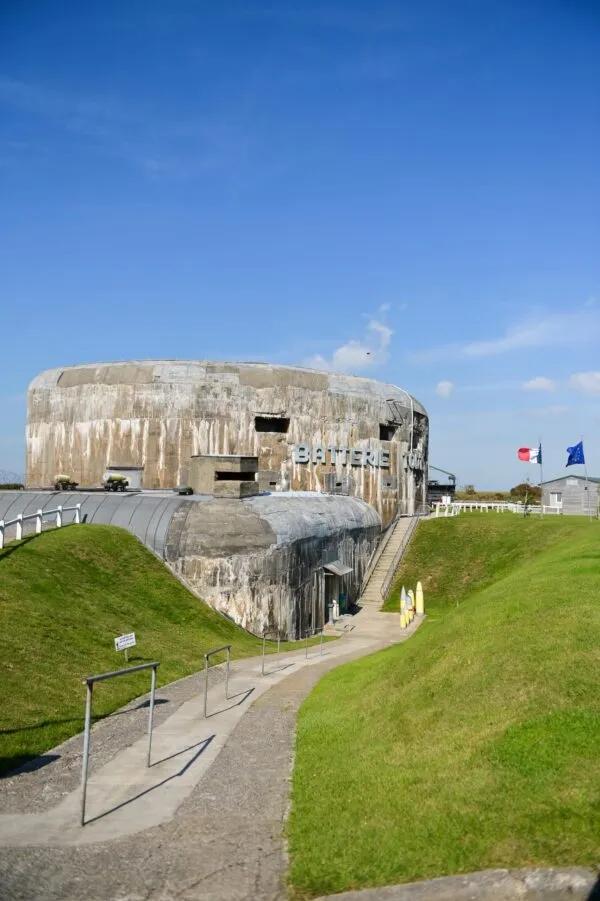
Each bunker was built with walls several metres thick, designed to withstand heavy bombing and naval shellfire.
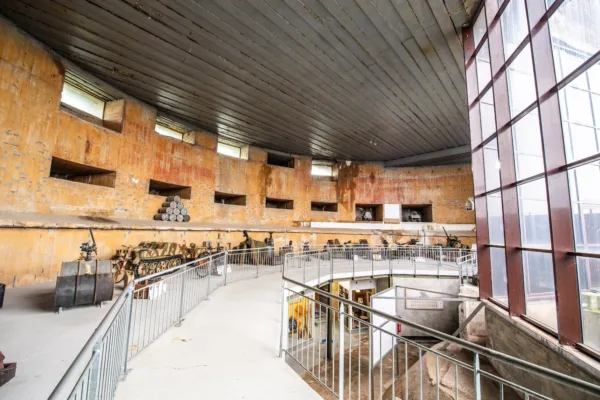
Inside the museum, visitors walk through the original chambers where ammunition, machinery and crews once operated beneath layers of reinforced concrete.
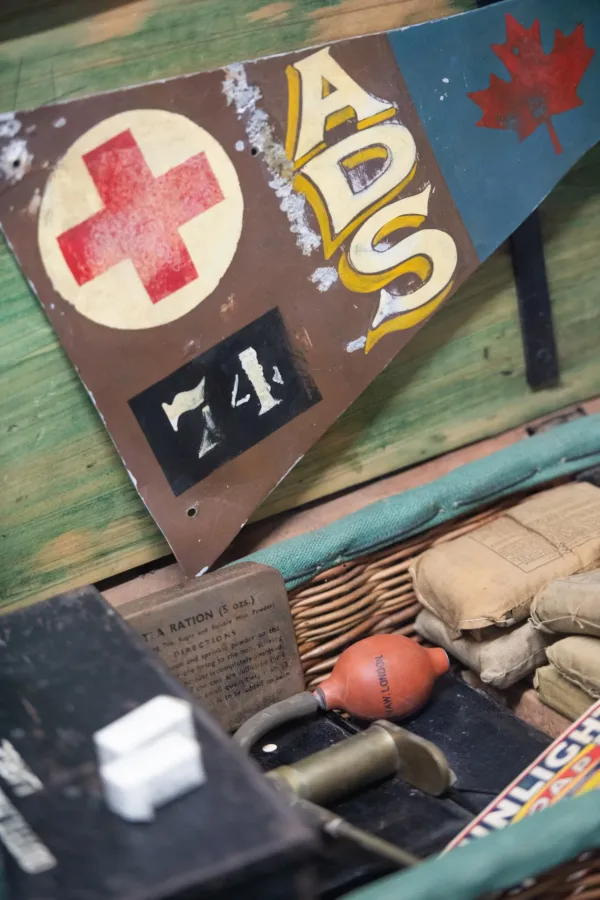
Exhibits include wartime uniforms, weapons, vehicles, propaganda posters and artefacts from both German and Allied forces, helping to tell the wider story of the Atlantic Wall and the occupation of northern France.
 © Yannick Cadart CD 62
-
The giant K5 railway gun
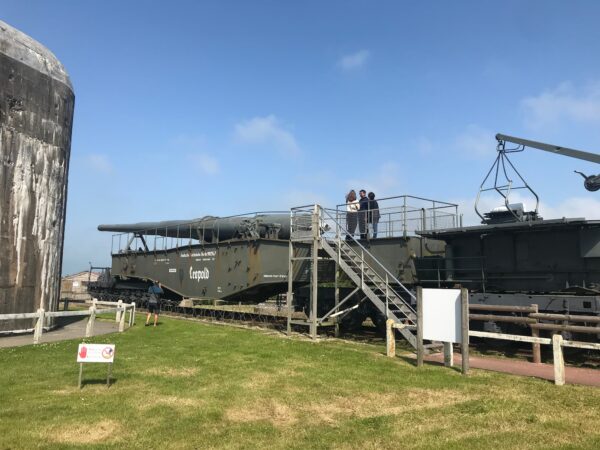
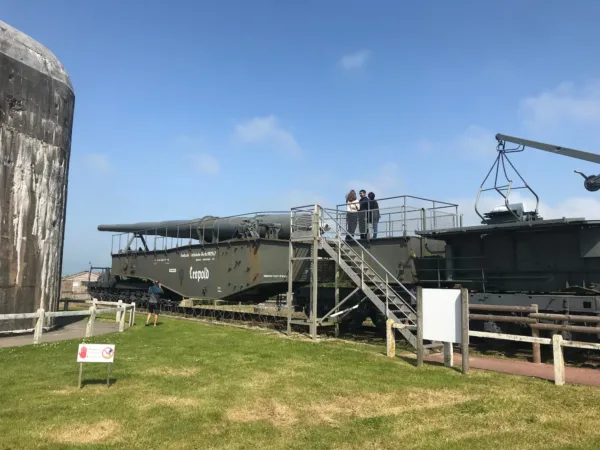
One of the museum’s highlights is the gigantic German K5 railway gun displayed outside — one of only a handful remaining in the world.
Its sheer size gives visitors a vivid sense of the enormous firepower concentrated along the Channel coast during the war.
Families and military history enthusiasts alike often describe the museum as one of the most memorable wartime attractions in the region because visitors can physically experience the scale of the fortifications rather than simply view them in photographs.
 © Delphine Bartier
-
The liberation of the Todt Battery
The battery was finally captured on 29 September 1944 during Operation Undergo, when Canadian troops of the 3rd Infantry Division stormed the Cap Gris-Nez defences following massive RAF bombing raids.
By then, the strategic importance of the Atlantic Wall had already begun to collapse after the Allied landings in Normandy, but the capture of the battery finally ended one of Germany’s last major coastal artillery threats against Britain.
 © Yannick Cadart CD 62
-
A major World War II site on the Opal Coast
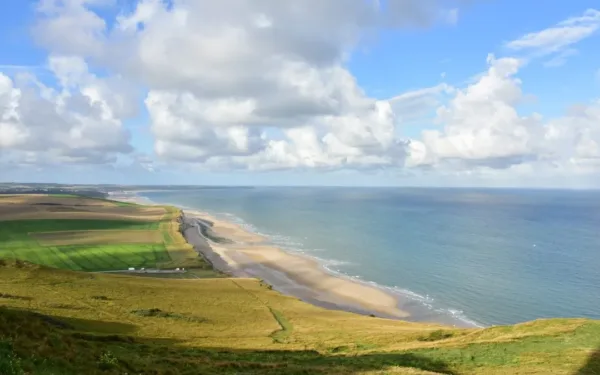
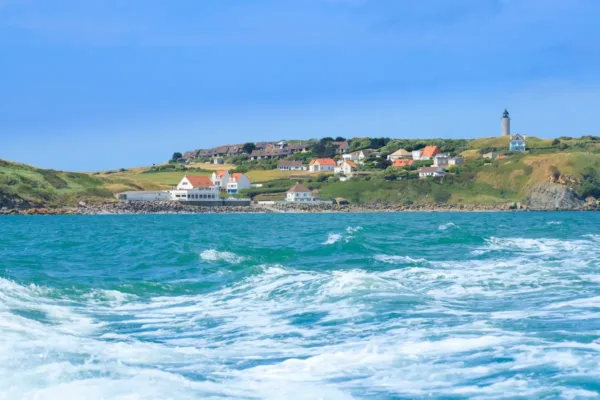
Set amid the spectacular scenery of the Opal Coast, the Todt Battery combines military history with one of the finest coastal landscapes in northern France.
For visitors exploring the wartime sites of Pas-de-Calais — including Mimoyecques, La Coupole and the beaches around Dunkirk — it provides an unforgettable insight into the heavily fortified frontier that once faced Britain across the Channel.
 © Yannick Cadart-CD62


Frequently Asked Questions about Todt Battery
-
What is the Todt Battery?
The Todt Battery, also known as Batterie Todt, was a major German coastal artillery battery built during the Second World War as part of Hitler’s Atlantic Wall. Located near Cap Gris-Nez on the Opal Coast, it was designed to fire across the English Channel towards Britain.
-
Where is the Todt Battery located?
The Todt Battery museum is located in Audinghen on the Opal Coast in northern France, between Calais and Boulogne-sur-Mer, close to Cap Gris-Nez.
-
Can you see England from the Todt Battery?
Yes. On clear days, visitors can see the white cliffs of Dover from nearby Cap Gris-Nez. The narrow distance across the Channel helps visitors understand why this area was strategically important during the war.
-
What can you see inside the Todt Battery museum?
Inside the Museum of the Atlantic Wall, visitors can explore original German bunkers, wartime rooms, military equipment, uniforms, weapons, propaganda posters and artefacts from both German and Allied forces.
-
What was the purpose of Batterie Todt during World War II?
Batterie Todt was built to defend the French coast and threaten Britain by controlling the Dover Strait. Its massive naval guns could fire shells across the Channel towards southern England.
-
How powerful were the guns at Batterie Todt?
The battery’s four giant 380 mm naval guns could fire shells more than 50 kilometres, reaching the Kent coastline in England.
-
What is the giant railway gun at the museum?
One of the museum’s highlights is the German K5 railway gun displayed outside the bunker complex. It is one of the few surviving examples in the world and gives visitors an idea of the enormous firepower used during the war.
-
Who captured the Todt Battery?
The Todt Battery was captured by Canadian troops of the 3rd Infantry Division on 29 September 1944 during Operation Undergo following heavy Allied bombing raids.
-
Is the Todt Battery worth visiting?
Yes. The Todt Battery is considered one of the most impressive World War II sites in northern France thanks to its enormous bunkers, dramatic coastal setting and immersive museum experience.
-
How long does it take to visit the Todt Battery museum?
Most visitors spend between 1.5 and 2.5 hours exploring the museum, outdoor displays and surrounding coastal viewpoints.
-
Is the Todt Battery suitable for families?
Yes. Families, history enthusiasts and visitors interested in military history often enjoy the museum because visitors can physically walk inside the giant bunkers and see large-scale wartime equipment up close.