Musée 39-45 Ambleteuse: One of France’s Best WW2 Museums
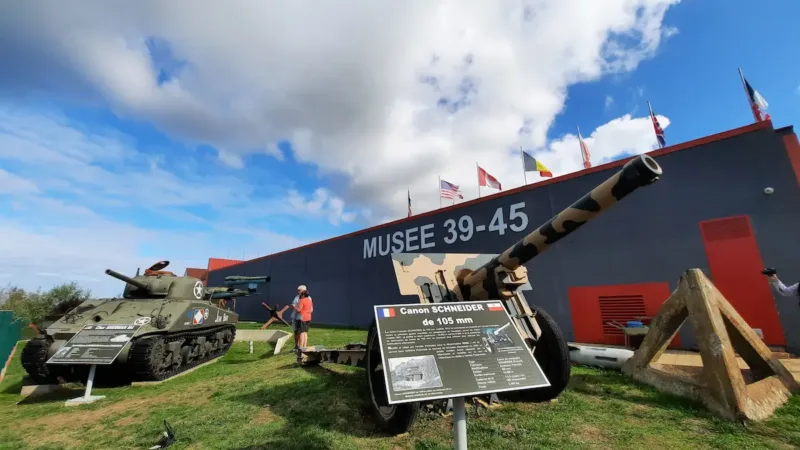
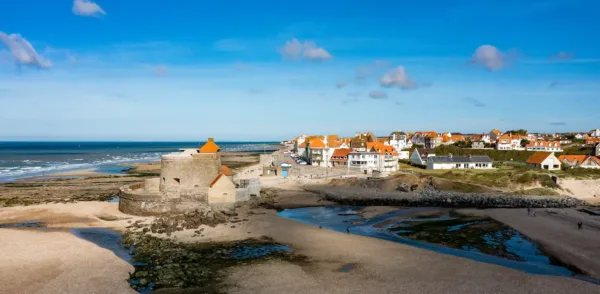
The WW2 museum in Ambleteuse, the Musée 39-45, tells the story of the Second World War from the invasion of Poland in 1939 to the surrender of Japan in 1945. Located on the Opal Coast, around 20 minutes from Boulogne-sur-Mer and 40 minutes from Calais by car, it makes a worthwhile stop for visitors arriving from the UK. After your visit, take time to explore the village of Ambleteuse or continue along the coast towards Cap Gris-Nez.
What Makes This Museum Worth a Visit
The Musée 39-45 is a private museum, built over more than 40 years of dedicated collecting by two local enthusiasts, Denis Barbe and Christophe Deschodt. Their obsession with detail shows at every turn.
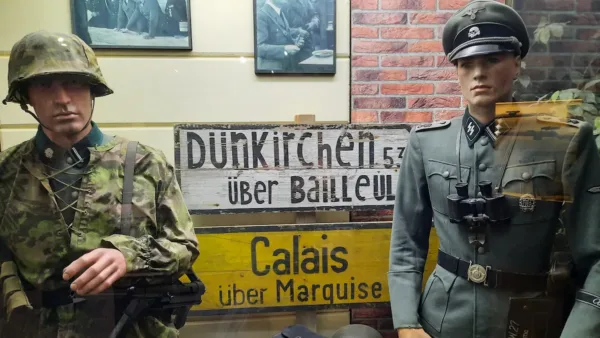
- – Over 120 fully dressed mannequins, each representing a specific soldier, unit and theatre of war
- – 800 square metres of immersive exhibitions, laid out in chronological order from 1939 to 1945
- – Considered by specialists to hold the richest collection of WW2 uniforms and military objects on public display in France
- – Labels and explanations written in four languages including English
- – A 1940s-style cinema room with archive film footage of the Normandy landings and the Liberation of Paris
French regional press and military history specialists have repeatedly described it as a model of its kind — more detailed than many larger national museums. Visitors include history enthusiasts from Germany, the UK, Australia, Japan and beyond.
Practical information :
-
Adress :2 Rue des Garennes, 62164 Ambleteuse, France
-
Phone :+33 (0)3 21 87 33 01
-
Hours of operation :Daily 10:00–18:00 (Feb–Oct, until 18:30 in July–Aug); closed January and December
-
What You’ll See Inside
The visit follows the chronology of the war, taking you from Europe’s early campaigns to the Pacific theatre. Each display case reconstructs a specific moment or front, with carefully sourced uniforms, weapons, insignia, documents and personal objects.
Key Highlights
- The Atlantic Wall bunker reconstruction — step inside a faithfully reproduced German blockhouse, complete with period equipment and atmosphere
- The Eastern Front under snow — a striking scene showing German and Soviet soldiers in winter conditions at Stalingrad
- A reconstructed Paris street under Occupation — three shops including a grocery selling ration-card goods, with authentic period products on display
- The Normandy landings — a richly detailed scene showing Allied and Axis forces side by side
- The Pacific War — including rare Japanese and Australian uniforms, and a kamikaze flight suit
- Rare artefacts: the Kieffer flag signed by survivors of the French Commando unit, a Goliath remote-controlled mine, and fragments recovered from the beaches of Dunkirk and Zuydcoote
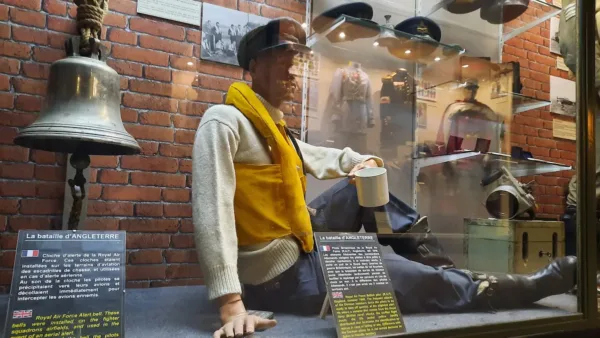 © Benoît Diéval
-
A Museum That Covers the Whole War
The Musée 39-45 is described by La Voix du Nord as the only museum in France to cover the entire Second World War — from the Polish campaign to Japan’s capitulation. Most WW2 museums in northern France focus solely on Normandy or Dunkirk. Here, you’ll also encounter the Norwegian expedition, the Resistance, the Italian campaign, the war in Russia and the battle for the Pacific.
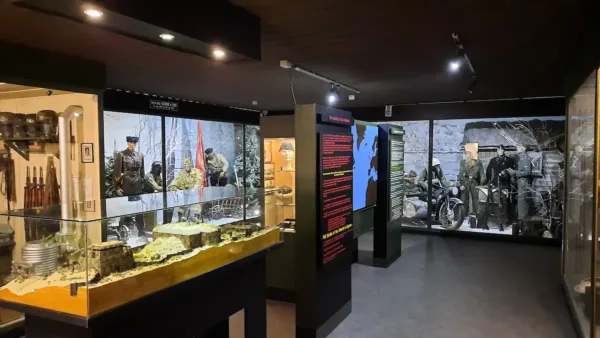 © B. Diéval Pas de Calais Tourisme
Getting There from the UK
-
Ambleteuse is perfectly placed for a stop on your way along the Opal Coast:
- From Calais (P&O / DFDS ferry or Eurotunnel): approximately 40 minutes by car via the D940 coastal road
- From Boulogne-sur-Mer: 15–20 minutes north along the coast road
- From Folkestone or Dover: under 90 minutes total including the crossing
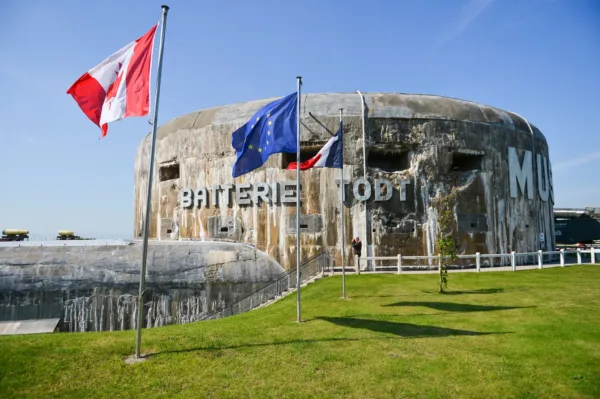
The museum sits on the main coastal road (CD940) at the entrance to Ambleteuse village — look for the row of flags outside the building as you arrive from Boulogne.
Frequently Asked Questions about WW2 Museum in Ambleteuse
-
Where is the WW2 Museum in Ambleteuse?
The Musée 39-45 is located at 2 Rue des Garennes in Ambleteuse, on the Opal Coast in the Pas-de-Calais region. It sits on the D940 coastal road between Boulogne-sur-Mer (15 km south) and Calais (35 km north).
-
How long does a visit to the Musée 39-45 take?
Most visitors spend between 1.5 and 2.5 hours in the museum. If you take a guided tour or watch the full archive film, plan for closer to 2.5 hours.
-
Is the Musée 39-45 suitable for children?
Yes — the museum is suitable for children aged 8 and over. The immersive scene reconstructions, the archive cinema and the pedagogical worksheets for school groups make it engaging for younger visitors. Under-6s enter free.
-
Is the Musée 39-45 open all year?
The museum is open daily from February to early November, 10:00–18:00 (18:30 in July and August). It is closed in January and December. Group visits can be arranged outside these dates — contact the museum directly.
-
How does the Musée 39-45 compare to other WW2 museums in northern France?
p>Unlike most WW2 museums in northern France — which focus on Normandy or Dunkirk — the Musée 39-45 covers the entire war, from the 1939 Polish campaign to the surrender of Japan in 1945. Specialists have described its uniform collection as the most complete visible in France, surpassing even the museum at Bayeux in depth and detail.
-
Is there a guided tour available in English?
Guided tours are available by reservation for groups of 10 or more. The museum’s explanatory labels are written in four languages including English. It is worth contacting the museum in advance to confirm English-language guide availability.
-
Can I visit Ambleteuse museum as a day trip from the UK?
Absolutely. Ambleteuse is less than 45 minutes from Calais by car. Combined with the Eurotunnel or a morning ferry crossing, it makes a very manageable day trip — especially if paired with a walk at Cap Gris-Nez or lunch in a nearby village.
-
What are the most unusual objects in the museum?
Among the standout pieces: the Kieffer flag, signed by survivors of the French Commando unit that landed on D-Day; a Goliath remote-controlled German mine; a kamikaze pilot’s flight suit; a hand-embroidered Wehrmacht regimental flag (one of only two known to exist in France); and a Japanese silk battle flag worn by soldiers for protection. Fragments retrieved from the beaches of Dunkirk and Zuydcoote are also on display.