Louvre-Lens: the Paris masterpiece collection without the Paris crowds
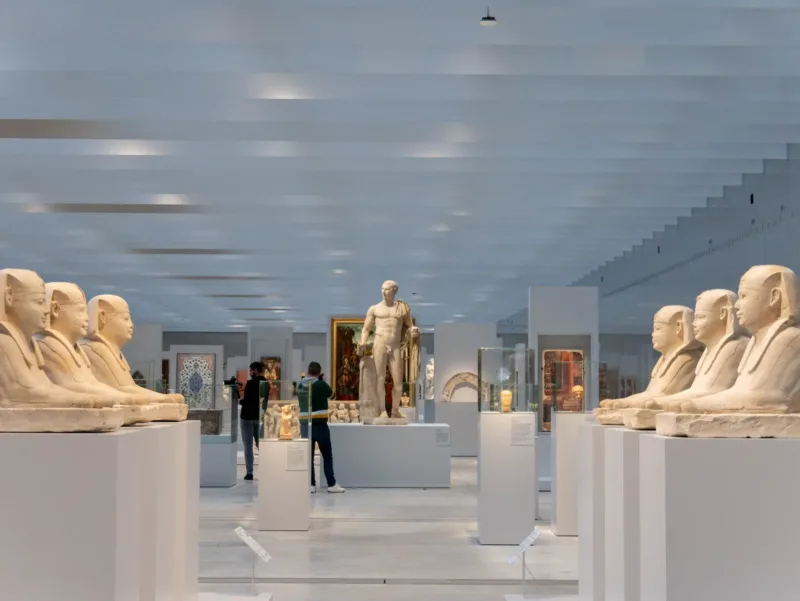
The Louvre-Lens museum opened in December 2012 on a former coal pit in Lens, bringing more than 200 works from the Paris Louvre to a region better known for its mining history than its art. Its Galerie du Temps spans 5,000 years of art history under one roof. For UK visitors weighing up a day trip to northern France, here’s what the museum actually offers, and why it’s worth the detour.
Inside the Galerie du temps, a 5 000-year journey through art history
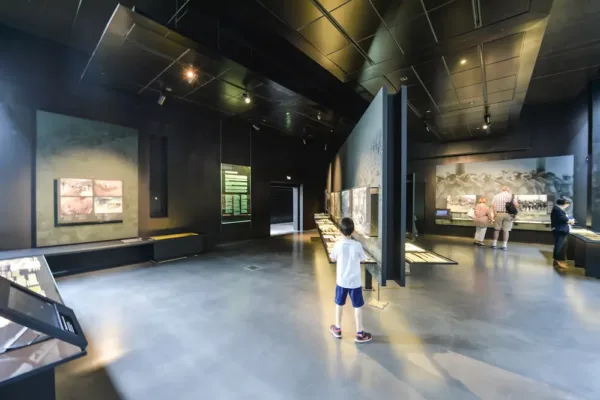
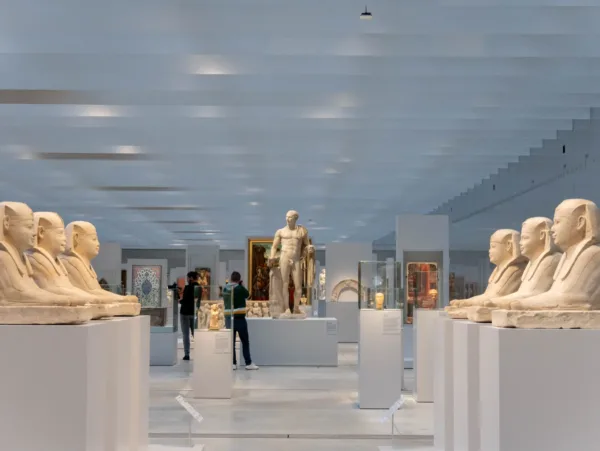
The Galerie du Temps answers a simple question with a startling scale: what does five thousand years of art actually look like, laid out in a single room? At the Louvre-Lens, the gallery occupies 3,000 square metres and displays more than 200 works on loan from the Louvre in Paris.
A journey without department walls
The Galerie du Temps covers the invention of writing in Mesopotamia during the fourth millennium BC through to the Industrial Revolution in the mid-nineteenth century. What sets it apart from its Parisian parent is the layout: works are arranged chronologically and across disciplines rather than sorted by department, so a Mesopotamian tablet, a Greek sculpture and a Renaissance canvas can share the same sightline. It is an approach built on unexpected connections, between eras, between techniques, between civilisations that never met but somehow end up as neighbours on the gallery wall.
Practical information :
-
Adress : 99 Rue Paul Bert, 62300 Lens
-
Phone : +33(0)3 21 18 62 62
-
Opening hours and admission :
Open from Monday to Sundays – 10.00 am to 06.00 pm. Closed on tuesdays
- Galerie du Temps and Pavillon de Verre (permanent collection): free for everyone, all year round
- Temporary exhibition gallery: €12 full price, €6 for ages 18–25, free for under-18s
-
A gallery that renews itself every year
The Galerie du Temps is not a fixed display. Louvre-Lens curators refresh part of the collection annually, timed to the museum’s December anniversary, rotating a portion of the 200-plus works for pieces usually kept in Paris or held in storage. Visitors who return year after year, in other words, are rewarded rather than shown the same room twice.
Two further spaces round out the visit. The Pavillon de Verre hosts temporary exhibitions that typically run for around three months, while Backstage, a digital space, opens a window onto works currently in storage or under restoration, the parts of a museum’s life a visitor rarely gets to see.
Space What it shows Galerie du Temps Permanent collection: 200+ works spanning 5,000 years Pavillon de Verre Temporary exhibitions, changing roughly every three months Backstage Digital space featuring works in storage or under restoration 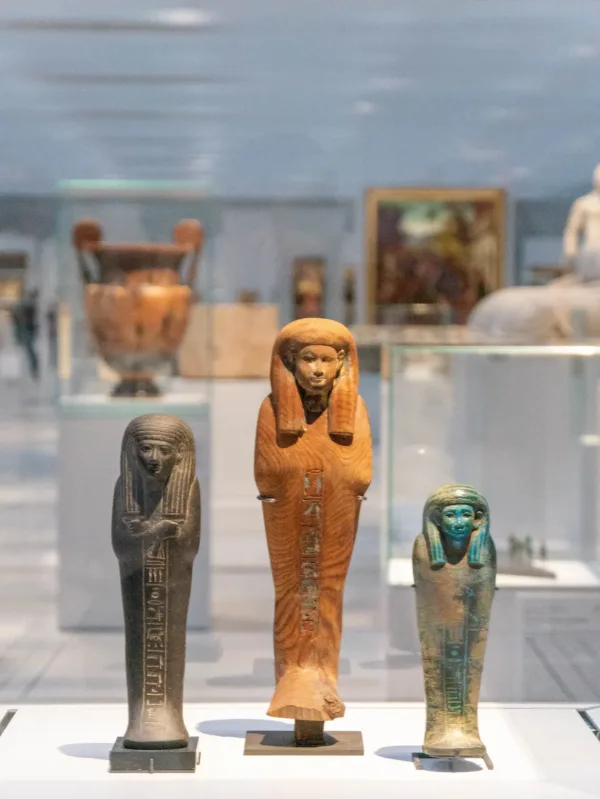
-
From coal pit to cultural landmark : the story behind Louvre-Lens
On 29 November 2004, Prime Minister Jean-Pierre Raffarin stood up and announced that Lens, not Amiens, not Boulogne, not any of the six other towns in the running, would host a new outpost of the Louvre. It was, by any measure, an unlikely address for a national treasure.
An old coal pit turned into a national gesture
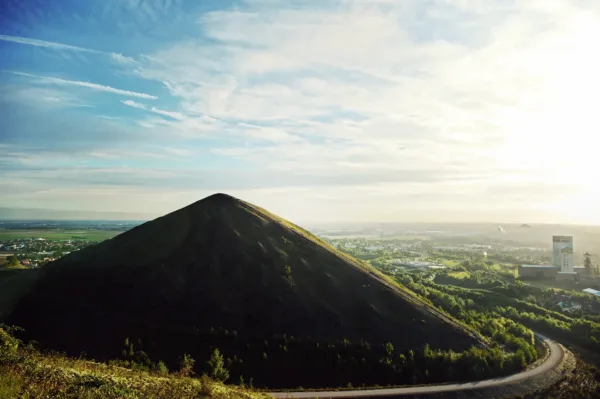
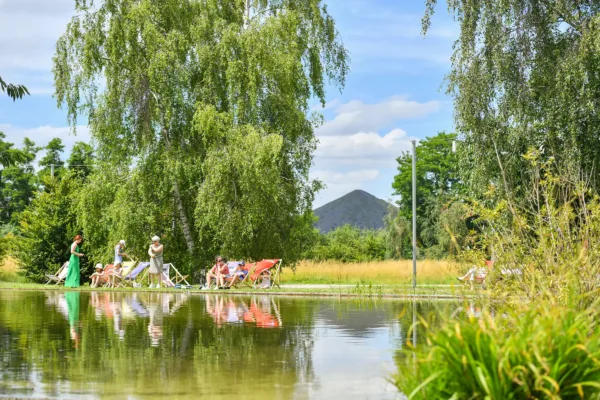
The museum rises on the former site of the ninth pithead of a coal mine, chosen deliberately rather than by convenience. The decision read as a gesture of national recognition for a region shaped by war and, later, by the transformation of the mining industry that had defined it for a century and a half. Lens, a town of 30,000 people, has spent the years since writing a new chapter, with the Louvre at the heart of it.
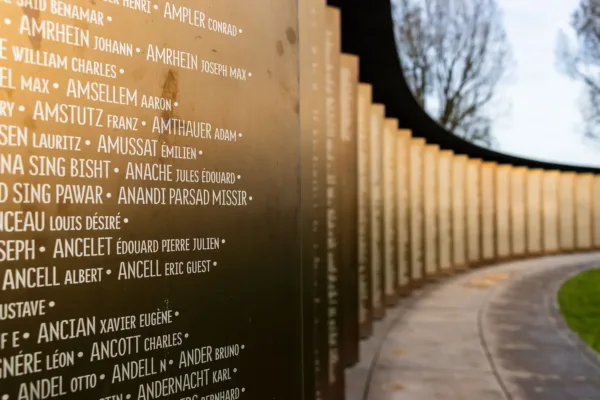
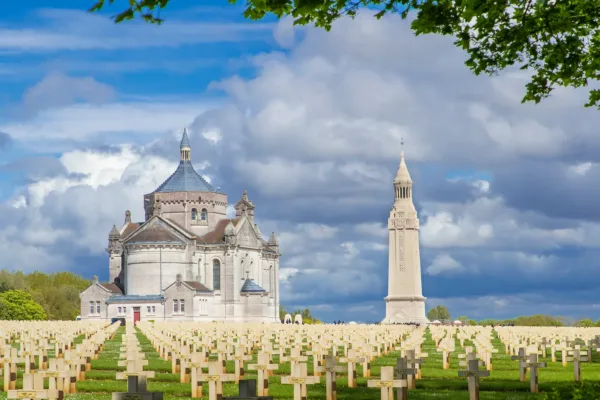
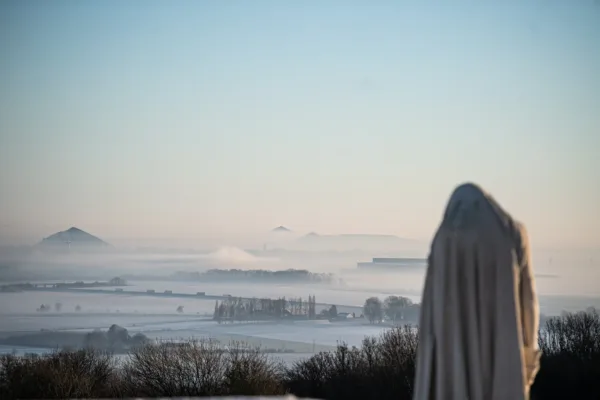
The museum now sits inside the Nord-Pas-de-Calais Mining Basin, itself inscribed on the UNESCO World Heritage List. It makes Lens something of a UNESCO crossroads: the mining landscape around the museum, and the First World War memorial sites scattered across the surrounding countryside, inscribed as recently as September 2023, sit within a short drive of each other, a concentration of world heritage status that few towns of Lens’s size can claim.
 © Yannick Cadart-CD62
-
A museum built to disappear into the landscape
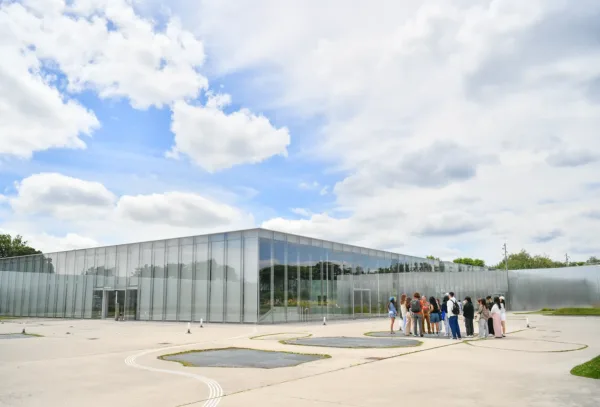
Rather than one dominant structure, the museum unfolds as five long, low pavilions of glass and anodised aluminium, arranged in a gentle curve that follows the old mining tracks running beneath the site. The polished aluminium panels reflect the sky and the surrounding parkland, blurring the edge between building and landscape rather than announcing themselves. The museum opened its doors on 4 December 2012, Sainte-Barbe, patron saint of miners, a detail unlikely to be a coincidence in a town built on coal.
The winning design came from Japanese firm SANAA, architects Kazuyo Sejima and Ryue Nishizawa, winners of the 2010 Pritzker Prize, working alongside New York-based Imrey Culbert and French landscape architect Catherine Mosbach.
 © Yannick Cadart-CD62
-
More than 450.000 visitors a year
Today, the gamble looks to have paid off. Within its first month, the museum had already welcomed 150,000 visitors. The Louvre-Lens now draws around 450,000 visitors a year, making it the third most-visited regional museum in France, behind only the Musée des Confluences in Lyon and the Mucem in Marseille.
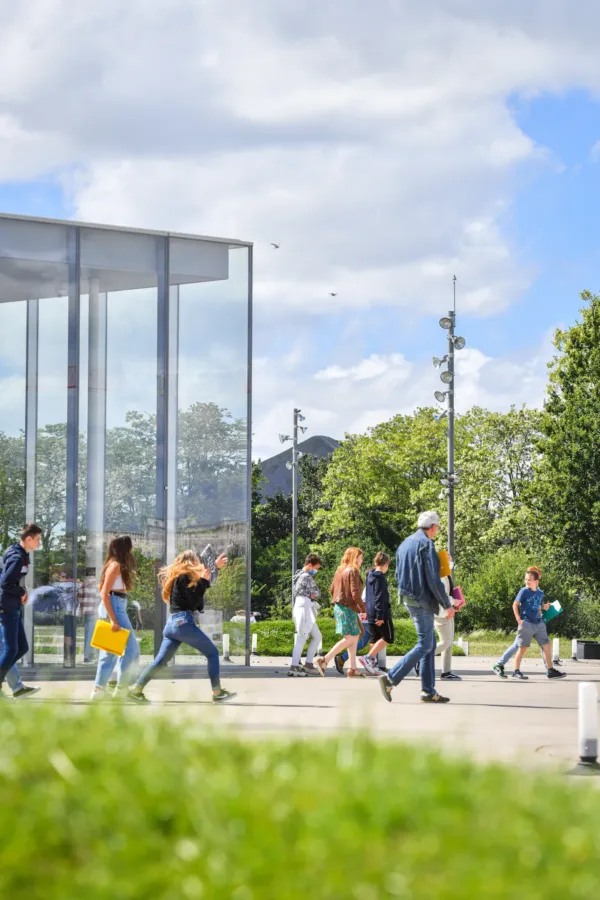 © Yannick Cadart-CD 62
Why Louvre-Lens deserves a spot on your Pas-de-Calais itinerary
Ask visitors what they remember most about the Louvre-Lens, and crowds rarely come up, a rare thing to say about anywhere with « Louvre » in its name. Reviewers consistently point to the relaxed pace of a visit here compared to its Parisian counterpart as one of the museum’s biggest draws, alongside an architecture that plays deliberately against its mining backdrop rather than ignoring it.