Via Francigena: Walk from Calais on the Pilgrim Route to Rome
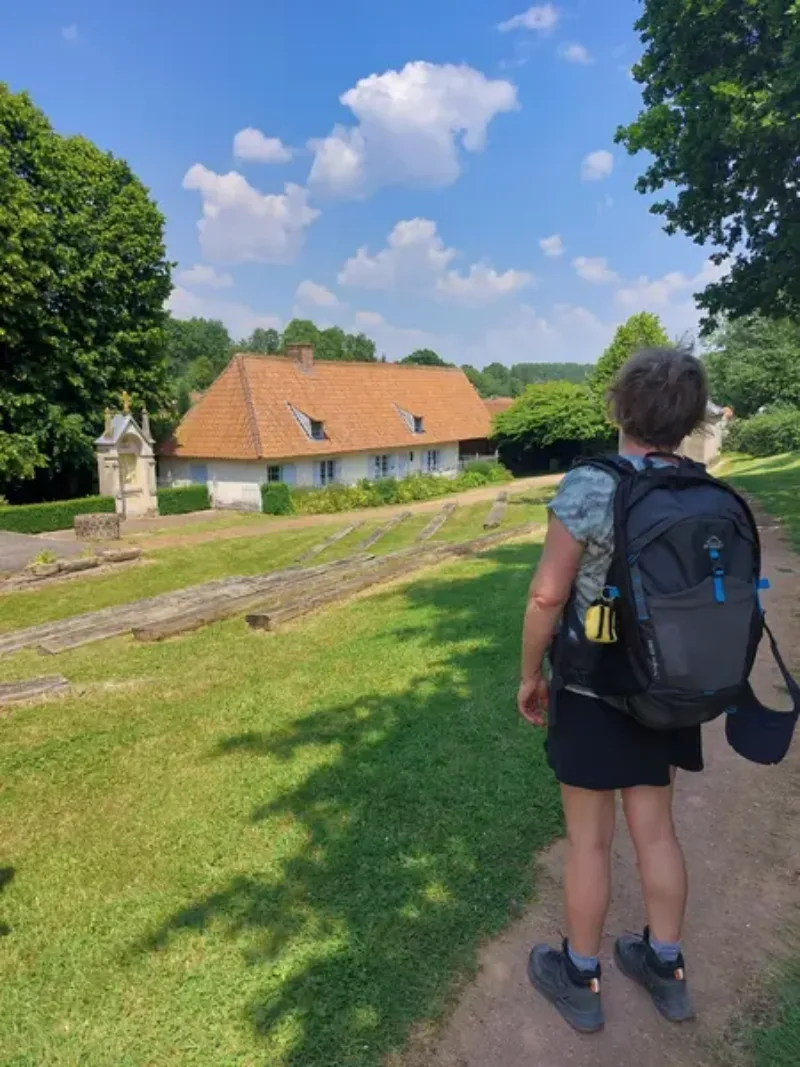
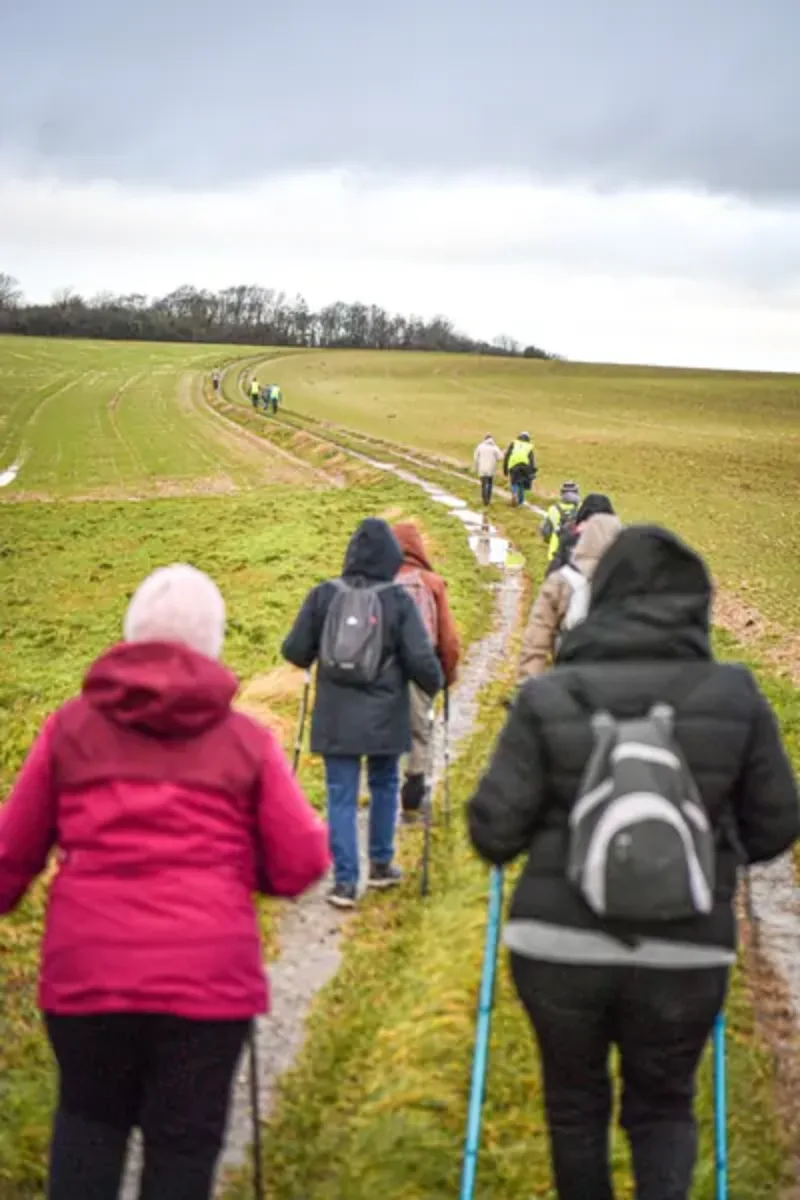
What if your next walking holiday began with a ferry crossing from England and ended with a journey through some of northern France’s most beautiful and surprisingly varied landscapes? The Via Francigena, one of Europe’s great historic pilgrimage routes, connects Canterbury to Rome. And its first French stages take you straight through Pas-de-Calais.
From the white cliffs of the Opal Coast to peaceful farmland, ancient abbeys, former mining communities and moving First World War memorials, the Via Francigena offers far more than a long-distance walk. It’s a journey through centuries of European history, with plenty of opportunities to discover a side of France that many British visitors have yet to explore.
What is the Via Francigena?
The Via Francigena is a historic pilgrimage route linking Canterbury in Kent with Rome in Italy, passing through France and Switzerland along the way.
Its origins are closely associated with Sigeric, Archbishop of Canterbury, who travelled to Rome in 989 to receive his pallium, the ceremonial vestment marking his appointment. A record of his return journey, listing 80 stopping places, helped establish the route followed by modern pilgrims.
Today, the Via Francigena attracts walkers for many reasons. Some undertake the journey as a religious pilgrimage, while others come for the scenery, history, physical challenge or simply the pleasure of travelling slowly through unfamiliar places.
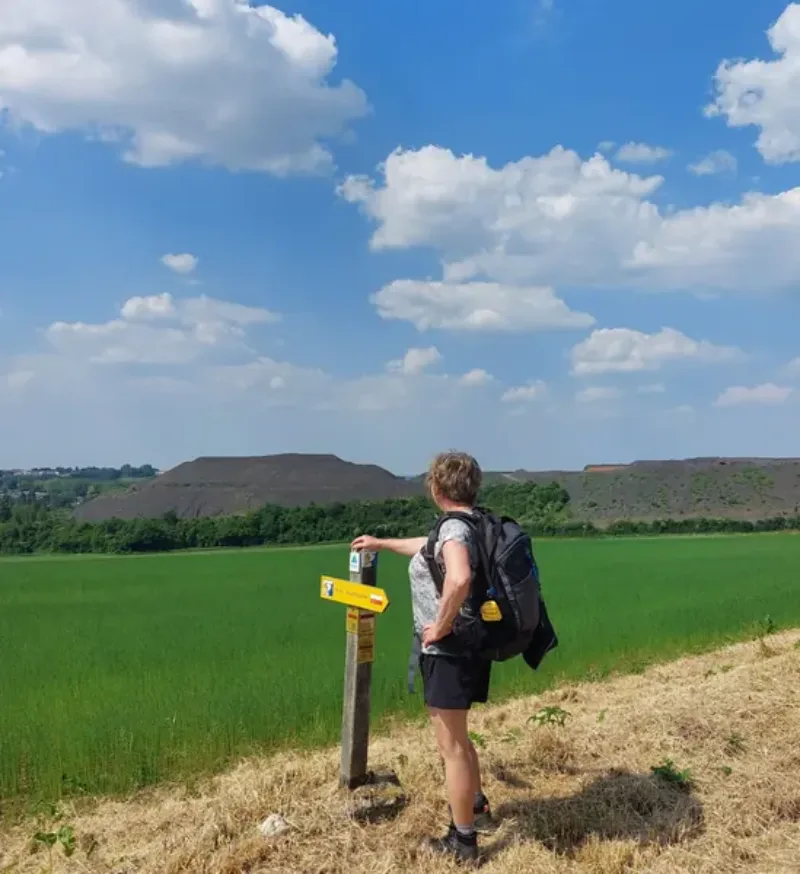
In France, the route follows the GR145 long-distance walking trail, marked with the familiar red and white signs of the French hiking network, alongside the yellow pilgrim symbol.
And for British walkers, there’s something particularly appealing about starting a European adventure on a route that begins at Canterbury Cathedral.
Practical info for walking the Via Francigena
-
From Canterbury to Calais: your pilgrimage begins across the Channel
For walkers arriving from Britain, Calais is the natural gateway to the French section of the Via Francigena.
Whether you’re continuing a pilgrimage that began in Canterbury or planning to explore just the French stages, the town offers an easy starting point for your journey.
The official French route begins at Notre-Dame Church in Calais, where you can start collecting stamps in your pilgrim passport, known as a credenciale.
But before heading inland, the Via Francigena has a rather wonderful surprise in store: some of the most spectacular coastal scenery in northern France.
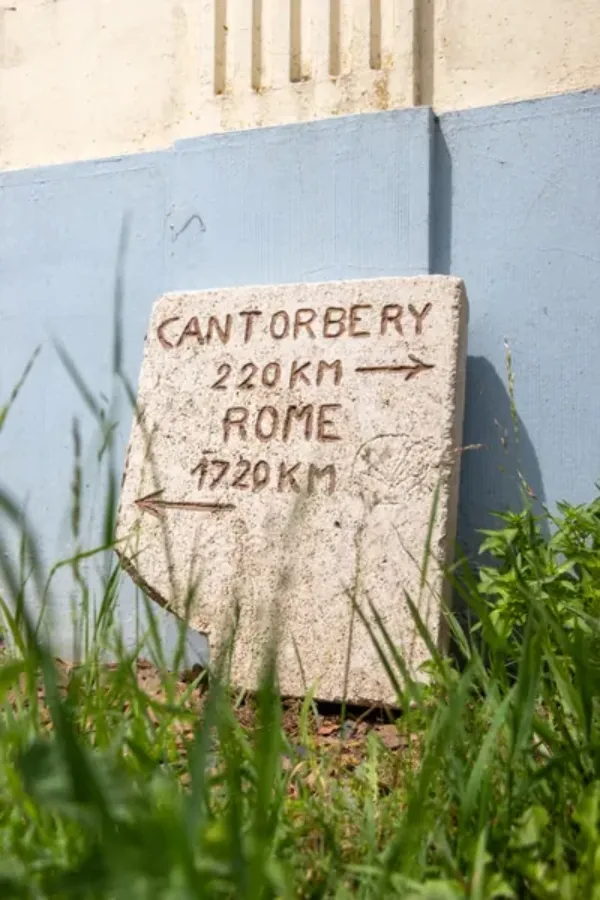 © Marion Harmel Pas-de-Calais Tourisme
-
From the white cliffs to the countryside: discover the Via Francigena in Pas-de-Calais
Calais to Wissant: a spectacular coastal beginning
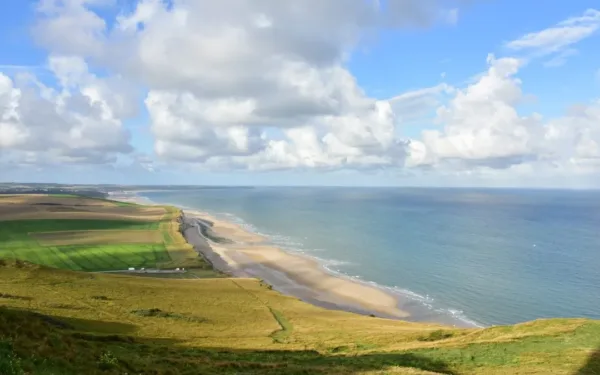
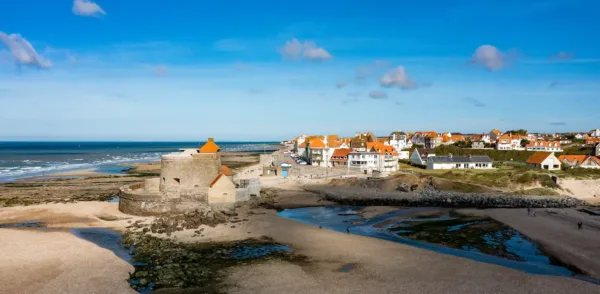
The first stage takes you from Calais to Wissant, following the coastline towards the magnificent chalk cliffs of Cap Blanc-Nez.
You’ll leave Calais along its seafront, passing traditional beach huts before reaching dunes, grassy hills and sweeping views over the English Channel.
On a clear day, you can see the white cliffs of Dover across the water. It’s a lovely reminder of just how closely connected this stretch of France is to England.
The route climbs towards Mont d’Hubert and Cap Blanc-Nez, where the views make every uphill step worthwhile. From here, the trail descends towards Cran d’Escalles before continuing to Wissant, a charming seaside village between Cap Blanc-Nez and Cap Gris-Nez.
With its sandy beach and relaxed atmosphere, Wissant makes an excellent first overnight stop.
Walking distance: approximately 20 km.
Good to know: Coastal paths can be affected by erosion and cliff falls. Always follow the current waymarking and respect path closures.
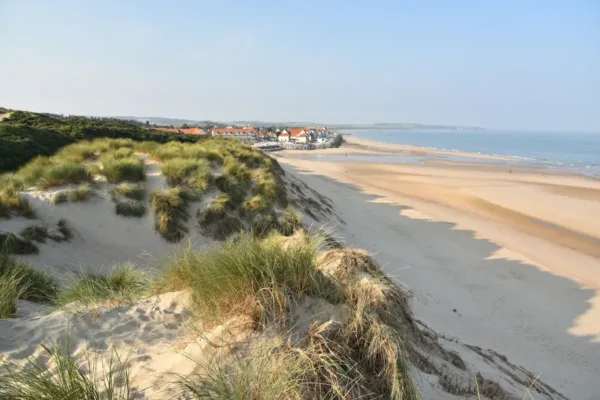 © Eric Desaunois CD 62
-
Wissant to Licques: forests, rolling hills and traditional villages
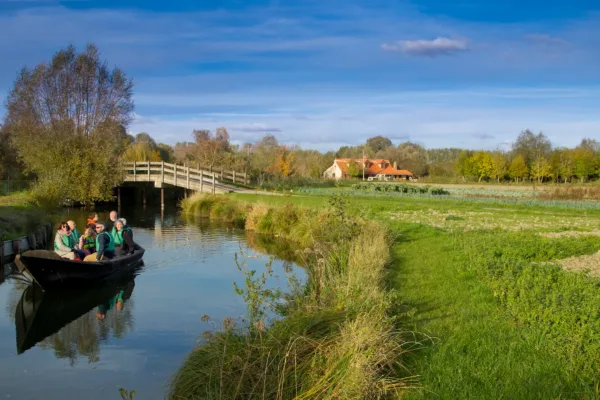
After Wissant, the Via Francigena gradually turns away from the coast and heads into the countryside.
The landscape changes from open sea views to rolling farmland, hedgerows and quiet villages. Around Mont de Couple, you may still catch a last glimpse of the English coast before the trail continues towards Guînes.
One of the highlights is the Forest of Guînes, where shaded woodland paths provide a peaceful contrast to the exposed coastal hills.
Beyond Guînes, the route continues through fields, past traditional farmhouses and over a series of gentle hills offering views across the surrounding valleys.
At Licques, the historic abbey provides a fitting end to this part of the journey.
This is the Pas-de-Calais countryside at its most peaceful: small villages, winding lanes and landscapes that seem made for exploring on foot.
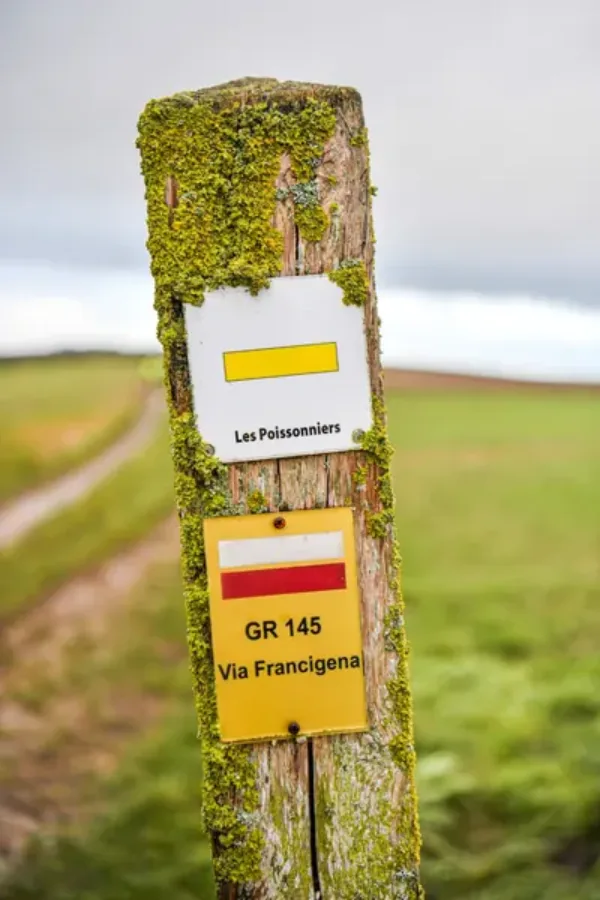 © Marion Harmel Pas-de-Calais Tourisme
-
Licques to Thérouanne: abbeys, Roman roads and rural landscapes
As the Via Francigena continues south, it passes through the beautiful Hem Valley and the village of Tournehem-sur-la-Hem.
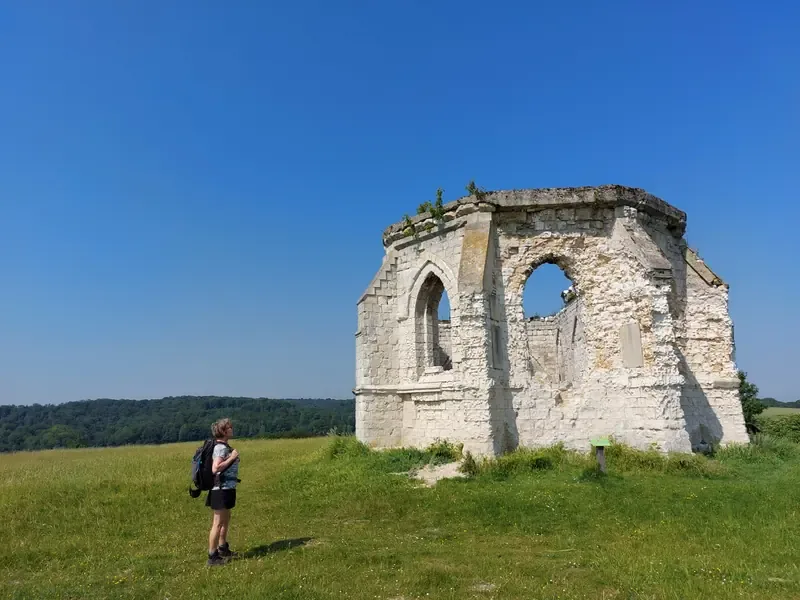
The landscape is a mixture of open farmland, wooded paths and hillsides with lovely views across the countryside. Near the Chapel of Guémy, walkers are rewarded with a particularly attractive panorama over the valley.
Further along the route, history is never far away.
Between Tournehem-sur-la-Hem and Wisques, the trail follows part of the Leulène, an ancient Roman road that once linked Thérouanne with Sangatte.
Wisques itself is known for its two abbeys, reminders of the religious heritage that has shaped this part of France for centuries.
Continuing towards Thérouanne, the path passes through the villages of Esquerdes and Delettes, where a small pedestrian bridge crosses the River Lys.
These quieter stages are ideal for walkers who enjoy discovering rural France at their own pace, away from busy tourist destinations.
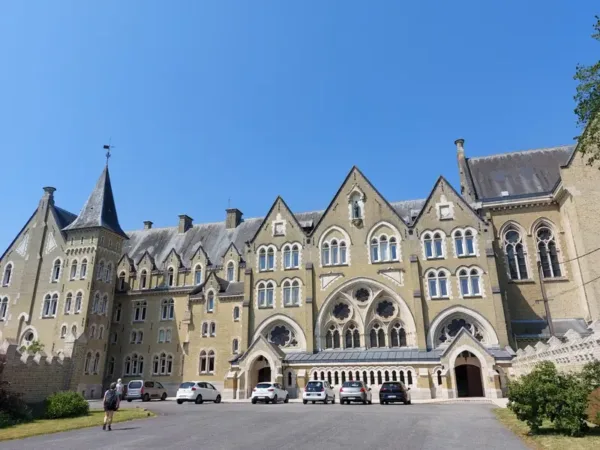 © Marion Harmel Pas-de-Calais Tourisme
-
Thérouanne to Bruay-la-Buissière: discover the mining heritage of northern France
One of the most interesting aspects of walking the Via Francigena through Pas-de-Calais is how dramatically the scenery changes.
After Thérouanne, the route passes through farmland and woodland before entering the former mining basin.
Here, the landscape tells a different story.
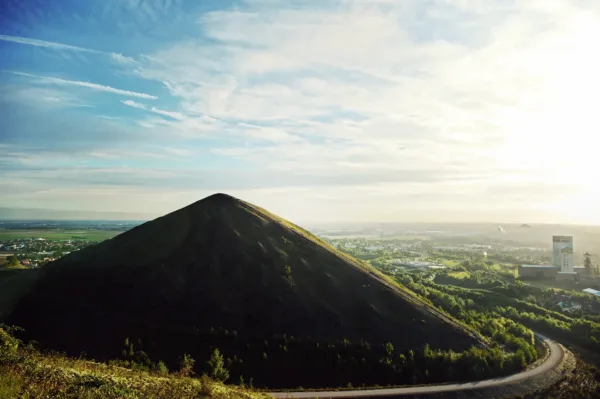
Mining spoil heaps, known locally as terrils, rise above the fields and villages. Some have been transformed into walking areas and viewpoints, including the spoil heap at Auchy-au-Bois.
The trail also passes through Amettes, birthplace of Saint Benedict Joseph Labre, before continuing towards Ferfay, Marles-les-Mines and Bruay-la-Buissière.
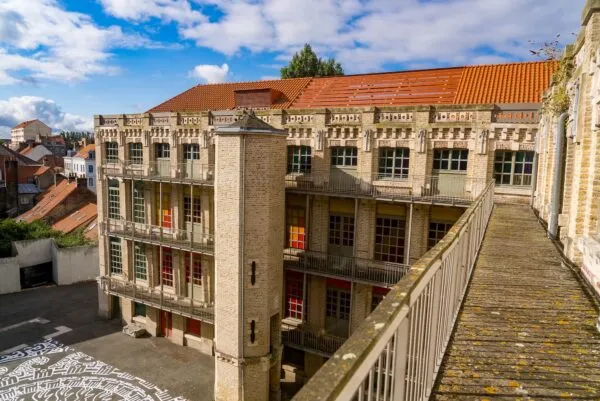
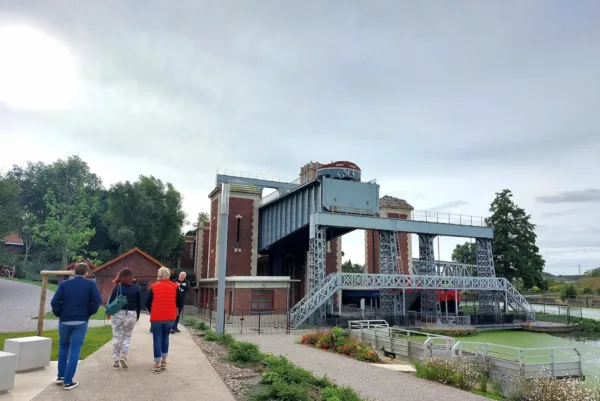
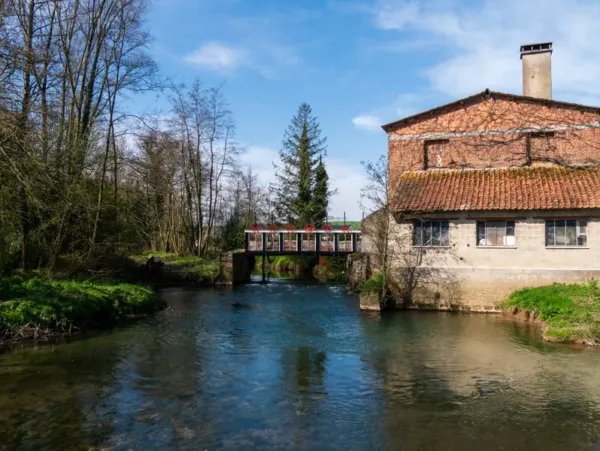
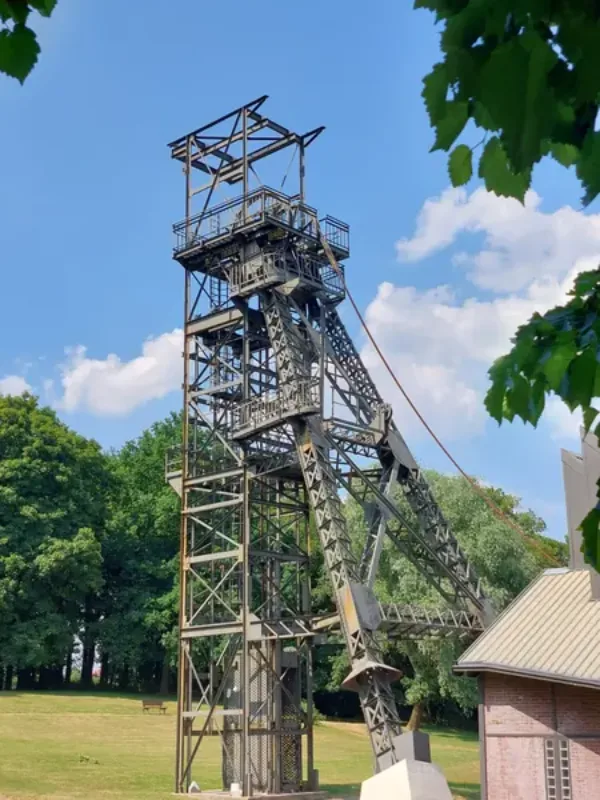
In Marles-les-Mines, red-brick buildings, former mining structures and the distinctive headframe of Pit No. 2 provide a glimpse into the industrial history of the region.
For British visitors familiar with the former coalfields of northern England, Scotland or Wales, these landscapes may feel surprisingly familiar.
Yet they are also an important part of the identity and heritage of Pas-de-Calais.
 © Marion Harmel Pas-de-Calais Tourisme
-
Bruay-la-Buissière to Arras: walking through First World War history
As the Via Francigena approaches Arras, the journey takes on a more reflective character.
The trail passes through the wooded Parc Départemental d’Olhain, a popular outdoor destination with walking trails, family activities and places to stop for refreshments.
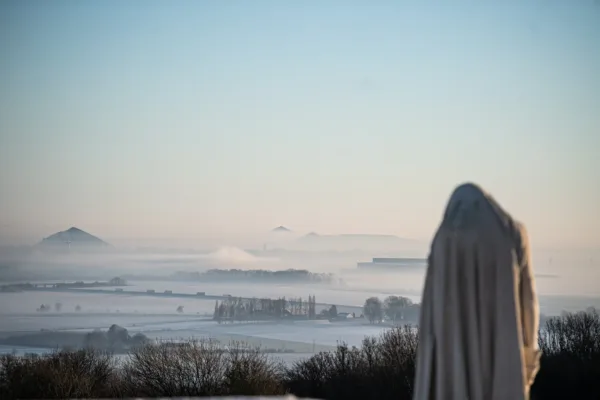
Beyond the forest, the route approaches one of the most significant remembrance sites in France: Notre-Dame-de-Lorette.
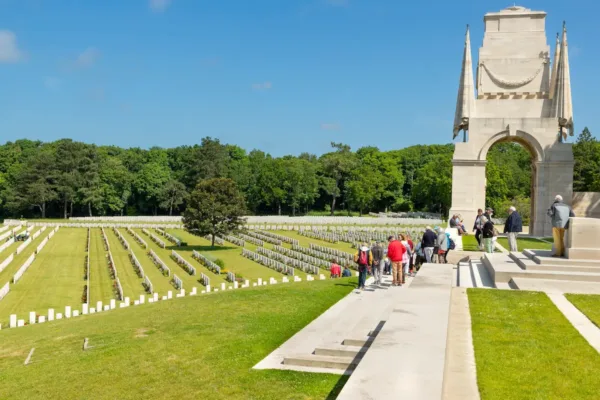
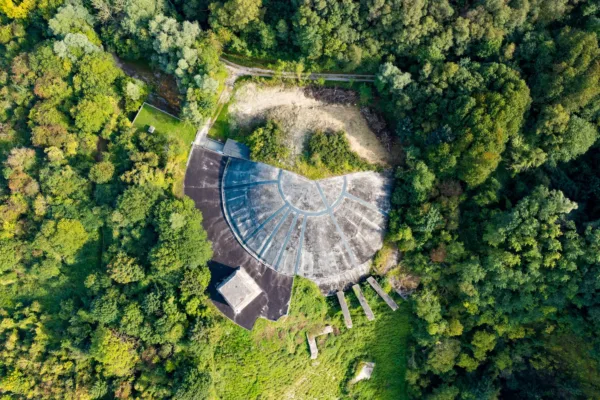
The French National Military Cemetery here is the largest in the country, and nearby stands the Ring of Remembrance, bearing the names of approximately 580,000 soldiers who died in the region during the First World War, regardless of nationality.
For British walkers, this part of the route has particular historical significance.
The following stage continues through Ablain-Saint-Nazaire, where the ruins of a church bear witness to the destruction of the war, and past the impressive remains of Mont-Saint-Éloi Abbey.
At Écoivres, a military cemetery contains both French and British graves.
It’s a moving stretch of the Via Francigena, where the peaceful countryside contrasts with the history of the Western Front.
 © Marion Harmel Pas-de-Calais Tourisme
-
Arras: a historic city worth an extra day
After several days of walking, Arras is an excellent place to take a break.
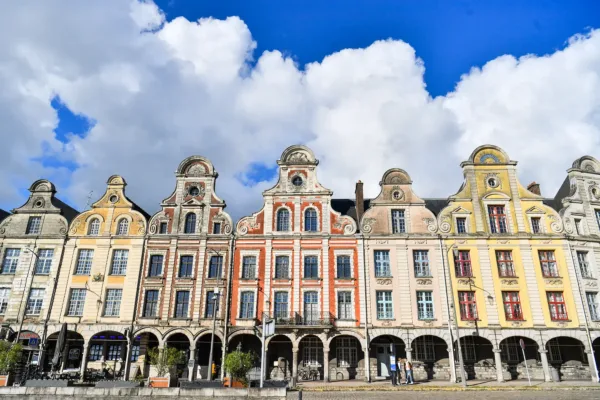
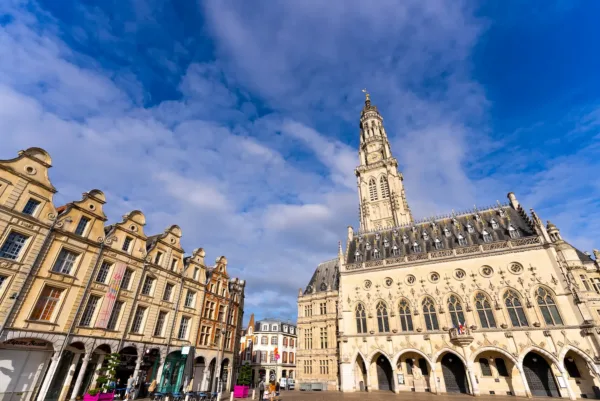
The city is famous for its two magnificent squares, the Grand’Place and Place des Héros, surrounded by elegant Flemish Baroque-style façades.
You can climb the UNESCO-listed belfry for panoramic views, explore the underground passages known as the Boves, or visit the impressive Notre-Dame-et-Saint-Vaast Cathedral.
For visitors interested in the First World War, the Wellington Quarry is particularly worth exploring. This underground site tells the story of the British and Commonwealth soldiers who prepared for the Battle of Arras in April 1917.
With its restaurants, historic architecture and fascinating museums, Arras is much more than a convenient stop on the pilgrimage route.
It’s a destination in its own right.
 © Les Coflocs
-
Arras to Bapaume and beyond: the final kilometres in Pas-de-Calais
South of Arras, the Via Francigena returns to open countryside.
The route towards Bapaume is relatively flat, passing through extensive farmland dotted with small chapels and rural villages.
In Bapaume, take time to admire the town hall and its belfry before continuing towards Rocquigny.
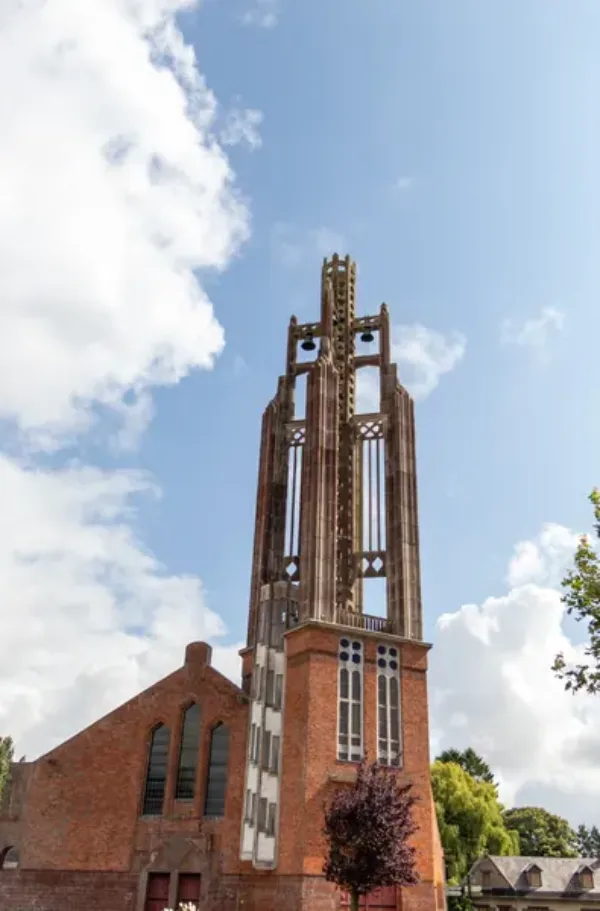
Here, an unusual Art Deco church, rebuilt after the First World War, provides one final architectural discovery.
Shortly after Rocquigny, the trail leaves Pas-de-Calais and enters the Somme, continuing towards Péronne and eventually Rome.
 © S. Brissaud – Pas-de-Calais Tourisme
The Via Francigena in Pas-de-Calais: walking stages at a glance
The following stages provide a useful overview for planning your journey. Distances and walking times are approximate and should be checked against current route information before setting off.
| Stage | Route | Distance | Walking time |
|---|---|---|---|
| 1 | Calais – Wissant | 20 km | 5 hrs |
| 2 | Wissant – Guînes | 27 km | 5 hrs 30 mins |
| 3 | Guînes – Licques | 16 km | 3 hrs 45 mins |
| 4 | Licques – Tournehem-sur-la-Hem | 15 km | 3 hrs 30 mins |
| 5 | Tournehem-sur-la-Hem – Wisques | 20 km | 4 hrs |
| 6 | Wisques – Thérouanne | 22 km | 4 hrs 30 mins |
| 7 | Thérouanne – Amettes | 19 km | 4 hrs |
| 8 | Amettes – Bruay-la-Buissière | 23 km | 4 hrs 45 mins |
| 9 | Bruay-la-Buissière – Ablain-Saint-Nazaire | 24 km | 5 hrs |
| 10 | Ablain-Saint-Nazaire – Arras | 24 km | 5 hrs |
| 11 | Arras – Bapaume | 27 km | 5 hrs 30 mins |
| 12 | Bapaume – Péronne (Somme) | 31 km | 6 hrs 30 mins |
Note: The final stage continues into the neighbouring Somme department. The complete list above therefore extends beyond Pas-de-Calais.
-
Do you have to walk the whole route?
Not at all. One of the pleasures of the Via Francigena is its flexibility.
You can walk a single stage, plan a long weekend around two or three sections, or complete the journey over several holidays.
Your pilgrim passport can be kept and used over several years, so there’s no need to complete the route in one continuous trip.
-
Where can you stay along the route?
Accommodation options along the Via Francigena include hotels, bed and breakfasts, campsites and other places welcoming walkers.
Some accommodation providers offer special rates or services for pilgrims carrying a stamped credenciale.
It’s advisable to book ahead, particularly in smaller villages where accommodation choices may be limited.
-
How do you follow the route?
p>In France, the Via Francigena follows the GR145, marked in red and white, together with the yellow pilgrim symbol.
GPX tracks and digital maps can help you prepare and navigate each stage, but always follow the official waymarking if it differs from your downloaded route.
For maps and further route information, consult the official Via Francigena website.
-
What should you bring?
Comfortable, well-worn walking boots or shoes are essential, particularly after rain when rural paths and woodland tracks can become muddy.
Carry drinking water, snacks, waterproof clothing and sun protection. Some stages cross open countryside with limited shade and few places to buy refreshments.
Along the Opal Coast, check weather conditions, tide times and any path closures before setting out.
-
Why walk the Via Francigena in Pas-de-Calais?
There are many wonderful long-distance walking routes in Europe, but the Via Francigena through Pas-de-Calais offers something distinctive.
For British walkers, it begins just across the Channel, yet within a few kilometres you’re discovering landscapes and villages that feel a world away from the familiar ferry port.
One day you’re walking above chalk cliffs with England visible across the sea. A few days later, you’re passing medieval abbeys, following an ancient Roman road or exploring the history of the former mining basin.
And as you approach Arras, the journey becomes a powerful encounter with the shared history of Britain and France.
Whether you’re following in the footsteps of Archbishop Sigeric, enjoying a walking holiday in northern France or simply looking for somewhere different to explore, the Via Francigena is a wonderful invitation to slow down and discover Pas-de-Calais, one step at a time.