
Wimereux: Things to Do, Beaches & Travel Guide
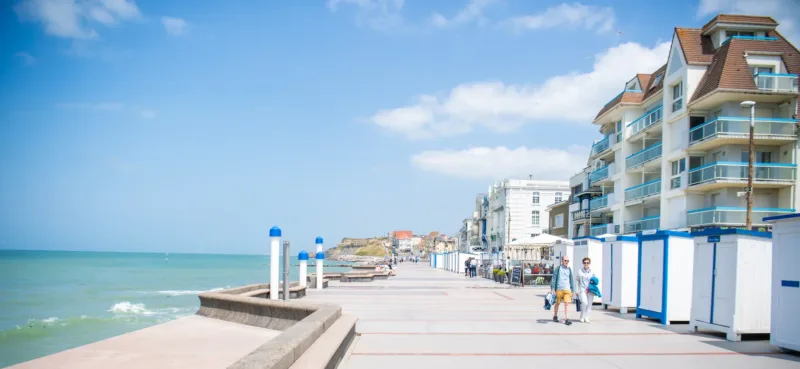
Wimereux is a Belle Époque seaside resort on the Opal Coast, about 10 minutes by car from Boulogne-sur-Mer and 35 minutes from Calais. Its colourful villas, seafront beach huts and sandy beach make it a lovely place to explore. The town is also home to Wimereux Communal Cemetery, where John McCrae, author of In Flanders Fields, is buried.
A brief history of Wimereux
It might be the oldest of our seaside resorts, but what panache!. It was officially founded by a decree of Napoleon I, who ordered the establishment of a town along the Wimereux river. The resort truly came into its own during the Second Empire (1852–1870), when sea bathing became fashionable among the French and British bourgeoisie, and the extension of the Boulogne–Calais railway brought visitors directly to the coast.
Highlighting the Villas of Wimereux
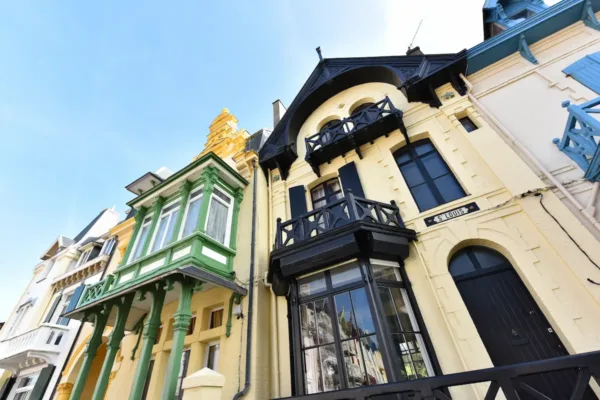
By the end of the 19th century, wealthy families were building exuberant Anglo-Norman villas along the seafront — a style that blended French and British architectural tastes with turrets, bow windows, balconies, and vivid ceramic tiles. More than a century later, the majority of those villas still stand, carefully maintained and freshly painted, giving Wimereux its distinctive Belle Époque character.
-
The villas and seafront architecture
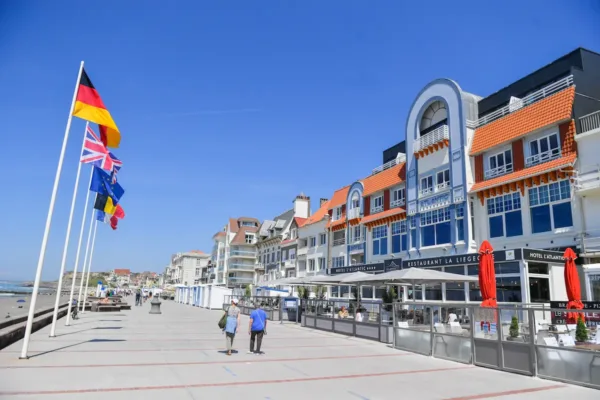
Walking the seafront of Wimereux is like stepping into a living museum of Belle Époque seaside architecture. The villas compete with each other in visual extravagance: turrets, ornate bow windows, wrought-iron balconies, and facades covered in brightly painted render or colourful glazed ceramic tiles. No two are alike.
What makes Wimereux unusual is that this heritage is still alive — the villas are private homes whose owners take evident pride in upkeep. Regular repaints mean the colours stay vivid and the resort retains its nostalgic, slightly theatrical atmosphere all year round.
 © Eric Desaunois
-
The beach huts of Wimereux
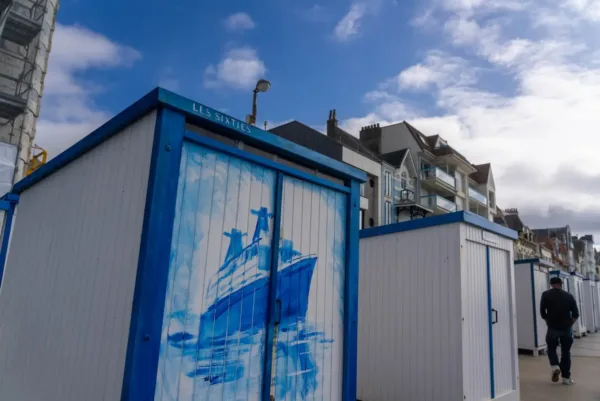
A timeless charm is accentuated by the long garland of beach huts stretching along the sea wall, all dressed in white and blue, they each have their own personality and their own poetic qualities.
The huts of Wimereux are a huge success, to the point that, for the first time since the origins of the resort, the town is now offering them for hire. Made by a social integration association from Le Portel, La Mouette rieuse, Le Phoque marrant or Le Bernard l’hermite can be hired for a day or a week to celebrate an art de vivre that is so dear to Wimereux.
 © Les Coflocs
-
The seawall promenade
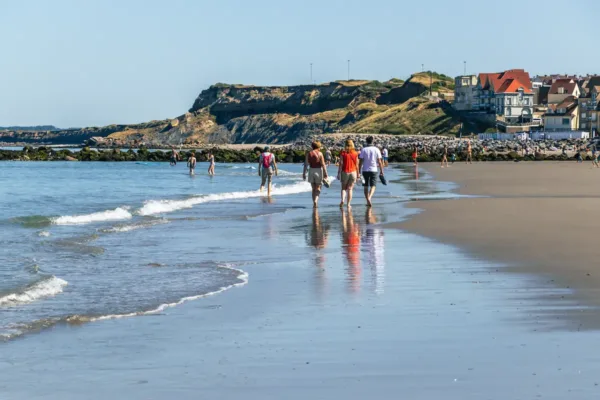
Just opposite, a superb seawall-promenade reserved for pedestrians runs along the beach when it is not engulfed by the sea. A kilometre and a half upon which you can “do the seawall”, grab some fresh air or get moving on two, three or four wheels, on stormy days you can also admire the waves breaking in a gigantic spray of foam.
Below, at low tide, Le Centre beach offers timeless pleasures. You can chase a kite, play ball, eat a sugar waffle, or build a sand castle that will not survive the next high tide.…
 © Yannick Cadart CD 62
-
Wimereux, vibrant and lively
Charming and authentic, Wimereux is above all a family resort, which unites all generations.
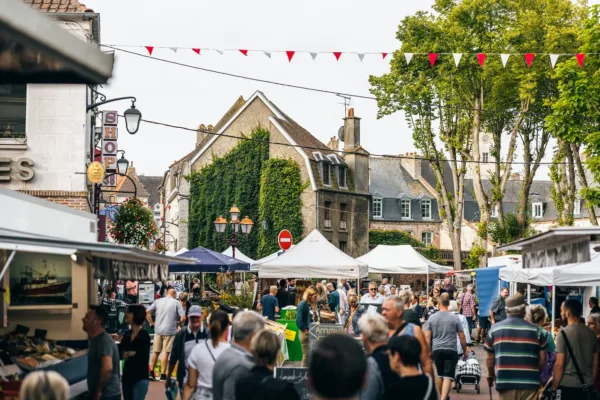
It is also vibrant and lively, with a number of food shops, restaurants, home décor boutiques, clothes boutiques and art galleries.
 © S.Brissaud Pas de Calais Tourisme
-
Sporty Wimereux
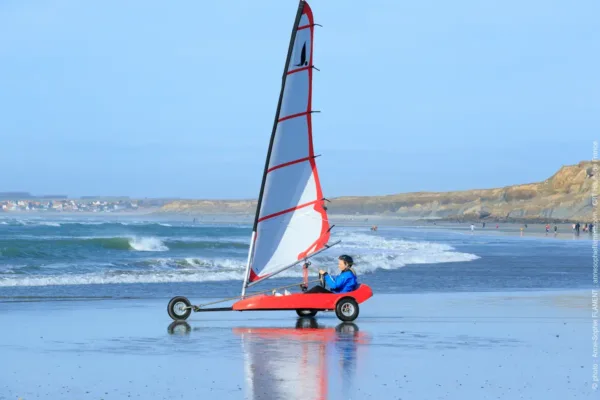
But Wimereux also knows how to be sporty. You can go sand yachting, kitesurfing, sailing, play tennis or go horse-riding. You can go for a walk on the many footpaths or just in the gardens of the Baie Saint-Jean, built at the former Napoleonic port.
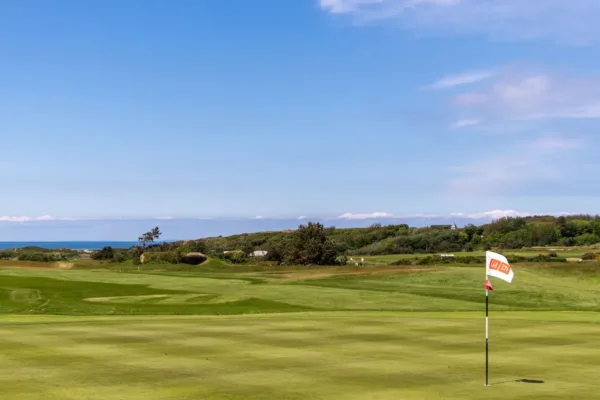
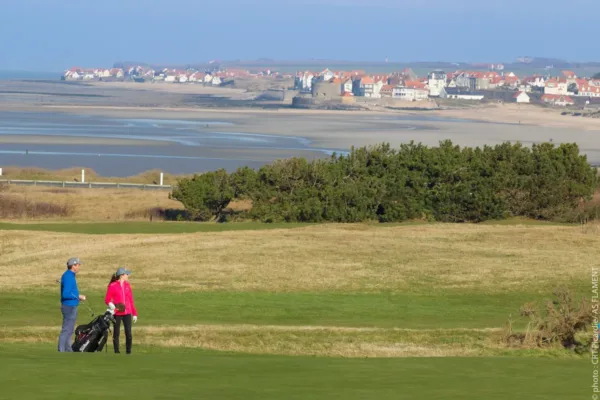
But the highlight is still hitting that little white ball on an eighteen-hole course, in the well-preserved natural environment of the Grand Site de France Les Deux-Caps.
In Wimereux, golf has been played since 1901, cultivating the resort’s chic side.…
 © S. Brissaud Pas de Calais Tourisme
-
Water sports and outdoor activities
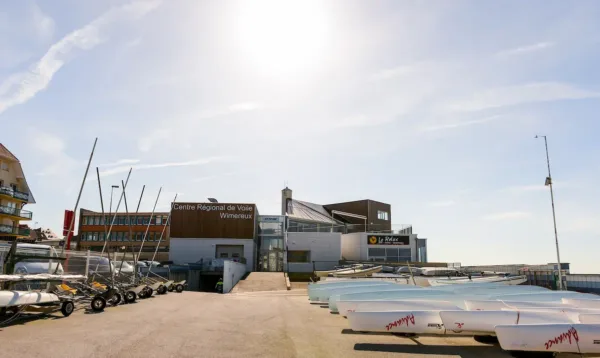
Wimereux’s position on the Channel coast — exposed to Atlantic winds and with a large tidal range — makes it one of the best spots on the Opal Coast for wind-powered sports:
- Sand yachting (char à voile) — available on the beach at low tide
- Kitesurfing — popular on the wide sand flats
- Sailing — via the local sailing club
- Walking and cycling — on marked footpaths and along the seawall and through the Dunes
- Horse riding — in the surrounding countryside
- Tennis — at the local tennis club
 © Yannick Cadart CD 62
-
Golf in Wimereux
Wimereux has been a golf destination since 1901 — one of the oldest courses in France. The Wimereux 18-hole course sits within the preserved natural landscape of the Grand Site de France Les Deux-Caps, offering sea views and a setting that keeps the resort’s reputation for genteel elegance well intact.
 © ©Charles Damourette
-
Family Friendly Wimereux
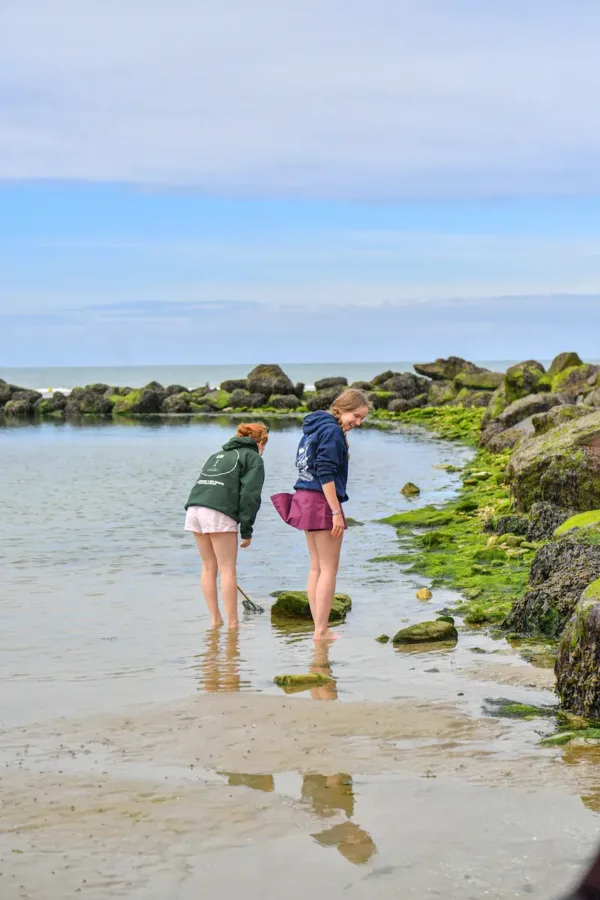
Despite its Belle Époque grandeur, Wimereux is fundamentally a family resort. The town brings together all generations: grandparents who remember the resort in its heyday, parents who grew up with the beach huts, and children discovering the seaside for the first time. The pedestrian seawall, the flat sandy beach at low tide, and the compact town centre all make it easy to navigate with young children.
The town also has a lively and varied selection of food shops, restaurants, boutiques, and art galleries — enough to fill a rainy afternoon without difficulty.
 © Yannick Cadart-CD62
UNESCO World Heritage:
Wimereux Communal Cemetery
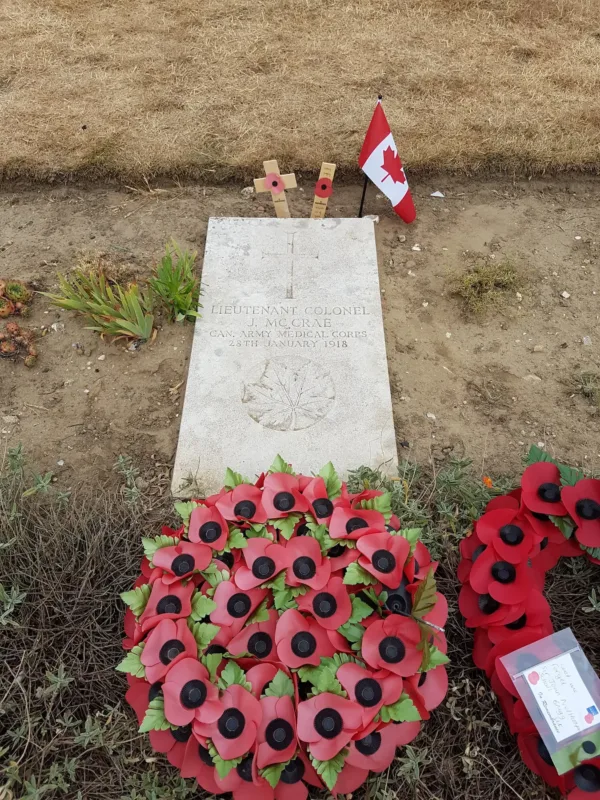
In September 2023, Wimereux Communal Cemetery was inscribed on the UNESCO World Heritage List as part of the Funerary and Memory Sites of the First World War (Western Front) listing — one of 14 WW1 UNESCO sites in Pas-de-Calais.
The cemetery is notable as the burial place of Lieutenant-Colonel John McCrae (1872–1918), the Canadian military doctor and poet who wrote In Flanders Fields — one of the most widely recited poems of the First World War. McCrae died of pneumonia and meningitis in Wimereux in January 1918 and is buried in plot I.B.3.
The cemetery is maintained by the Commonwealth War Graves Commission (CWGC), is free to visit, and is open year-round. It is a short walk from the town centre.
Getting to Wimereux
-
From Distance By car By train Calais 30 km ~25 min via A16 Change at Boulogne Channel Tunnel (Folkestone–Coquelles) 35 km ~30 min N/A Boulogne-sur-Mer 5 km ~10 min ~5 min (TER regional service) Lille 95 km ~1 hr via A16/A25 Change at Boulogne Paris 250 km ~2 hr 30 min TGV to Boulogne then TER Parking: Wimereux has several free and paying car parks close to the seafront. Parking on the seawall itself is limited; arrive early in July and August.
Frequently Asked Questions
-
How far is Wimereux from Calais and Boulogne?
Wimereux is approximately 5 km north of Boulogne-sur-Mer (10 minutes by car) and 30 km south of Calais (25 minutes by car), making it an easy day trip from the Channel ports or a convenient base for exploring the Opal Coast.
-
Is Wimereux beach sandy?
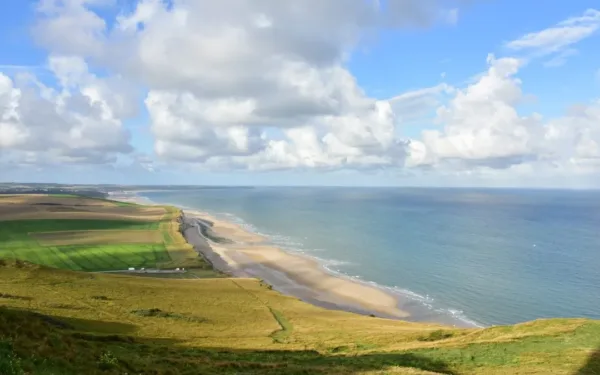
Yes. Le Centre beach in Wimereux is a broad sandy beach, best explored at low tide when the full expanse of sand is revealed. It is well suited to families, kite-flyers, and sandcastle builders.
-
What is Wimereux famous for?
Wimereux is famous for its colourful Belle Époque villas, its seafront beach huts, wind sports on the beach, an 18-hole golf course dating from 1901, fine seafood restaurants, and the Wimereux Communal Cemetery — a UNESCO World Heritage site and the burial place of poet John McCrae.
-
When is the best time to visit Wimereux?
Wimereux is a year-round destination. Summer (July–August) is best for beach activities and water sports. Spring (April–June) offers mild weather, fewer crowds, and pleasant walking conditions. Autumn and winter bring dramatic Channel storms — the seawall promenade is spectacular on a stormy day.
-
Can I visit Wimereux Communal Cemetery?
Yes. The cemetery is free to visit and open year-round. It is maintained by the Commonwealth War Graves Commission (CWGC) and was inscribed on the UNESCO World Heritage List in September 2023. It is located a short walk from the town centre and the seafront.