Notre-Dame-de-Lorette: France’s largest WW1 necropolis
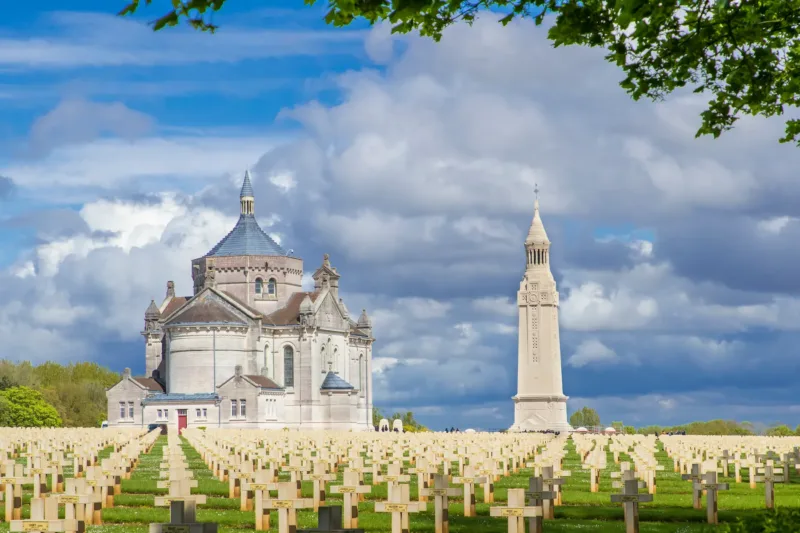
High above the Artois plain, Notre-Dame-de-Lorette is France’s largest military necropolis and one of the most important First World War remembrance sites in Pas-de-Calais. More than 42,000 French soldiers are laid to rest here, on a hill that saw intense fighting during the Battles of Artois.

Practical information :
-
Address:
- Location: Chemin de la Chapelle, 62153 Ablain-Saint-Nazaire
- Admission: Free
- Opening: The necropolis is open year-round
- From Lens: around 15 minutes by car
- From Arras: around 25 minutes by car
- From Calais: around 45 minutes by car
-
From battlefield to place of remembrance
Long before the First World War, the hill of Notre-Dame-de-Lorette was a place of pilgrimage. That changed dramatically in 1914, when its position overlooking the surrounding plain made it a strategic objective.
French and German troops fought fiercely for control of the ridge during the Battles of Artois. The hill became known to soldiers as la colline sanglante, the Bloody Hill. The French finally retook the summit in 1915.
After the war, the site became a gathering place for the French soldiers who had died across the Artois and Flanders fronts. A battlefield cemetery created in 1915 was gradually enlarged, receiving remains transferred from more than 150 smaller cemeteries. The national necropolis was inaugurated in 1925.
 © Jean Michel André
-
What to see at Notre-Dame-de-Lorette
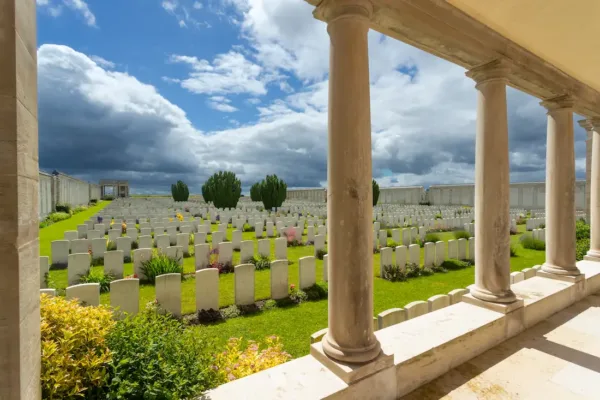
The scale of the cemetery is immediately striking. The necropolis extends across more than 13 hectares and contains individual graves as well as ossuaries holding the remains of thousands of soldiers.
 © Les Coflocs
-
The lantern tower
Rising 52 metres above the cemetery, the lantern tower is one of the site’s most recognisable landmarks. Its light was conceived as a symbolic lantern for the dead. Beneath the tower, a crypt contains the coffins of unknown soldiers from several conflicts.
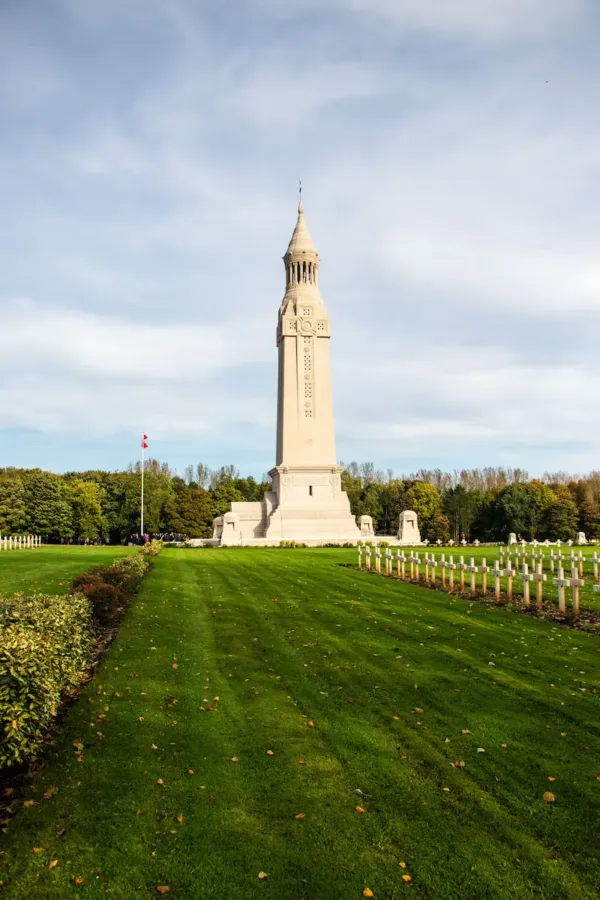 © S. Brissaud Pas de Calais Tourisme
-
The chapel
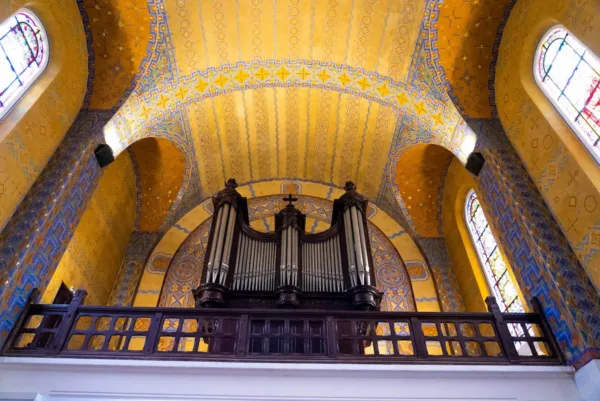
The neo-Byzantine chapel and lantern tower were designed by Lille architect Louis-Marie Cordonnier. Inside the chapel, look out for the stained-glass windows. Six were donated by the British as a reminder of the Franco-British alliance and the many British troops who fought in Artois and Flanders.
The chapel also contains memorial plaques dedicated to soldiers and other figures connected with the war, including Tour de France winner François Faber. A wooden cross from the provisional grave of Louise de Bettignies recalls the French resistance figure who organised an intelligence network for the British during the First World War.
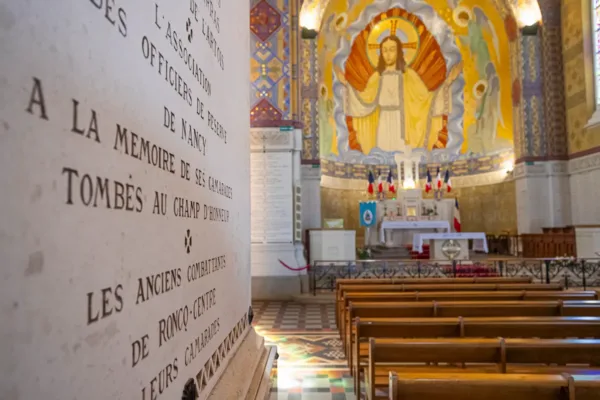 © Anne Sophie Flament
-
The Gardes d’Honneur
Notre-Dame-de-Lorette is watched over by the Gardes d’Honneur, a large network of volunteers who welcome visitors and help preserve the memory of those buried here. They can also assist visitors looking for individual graves. Free guided tours are offered on Sundays at 15:30, except in January.
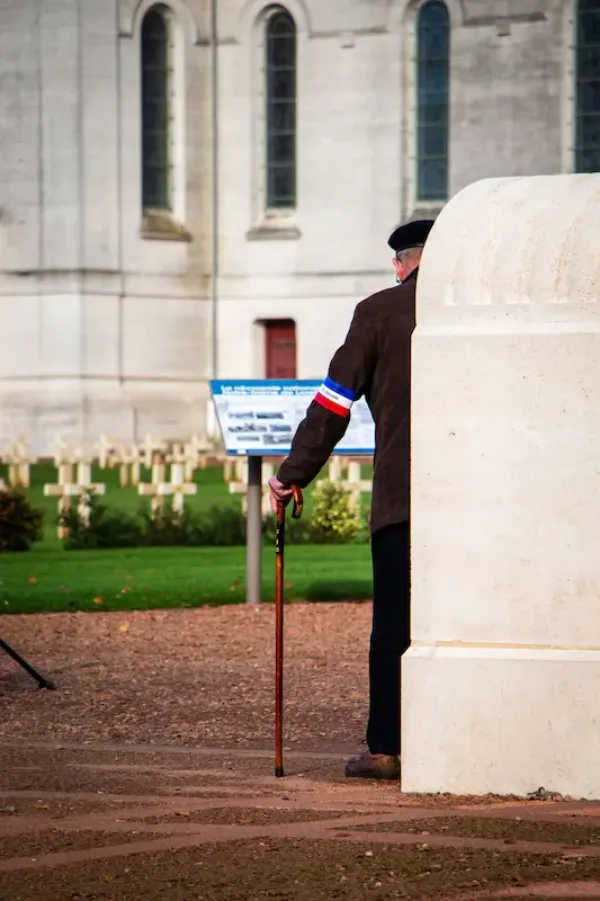 © S. Brissaud Pas de Calais Tourisme
-
The Ring of Remembrance
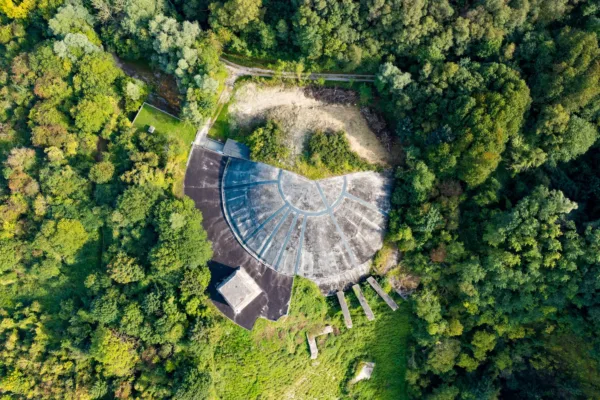
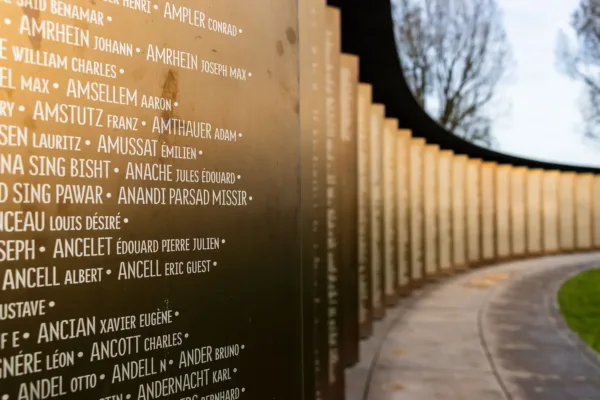
Directly opposite the necropolis stands the Anneau de la Mémoire, or Ring of Remembrance. Inaugurated in 2014, this contemporary memorial carries the names of 579,606 soldiers who died in Artois and French Flanders between 1914 and 1918.
The names are listed alphabetically, without distinction of nationality, rank or religion. French, British, Canadian, Australian, German, Indian and many other soldiers appear side by side. For British and Commonwealth visitors, it offers a particularly powerful perspective on the international scale of the fighting in this part of France.
Notre-Dame-de-Lorette and the Ring of Remembrance form part of the Funerary and Memory Sites of the First World War (Western Front), inscribed on the UNESCO World Heritage List in 2023.
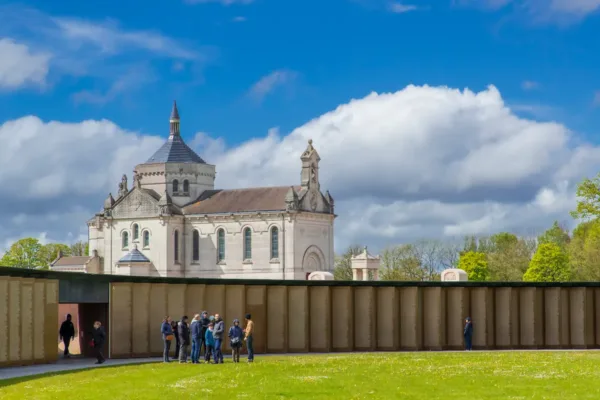 © Anne Sophie Flament

Planning your visit
Allow time to walk through the cemetery rather than treating Notre-Dame-de-Lorette as a quick photo stop. The necropolis, chapel, lantern tower and Ring of Remembrance each tell a different part of the story.
If you are interested in First World War history, the site works particularly well as the starting point for a wider route through Vimy, Loos-en-Gohelle and Arras. Together, these sites reveal how closely French, British, Canadian and Commonwealth histories are connected across the former battlefields of Pas-de-Calais.
FAQ : Notre-Dame-de-Lorette for British visitors
-
How far is Notre-Dame-de-Lorette from Calais ?
Notre-Dame-de-Lorette is approximately 55 km south of Calais, around 45 minutes by car via the A26 motorway towards Arras, then the A21. From the Eurotunnel terminal at Folkestone, the total drive is roughly one hour and 20 minutes once you cross. From Boulogne-sur-Mer it is about 70 km and 55 minutes. From Arras, the site is only 20 km north-west — around 25 minutes. It makes a straightforward day trip from the Channel ports, with time to spare for nearby sites such as Vimy Ridge, just 6 km away.
-
Is Notre-Dame-de-Lorette free to visit ?
Yes. Entry to the necropolis is completely free and the site is open every day of the year. The chapel and lantern tower are also free but are closed from 1 December to 1 March. The Gardes d’Honneur guided tour, offered every Sunday at 15:30 (except January), is also free of charge. The nearby Mémorial 1418 museum, 200 metres from the chapel, is fee-paying.
-
What are the opening hours at Notre-Dame-de-Lorette ?
The necropolis is open year-round with seasonal hours :
June – August : 09:00 – 18:30
April – May and September : 09:00 – 17:30
October – March : 09:00 – 16:30
The chapel and lantern tower are closed from 1 December to 1 March. Guided tours with the Gardes d’Honneur run every Sunday at 15:30, except in January. -
Why is Notre-Dame-de-Lorette significant for British visitors ?
The connection is more direct than most British visitors expect. Inside the chapel, six stained-glass windows were gifted by the British government to mark the Franco-British alliance in Artois and Flanders. The chapel also holds a cross from the provisional grave of Louise de Bettignies, a French woman who ran a British military intelligence network from 1914 until her arrest in 1915. Opposite the necropolis, the Anneau de la Mémoire carries the engraved names of 579,606 soldiers of all nationalities — including British, Australian, Canadian, South African and Indian troops — listed alphabetically without distinction of rank or religion.
-
Can I trace a British soldier buried or named at Notre-Dame-de-Lorette ?
British soldiers are not buried in the French national necropolis itself, but their names appear on the Anneau de la Mémoire (Ring of Memory), the elliptical memorial inaugurated on 11 November 2014 that faces the necropolis. It lists 579,606 soldiers of all nationalities who died in Artois and French Flanders between 1914 and 1918. On site, the Gardes d’Honneur volunteers can assist with grave and name searches. For Commonwealth graves specifically, the CWGC (Commonwealth War Graves Commission) database at cwgc.org is the definitive starting point before your visit.
-
Is Notre-Dame-de-Lorette a UNESCO World Heritage Site ?
Yes. In September 2023, Notre-Dame-de-Lorette was inscribed on the UNESCO World Heritage List as part of the series “Funeral and Memorial Sites of the First World War — Western Front”, which encompasses 139 sites across France and Belgium. The inscription recognises both the necropolis and the Anneau de la Mémoire as forming an outstanding example of how the Great War is commemorated at international scale. The site was proposed for inscription by France and Belgium jointly, partly in recognition of its growing role in cross-border remembrance.
-
What else can I visit near Notre-Dame-de-Lorette in a day ?
The site sits at the centre of one of the richest WW1 circuits in northern France. Within easy reach :
Vimy Ridge Canadian National Memorial — 6 km south-east, free, open year-round
Mémorial 1418 museum — 200 m from the chapel at Souchez, reconstructed trenches and 2,000+ artefacts, open Wednesday–Sunday
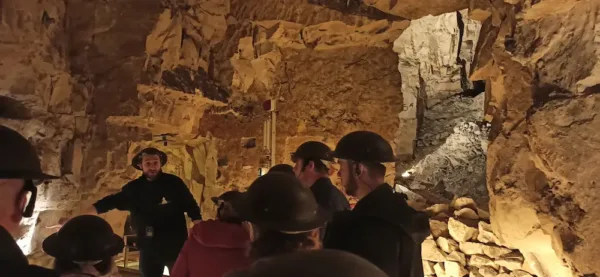
Wellington Quarry (Carrière Wellington), Arras — 20 km south, the underground British tunnel network used before the Battle of Arras in April 1917
A Sunday visit is recommended : the Gardes d’Honneur free guided tour at 15:30 leaves the morning free to cover the necropolis, the Ring of Memory, and the Mémorial 1418 at your own pace.